
Even though the two sides maintain no formal diplomatic ties, the United States remains the largest weapons provider to Taiwan. Since 1979—when the United States switched its diplomatic ties from the Republic of China (Taiwan) to the People’s Republic of China (PRC)—roughly 77 percent of Taiwan’s major arms imports have originated from the United States. The volume of US arms exports has significantly increased in the past several years. According to SIPRI, from 2019 to 2023, an astonishing 99 percent of Taiwan’s imports of major conventional arms came from the United States.
After Donald Trump returned to the White House in January 2025, his transactional approach to strategic alliances, coupled with his decision to withhold some military aid to Taiwan, has raised concerns. These concerns bubbled into headlines when, in February 2026, President Trump stated that he had consulted with PRC President Xi Jinping over the specific issue of arms sales to Taiwan. Given that Trump made this statement in advance of his much-anticipated visit to China—originally expected to take place in April, now tentatively planned for mid-May—it fueled additional hype. There is now no shortage of speculation that Trump may agree to drawn down arms sales to Taiwan in return for some form of concession from Xi Jinping.
Nonetheless, this author argues that while US arms sales to Taiwan under Trump 2.0 might slow down for tactical reasons, sales to the island are likely to remain intact overall and may even increase further. In making this argument, this author analyses arms sales already concluded during Trump’s first and second terms, his “America First Arms Transfer Strategy” executive order and its alignment with current Taiwanese government policies, and an active US Congress with bipartisan support for Taiwan.
Trump’s So-Called “Consultation” with China
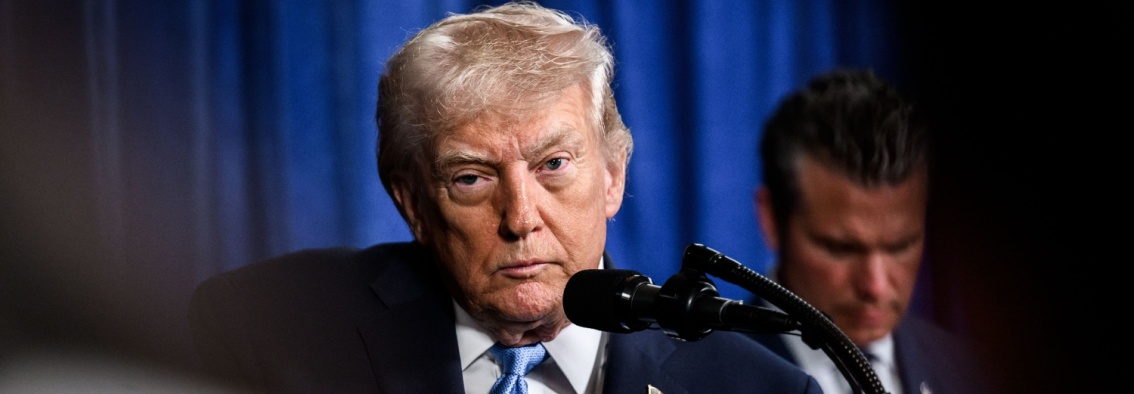
On February 17, in response to a reporter’s question on board Air Force One, Trump stated that “I’ve talked to him [Xi Jinping] about it [US arms sales to Taiwan]. We had a good conversation, and we’ll make a determination pretty soon.” In his answer, Trump was referring to a telephone conversation he had held with Xi on February 4.
The PRC Ministry of Foreign Affairs reported that during the February 4 phone call, Xi urged the United States to “handle the issue of arms sales to Taiwan with prudence,” and added that “the Taiwan question is the most important issue in China-US relations.”
The meeting marked the first time since the United States announced its “Six Assurances” policy that an American president had consulted the Chinese leadership on weapon exports to Taiwan. The “Six Assurances,” a non-binding United States policy framework formulated in 1982, directly stated that the United States would not consult with China on arms sales to Taiwan.
In response to this news, some analysts argued that Trump’s so-called “consultation” set a “dangerous precedent.” Others termed the consultation a “blatant violation” of established US norms, accusing Trump of employing Taiwan as a bargaining chip in trade talks with China and sending the wrong signal to allies regarding the United States’ reliability.
The Wall Street Journal reported that, given the co-occurring flashpoints in US-China ties (such as Trump’s efforts to finalize a trade deal with China), Washington might postpone or delay the supply of weapons to Taiwan until at least Trump’s meeting with Xi in Beijing.
The confusion has spawned multiple overlapping questions, such as: whether Trump would permanently slow down arms deliveries to Taiwan; whether Washington was willing to employ arms sales as a bargaining chip in its trade deal with China; or whether the “consultation” was merely a tactical pause to attract PRC attention towards US-China trade negotiations.
Factors Rendering Continued US Arms Sales to Taiwan Likely
Three major political trends render the Trump Administration’s continued support for Taiwan more likely. The first is the rapid pace of arms deals that Trump has already struck with Taiwan. The second is the current Trump Administration’s “America First Arms Transfer Strategy” and its alignment with Taiwanese government policy. The third is longstanding support in the US Congress for Taiwan.
The Rapid Pace of Arms Sales to Taiwan under Trump
President Trump’s actions towards Taiwan during his first full term (2017-2021) can provide a useful baseline for assessing his second term policies. During his first term, Trump authorized approximately USD 18.3 billion in arms sales to Taiwan. This was roughly equivalent to the total value of arms sales over the two consecutive terms of his predecessor, Barack Obama (around USD 20 billion). It amounted to more than double the arms sales of his successor, Joe Biden (USD 8.4 billion).
Even if Trump set a record for arms sales to Taiwan in his first term, the rapid pace of arms sales in the first year of his second term has encouraged some analysts to argue that he may soon break his own record for arms sales to the island. For instance, in December 2025, Washington announced about USD 11 billion worth of arms sales to Taiwan, the largest single US weapons deal with the island to date. It was against the backdrop of this record deal that President Trump spoke with Xi Jinping on February 4. Despite the fact that Trump reportedly discussed arms sale to Taiwan with Xi, multiple outlets reported just a few days after the call that the United States was weighing additional arms packages for Taiwan, potentially worth up to USD 20 billion. While this package has not yet been reported to the US Congress, it would dwarf sales made by any prior US president.
The “America First Arms Transfer Strategy” Aligns with Taiwanese Policy
President Trump’s strategic thinking, reflected in his executive orders, can also serve as a guide for his second term intentions. On February 6, 2026, Trump issued an executive order (EO) outlining an “America First Arms Transfer Strategy.” This EO introduced foundational changes to the United States’ arms export policy. It prioritizes weapons exports to countries that spend more on their own defense and occupy critical strategic geographies. It explicitly seeks to use foreign purchases and capital to support US domestic reindustrialization and the resilience of America’s defense industrial base. The EO effectively elevates industrial and economic objectives in arms-transfer decisions, while giving comparatively less weight to traditional foreign policy and normative considerations.
The commercially driven “America First Arms Transfer Strategy” aligns well with the policies of the incumbent Lai Ching-te (賴清德)Administration in Taiwan, both strategically and economically. In response to the PRC’s sustained military pressure, Lai’s government has adopted a more assertive deterrence posture. The Taiwanese president has introduced structural defense reforms, under strategies such as “peace through strength,” “all-of-society resilience,” and the “porcupine” doctrine—which emphasizes asymmetric defense capabilities.
To meet defense objectives, the Lai government moved to raise the annual defense budget from about 2.4 percent of GDP to roughly 3.3 percent in 2026, with a stated goal of reaching 5 percent by 2030. Furthermore, in November 2025, the Lai government proposed an additional supplemental defense budget of roughly USD 40 billion spread over eight years, although the proposal has remained stalled in the legislature.
These ambitious defense modernization efforts have only been made possible through Taiwan’s burgeoning economy, which has benefited from a surge in AI-related exports and investments. Taiwan’s statistics office projected real GDP growth of 7.37 percent in 2025, the fastest pace in 15 years and sharply higher than its earlier 4.45 percent estimate. Economic growth is expected to remain resilient, with an estimated growth rate of 7.7 percent in 2026. Strong global demand for semiconductors and AI technology continues to underpin expansion.
As Taiwan’s economy grows, its government has greater leeway to obtain expensive, US-made weapons. Trump’s arms sales strategy and Taiwan’s increased ability to finance purchases are therefore mutually reinforcing. Moreover, the “America First Arms Transfer Strategy” has targeted “inefficiencies” in the supply of weapons, which have led to long delays in delivering weapons systems once sold. The EO aims to streamline arms transfer procedures, improve interagency coordination, and accelerate reviews and approvals to reduce delivery delays. This could help ease the backlog in arms deliveries, a long-standing concern for Taiwan.
Bipartisan US Congressional Support for Taiwan
Although the US president holds significant power over arms transfers, the US Congress has consistently provided bipartisan support for accelerated arms supplies to Taiwan. Both Democrats and Republicans have backed efforts to speed deliveries and expand Taiwan’s access to US-made systems. This support is evidenced by the fact that the 119th Congress has introduced over a dozen Taiwan-related bills since January 2025.
Furthermore, when Taiwan’s Legislative Yuan (LY, 立法院) stalled President Lai Ching-te’s proposed USD 40 billion multi-year special defense budget, a bipartisan group of 37 Congressional lawmakers sent a letter urging Taiwanese lawmakers to approve the legislation. The letter emphasized that both the United States and Taiwan must “do more to deter PRC aggression,” and called the special budget “critical” to closing Taiwan’s capability gaps. The letter warned that without substantial increases in defense spending to the proposed levels, Taipei’s recent progress in readiness and asymmetric capabilities would be “insufficient.”
Given the US Congress’s obvious appetite for expanded arms sales to Taiwan, President Trump can supply weapons to the island with relatively little domestic political cost.
Conclusion
Though unprecedented, Trump’s “consultation” with Xi on the issue of arms sales to Taiwan should not be construed as a shift in US policy. Trump’s decision to discuss arms sales with Xi in a telephone call could merely be a tactical move to smooth his expected visit to China. After all, Trump is aware of the sensitivity of arms sales to China. At most, the United States might choose to temporarily slow or pause weapons transfers until the conclusion of Trump’s May visit to Beijing. In the long-term, the Trump Administration and US Congress’ historical appetite for arms sales to Taiwan, coupled with the island’s expanded fiscal capacity to purchase weapons, suggests that Trump’s second term may even bring about a qualitative expansion of arms transfers between American and Taiwan.
The main point: Trump’s unprecedented February 2026 “consultation” with Xi over Taiwan arms sales could simply be a tactical pause driven by trade and summit diplomacy. Trump’s track record of arms sales to Taiwan, coupled with the island’s growing economy, indicates not only continuity but possibly an increase in US arms transfers to Taiwan for the remainder of his term.