
Introduction
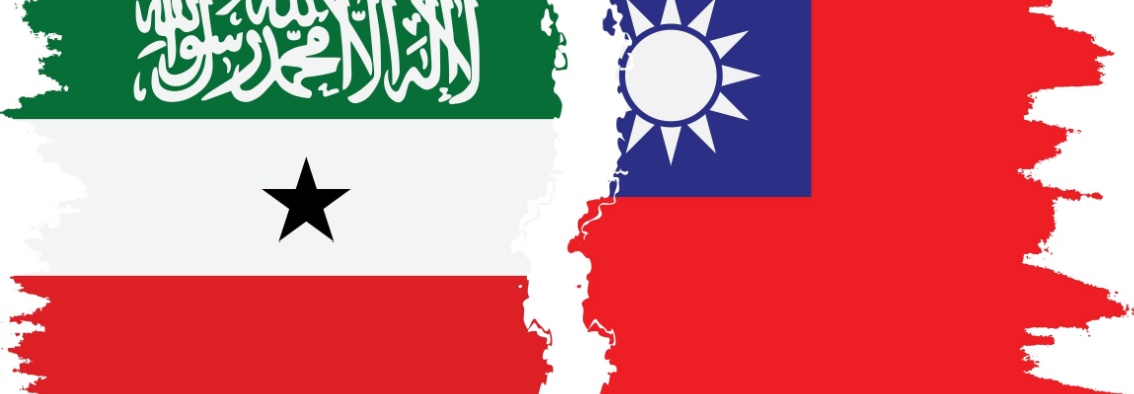
In recent years, de facto states have become increasingly active in international diplomacy, challenging the traditional state-centric framework that once restricted meaningful global engagement to fully-recognized sovereign states. The unofficial diplomatic ties between Somaliland and Taiwan demonstrate this shift toward non-traditional diplomacy, as both states occupy unique positions in the international system as self-determining democracies without official universal recognition.
Historically, Somaliland located in the Horn of Africa represents a significant case of resilience and self-determination. It gained independence from the United Kingdom on June 26, 1960, only to voluntarily unite with Somalia five days later in pursuit of pan-Somali nationalism. However, years of political marginalization, civil war, and the collapse of the Siad Barre regime later prompted Somaliland to declare its independence on May 18, 1991. Since then, it has established functioning state institutions, maintained peace and stability, and has conducted multiple free and fair elections—even as it remains diplomatically unrecognized by all United Nations members except Israel.
Taiwan—officially known as the Republic of China (ROC)—shares a parallel experience of de facto statehood. After losing the Chinese civil war (1946-1949), the nationalist government led by Chiang Kai-Shek fled to Taiwan, while the Chinese Communist Party (CCP, 中國共產黨) established the People’s Republic of China (PRC) on the mainland in 1949. In the intervening years, Taiwan has built strong government institutions, a thriving democracy, and a major global economy yet it continues to face diplomatic quarantine due to Beijing’s efforts to restrict its international space.
This article explores three key areas: first, the primary foundation of Somaliland-Taiwan ties, second, the main challenges that threaten the sustainability of Somaliland-Taiwan relations, and finally, key policy recommendations to sustain this cooperation.
The Foundation of Somaliland-Taiwan Ties
Somaliland and Taiwan stand out as remarkable models of de facto states that have built effective governance systems and resilient political institutions, despite their limited official recognition. In July 2020, Somaliland and Taiwan launched enhanced relations through a bilateral protocol and the mutual establishment of representative offices at each other’s capitals (Hargeisa and Taipei). According to Mohamed Hagi, former Somaliland chief representative to Taiwan, the partnership is based on the two nations’ shared commitment to the common values of democracy, freedom, justice, and the rule of law. Both countries are located in volatile geographical regions the Horn of Africa and the East China Sea while both parties operate outside of full membership in major international organizations such as the United Nations, which underscores the novelty of their diplomatic engagement.
According to Taiwan’s Ministry of Foreign Affairs (MOFA, 外交部), bilateral engagement focuses on areas such as education, public health, fisheries management, agriculture, energy, mining and Information and communication Technology. Somaliland and Taiwan relations extend beyond ideological alignment. Somaliland seeks economic growth and investment, while Taiwan seeks to increase its influence and access to growing African markets.
Over the past five years, cooperation between Somaliland and Taiwan has produced significant and multidimensional benefits mainly in the areas of democratic governance, infrastructure development, education, health, and global visibility.
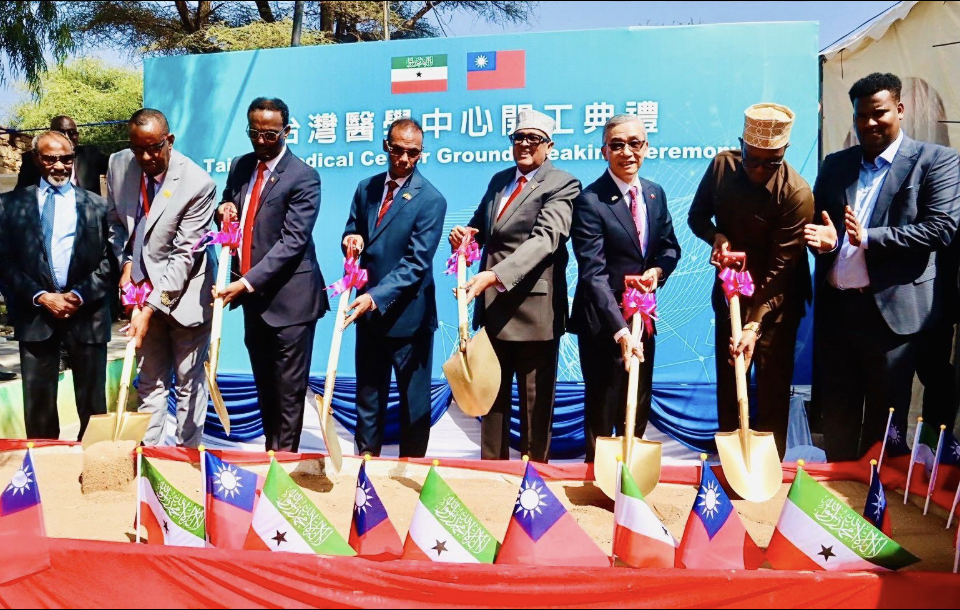
Image: President of Somaliland Abdirahman Mohamed Abdillahi (fourth from right), accompanied by cabinet ministers and Taiwan’s Ambassador Allen Lou (羅震華, third from right) at the ground-breaking ceremony for the Taiwan Medical Center in Hargeisa (Oct. 26, 2025). (Image Source: Taiwan in Somaliland)
In the health sector, Taiwan has emerged as one of Somaliland’s most significant partners in health systems reinforcement. The flagship aspect of this partnership is the USD 22 million Taiwan Medical Center in Hargeisa, as well as Taiwan’s donation of four ambulances (two to Somaliland’s Ministry of Health and two to medical mobility initiatives). Furthermore, Taiwan supplied 150,000 doses of the MVC COVID-19 vaccine and supported the expansion of digital health information systems through five national hospitals in Somaliland. These interventions significantly improved the nation’s emergency response capabilities, pandemic control, and national hospital data management.
In the areas of humanitarian relief and democratic governance, Taiwan has contributed USD 2.5 million in rehabilitation and humanitarian assistance, USD 2 million to support Somaliland’s 2024 presidential and political party elections, and USD 500,000 to a drought relief effort. Moreover, Taiwan government provided USD 550,000 in donations towards rebuilding efforts following the Waaheen Market Fire, one of the most devastating urban disasters in Somaliland history.
Meanwhile, when it comes to digital infrastructure, the Taiwanese government has allocated a total of USD 1 million for the establishment of the Somaliland National Data Center, which has been critical for modernizing e-government systems. Taiwan also contributed USD 1.85 million—approximately 70 percent of the total cost—to the construction of the “Taiwan Road,” connecting Hargeisa to Egal International Airport. Furthermore, Taiwan provided USD 810,000 as seed funding for the new Cheetah Conversation Fund’s (CCF) Education Center in Somaliland.
In education, Taiwan has offered governmental scholarships and fellowships arranged by MOFA, the International Cooperation and Development Fund (ICDF,國際合作發展基金會), and the Ministry of Education (MOE, 教育部). Recently, almost one hundred and eighty Somaliland students have received the above scholarships and fellowships. Many of them have returned to the country and become leaders and managers in Somaliland’s government, business, academia and beyond. Also, security sector scholarships have brought senior Somaliland military officers to the National Defense University (NDU, 國防大學) in Taiwan. Furthermore, Taiwan has trained over 1,200 individuals in 56 diverse IT courses through the Somaliland Innovation Zone (SIZ).
Additionally, Taiwan offers advanced training programs and exchanges for Somaliland’s governmental-level and institutional partners in areas such as agriculture, health, technology and education. Similarly, Somaliland hosts Taiwanese delegations, investors, technical missions, and tourists to expand development and commercial cooperation. Finally, Somaliland and Taiwan have signed multiple bilateral strategic agreements and MOUs in areas of mutual interest, such coast guard cooperation.
Main Challenges to Somaliland-Taiwan Ties
The Reactions of Regional and Global Actors
The responses of regional and global powers to Somaliland-Taiwan relations are complicated and diverse. For example, Somalia strongly opposes these relations, condemning the partnership as a violation of its sovereignty and territorial integrity, and a challenge to its “One-Somalia Policy”. Other neighboring countries such as Ethiopia, Djibouti, and Eritrea maintains cautious neutrality and public silence regarding these relations, in line with both their “One-Somalia” and “One-China” policies.
Globally, China also strongly opposes Somaliland-Taiwan relations, framing it as a violation of its “One-China Principle”. China uses diplomatic pressure, such as through lobbying at international fora, to challenge and isolate both Hargeisa and Taipei. On the other hand, the United States adopts a neutral but generally positive stance towards these ties. Washington plays an indirect yet influential role, supporting initiatives that reinforce democratic governance, economic resilience, and strategic autonomy in both Somaliland and Taiwan.
The Absence of Global Recognition
The de facto independent status of both Somaliland and Taiwan continues to limit their ability to engage in official diplomacy and access multilateral platforms. This lack of international recognition restricts the institutional depth of their bilateral relations. Both Somaliland and Taiwan are excluded from major international and regional organizations such as the United Nations and African Union. This isolation restricts opportunities for broader strategic relations, limits avenues for advancing their interests in international platforms, and reduces their global visibility.
US-China Rivalry
The growing strategic rivalry between the United States and China in the Horn of Africa indirectly shapes the outside environment within which the Somaliland and Taiwan partnership operates. China views Taiwan’s external relations as challenges not only to its One-China principle but also to China’s broader strategic ambitions in the region. For instance Beijing has increased pressure on Somaliland by strengthening relations with Mogadishu and reiterating support for Somalia’s “One Somalia” Policy as a means to isolate Taiwan’s engagement in the region, while warning against deeper ties with Taipei that could challenge Beijing’s regional footprint near its military base in Djibouti. In this context, neighboring states are cautious about openly supporting Somaliland and Taiwan relations for fear of damaging economic and political ties with China. On the other hand, US-China competition limits the extent of public external support for these relations. Although the United States roughly supports Taiwan’s global engagement and views Somaliland through a strategic lens, it remains neutral about actions that could escalate tensions with China in the geopolitically vital region.
Limited Trade and Economic Connectivity
Bilateral economic relations remain constrained by structural obstacles such as inadequate direct transport corridors, limited infrastructure in Somaliland, and poor financial linkages. These challenges decrease the potential for robust trade, investment, and private sector partnerships between Somaliland and Taiwan.
Key Policy Recommendations for Sustainable Somaliland-Taiwan Cooperation
- Somaliland and Taiwan can mitigate diplomatic isolation by joining regional dialogues as an observer such as the Intergovernmental Authority on Development (IGAD) forums, African Union policy dialogues, the Global Cooperation and Training Framework (GCTF) and also democracy oriented platforms such as the Copenhagen Democracy Summit. This dialogue will enhance public diplomacy and engage bilateral cooperation with states that advocate democracy and development.
- Both parties should maintain balanced neutrality and focus on their common development goals rather than geopolitical alliances vis-à-vis the United States and China.
- Both sides should collaborate on high impact, quality-driven programs that differentiate Taiwan’s aid approach from that of China.
- Somaliland and Taiwan should establish a trade enhancement framework and logistics corridor that will reinforce connectivity, reorganize the movement of goods, and increase market access.
- Somaliland and Taiwan academics and scholars should expand joint research, policy studies, and academic relations focused on governance, diplomacy, and development to expand intellectual connectivity.
- Both parties should engage supportive international partners and compatible states such as the United States, Japan and European democracies to support technical agendas, economic development and broader global visibility.
- Somaliland and Taiwan should enhance media cooperation and increase coverage of bilateral programs and success stories, while combatting misinformation.
- Civil society leaders, youth groups and digital influencers in both governments should play a vital role in enhancing bilateral ties, deepening public diplomacy, and promoting international visibility.
The main point: Over the past five years, Somaliland-Taiwan relations have revealed how two de facto states and democracies can leverage pragmatic relations to expand their global positions in spite of diplomatic pressure. Sustaining this cooperation requires aligning strategic priorities, resisting external isolation, and institutionalizing long-term policy mechanisms.