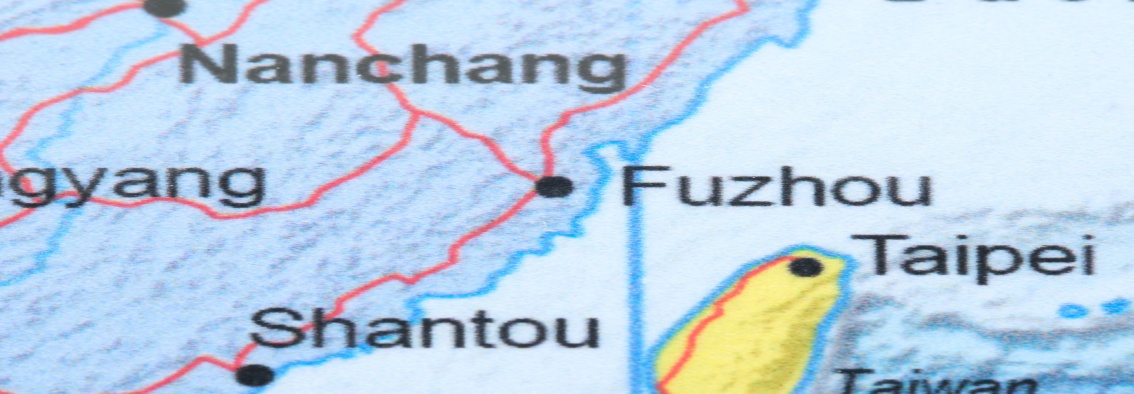

Fujian Province would serve as the closest People’s Republic of China (PRC) territory to Taiwan during a cross-Strait contingency. In the United States Department of Defense’s annual report to Congress, Military and Security Developments Involving the People’s Republic of China 2024, the province is mentioned 16 times. The report detailed several People’s Liberation Army (PLA) units of strategic significance based in Fujian. Indeed, understanding the People’s Liberation Army’s (PLA) military installations in Fujian Province is pivotal for predicting the PLA’s operational calculus in a potential Taiwan contingency.
Fuzhou and the Eastern Theater Command: A Node of C-3
As a key coastal area facing Taiwan, Fujian hosts large deployments of the People’s Liberation Army Ground Force (PLAGF), including infantry, artillery, and missile units. Its capital city, Fuzhou, has been home to the Eastern Theater Command (ETC)’s Ground Force (东部战区陆军机关) since its reformation in 2016. In 2016, the PLA conducted a command reform that replaced the former seven Military Regions (军区)—which were largely administrative and army-centric—with five joint Theater Commands (战区) oriented toward operational warfighting. Under the guiding principle of “the CMC exercises overall command, theater commands conduct operations, and services focus on force development,” the reform concentrated command authority while enabling theater-level joint operations. The Eastern Theater Command was explicitly structured to manage contingencies in the Taiwan Strait and adjacent maritime domains.
The new ETC headquarters oversees the PLAGF’s 71st Group Army, 72nd Group Army, and 73rd Group Army. Historically, Fuzhou has hosted key PLA headquarters at the provincial and group-army levels, including the Fujian Military District (福建省军区) and major ground force units subordinated to the former Nanjing Military Region, such as the Taiwan-oriented 31st Group Army. Even though these commands did not exercise authority beyond Fujian Province, their location reflected the city’s longstanding role in PLA Taiwan-facing military planning. In particular, the distance between Fuzhou (Fujian’s capital city) and Taipei is only 110-115 miles (180-184 km) by air.
As a result, the Eastern Theater Command Ground Force Headquarters in Fuzhou would support command, control, and communication (C-3) functions during a Taiwan contingency, specifically in coordination with the Eastern Theater Command Joint Operations Command Center in Nanjing. Consequently, Fuzhou would function as a vital supporting command node within the PLA’s broader multi-domain joint operations framework (联合作战).
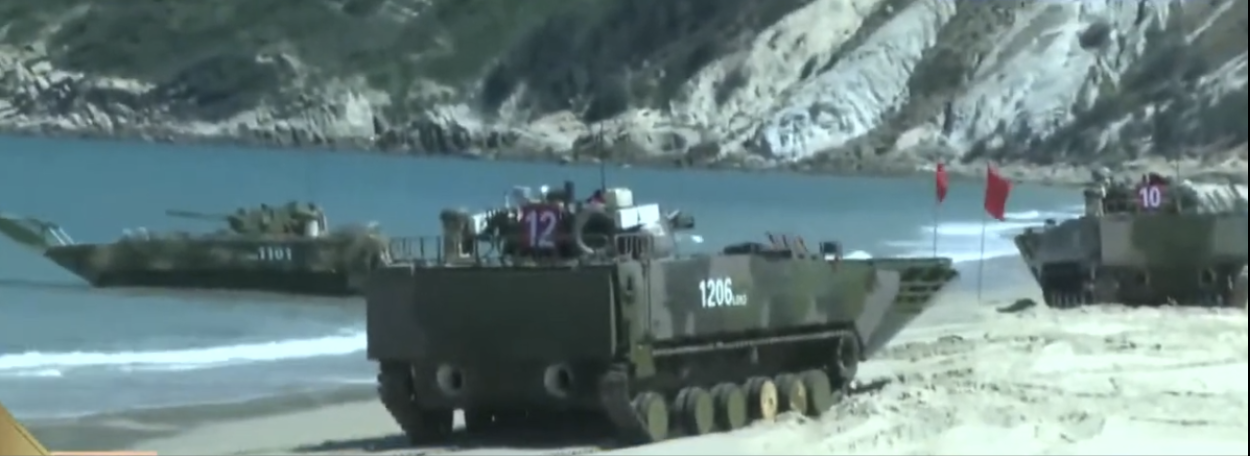
Image: Amphibious landing vehicles operated by the Fujian-based PLA 73rd Group Army conducting training at an unidentified location, July 2021. (Image source: CGTN)
Missile Deterrence: PLA Rocket Force and DF-17 Brigade(s) in Fujian
Open source research has identified at least two PLA Rocket Force (PLARF) units in Fujian’s two mountainous county-level cities, Yong’an (25.9414° N, 117.3652° E) and Nanping (26.64° N, 118.17° E). Known as “Eight parts mountain, one part water, one part farmland” (八山一水一分田), Fujian is at least 80 percent mountainous. Such terrain characteristics thus provide concealment for the PLARF nuclear force, enhancing the overall survivability and launch on warning (LOW) capacity of the PRC during a contingency.
Situating the PLARF brigade in Fujian significantly extends the PLA’s overall force-projection capacity and the credible threats it can impose on its adversaries. Situated in northwestern Fujian, Nanping is a regional transportation hub with established railway and highway links connecting inland Fujian to coastal areas. This civilian transportation infrastructure enhances the mobility and concealment of nearby PLA Rocket Force units, including the 815th Ballistic Missile Brigade, by facilitating logistical and coordination support under peacetime conditions. Yong’an, located in Fujian’s central west region, hosts the PLARF’s 614th Brigade that is equipped with the DF-17 (東風-17), the PLARF’s latest hypersonic missile capable of carrying both conventional and nuclear warheads. Specifically, the DF-17 is a solid-fueled ballistic missile that employs a hypersonic glide vehicle (HGV) with an irregular trajectory, which significantly increases the difficulty and cost of interception. The high mobility of the DF-17 system, combined with the mountainous terrain in which the 614th Brigade is embedded, significantly enhances both the missile’s survivability and strike capacity. This geographic advantage strengthens the PLA’s LOW posture by complicating adversary detection, compressing response timelines, and raising interception costs. With a demonstrated range capable of reaching Japan’s Kadena Air Base in Okinawa and US facilities on Guam, the DF-17’s deployment in Fujian poses credible threats to Taiwan, Japan, and the United States. As a result, Fujian thus contributes to the survivability and responsiveness of the PRC’s regional strike forces.
PLA Naval and Air Force Bases in Fujian
As a vital People’s Liberation Army Navy (PLAN) hub, hosting several PLA Navy squadrons, Fujian enhances the PLA’s operational advantages in the air and maritime domains—which would be critical to a successful Taiwan operation. The People’s Liberation Army Navy Fujian Base (中国人民解放军海军福建基地) is also located in Fuzhou. Deep-water ports in economic hubs—including Xiamen and Quanzhou—provide the PLAN with convenient regional infrastructure and sea access. These installations position Fujian on the frontline of a Taiwan contingency in which joint sea-air domain operations (海空聯合作戰) and joint sea-denial operations (联合海域封控) are indispensable.
In particular, Xiamen port is home to the People’s Liberation Army Navy Xiamen Marine Police District (中国人民解放军海军厦门水警区)—as well as Fujian’s maritime militia, which operates under the jurisdiction of the PLAN Fujian Base. The port also hosts a “Xiamen-based submarine unit” (潜艇大队) that “safeguards cross-Strait dynamics,” as indicated by the official website of the Fujian Provincial Government. Kinmen (Quemoy) County, one of Taiwan’s outer islands, sits only 6 miles (10 km) east of Xiamen. Kinmen has been at the forefront of PRC military activity directed at Taiwan since 1949. The city of Xiamen and Chongwu of Quanzhou (崇武,泉州) have been the launch pad for critical PRC-Taiwan conflicts, including the Battle of Guningtou (古寧頭戰役) in 1949, as well as surface engagements with the Republic of China (Taiwan) Navy during the Kuomintang (國民黨) martial law period. These surface warfare engagements, including the Battle of Wuqiu/Eastern of Chongwu (崇武以東海戰 /烏坵海戰), were part of the ROC’s objective to reclaim the mainland, known as Project National Glory.
In addition to naval features, Fujian also hosts critical PLA Air Force (PLAAF) air bases capable of swift sorties to Taiwan. Fujian hosts multiple PLA Air Force (PLAAF) air bases that support aviation brigades tasked with Taiwan-facing operations. These include Longtian Air Base (龙田空军基地) near Fuzhou—widely assessed to be the PLAAF air base closest to Taiwan—as well as Hui’an Air Base (惠安空军基地) in Quanzhou and Shuimen Air Base (水门空军基地). Operationally, these facilities host PLAAF aviation brigades, including the 41st Aviation Brigade at Wuyishan Airport in Nanping. In addition, several dual-use civilian airfields in cities such as Longyan and Sanming could support surge or dispersal operations during a contingency. Detailed sorties of the PLAAF fighters remain unconfirmed, yet it is understood that those installations serve as forward bases and launchpads for the PLAAF’s stealth fighters—especially the J-20—during missions aimed at the mainland of Taiwan. Under favorable aviation conditions, the PLA’s J-20 fighter could theoretically reach Taipei in under seven minutes from Shuimen Airbase, compressing Taiwan’s detection and reaction window.
Last but not least, the PRC’s gray zone tactics, along with its “Joint-Sword” series of exercises (联合利剑系列军演), have involved PLAN and PLAAF bases in Fujian. These activities—including live-fire drills, blockade simulations, and gray-zone pressure—could cross the threshold from coercion into active conflict. Consequently, Fujian’s dense network of air, naval, and dual-use infrastructure significantly expands the PLA’s anti-access/area-denial (A2/AD) capacity and provides critical forward positioning for operations against Taiwan.
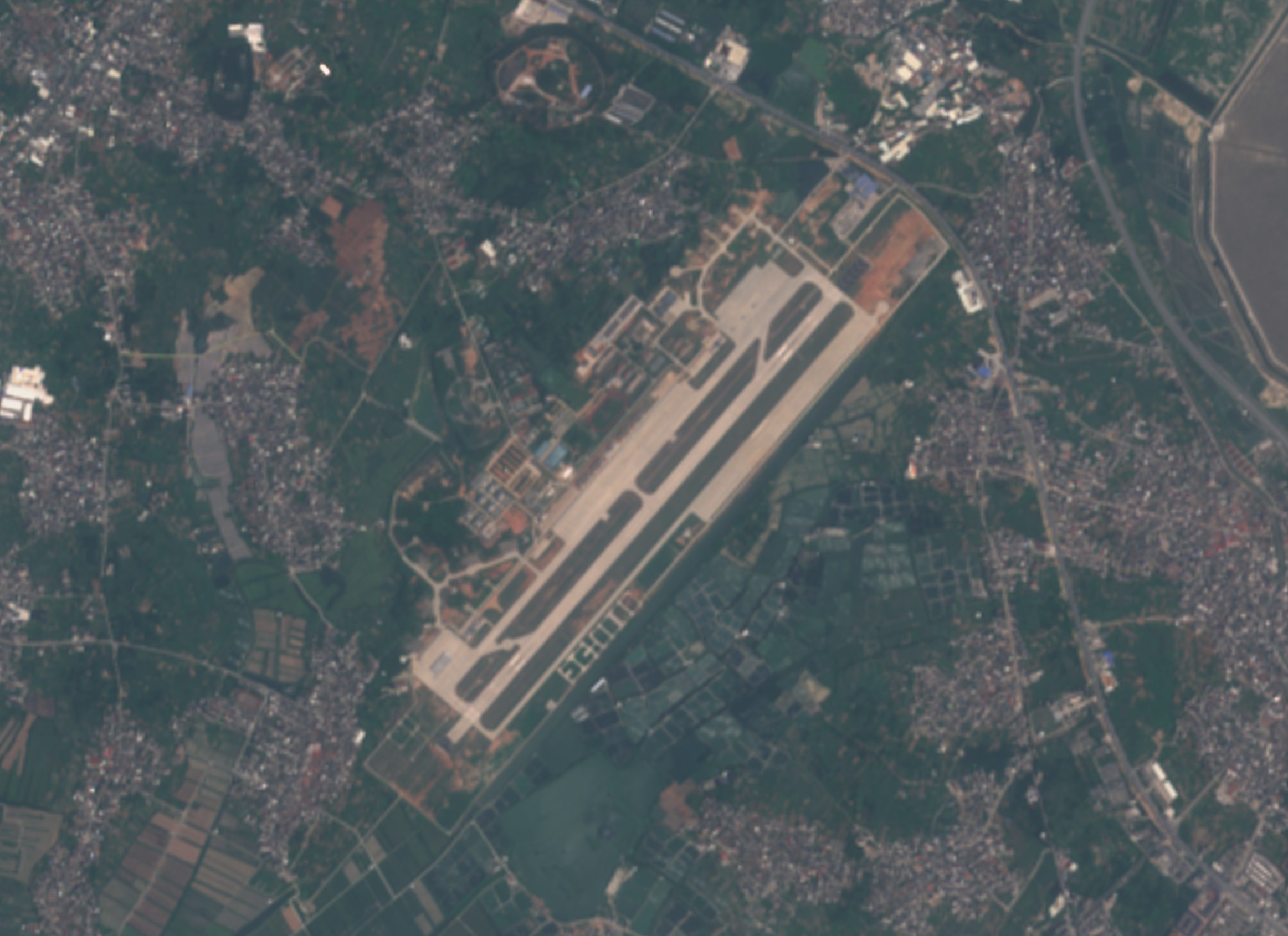
Image: A Sentinel-2 satellite imagery shot of Longtian PLA Air Force base in Fujian (circa 2023). (Images source: Wikimedia Commons)
Non-Military Forces: Coast Guard & Maritime Militia
During a cross-Strait campaign, where the maritime domain is central, Fujian’s maritime militia (海上民兵) would play a critical role. In particular, the militia and its related civilian infrastructure can be mobilized to perform various duties, including assisting with a naval blockade, island encirclement, logistics, and transportation. They can perform combatant and noncombatant tasks (e.g., covering and rescuing) within and beyond the nearshore waters of Fujian. In this way, Fujian’s maritime militia can critically enhance the PLA’s A2/AD capacity. Trained under the People’s Armed Forces Departments (人民武装部), the maritime militia comprises local fishermen and noncombatant members of the public, and is capable of rapid mobilization and deployment during a contingency. In practice, Fujian Province has been implementing incentives to strengthen the militia’s combatant capacity. During January 2025, the Fujian Government issued “Measures for Guaranteeing Militia Rights and Interests” (福建省民兵权益保障办法). Such measures provide detailed incentives, ranging from financial compensation to various social welfare measures, to promote militia members’ performance and morale.
Historically, Fujian served as a Historic Revolutionary Base Area (革命老区) with a robust civilian-military nexus (军民融合), and a frontline area for support traditions (支前传统) and united front work during the early stages of the Chinese Communist Revolution. Specifically, Fujian cities hosting PLA brigades, including Fuzhou, Quanzhou, Xiamen, and Longyan, have consistently been awarded the “Double-Support Model City” (双拥模范城市) designation. This honor aims to incentivize local military-civilian integration efforts.
Traditions and local policy implementation are thus interwoven into the PRC’s plan for using Fujian to achieve unification with Taiwan by force. In short, historical heritage and policy implementation in Fujian’s civil–military integration adds significant weight to the province’s field advantages during a Taiwan contingency.
From Historical Patterns to Trending Dynamics: Fujian in Past Taiwan Strait Crises
Fujian has been an essential launchpad during the past four Taiwan crises, and the PRC’s historical attempts to capture Taiwanese outlying islands by force. Xiamen remains the critical launchpad and base for the PLA’s recorded operations during the final stages of the Chinese Civil War. Examples include the Battle of Guningtou (1949), the Battle of the Dadan (1950), and other engagements during the First (1954-1955) and Second (1958) Taiwan Crises. Despite the PLA’s initial failure to capture Kinmen, Xiamen-based artillery continued intermittent shelling of Kinmen County until 1979. The distance between Xiamen and Kinmen is only 6 miles, making control over Kinmen strategically advantageous for expanding wartime A2/AD coverage.
In addition to the capture of Taiwan’s outer islands, Fujian has also served as the launchpad for the PLA’s military coercion operations. During the Third Taiwan Strait Crisis (1995-1996), the PRC launched DF-15 (東風-15) missiles from Fujian’s Yong’an and Nanping to deter Taiwan from declaring independence. Both cities, as previously mentioned, hold PLARF brigades armed with missiles capable of carrying both conventional and nuclear warheads. In the Fourth Taiwan Strait Crisis following then-US House Speaker Nancy Pelosi’s 2022 visit to Taiwan, a live-fire exercise started from Fujian’s Pingtan island before being accompanied by a joint drill simulating a encirclement of Taiwan (合围台岛).
The main point: A Taiwan contingency would begin in Fujian. The province’s key military features—the C-3 operational structure, bases, and critical units of the PLAN, PLARF, and PLAAF—attest to this. Historical patterns and recent cross-Strait dynamics have further underscored the province’s position as a wartime hub. As a result, Taiwanese defense planners and stakeholders must enhance their monitoring work directed at Fujian.