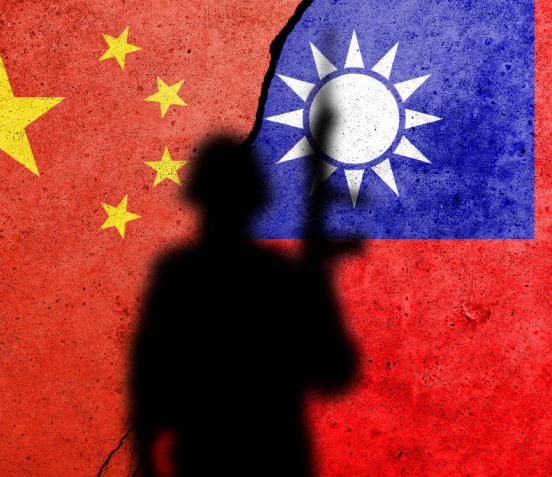

With a military that has not seen large-scale active conflict since 1979, much remains unknown about how the armed forces of the People’s Republic of China (PRC) would conduct themselves in a modern conflict. While logistics, tactics, and the overall outcomes of a Taiwan contingency are all cause for further analysis, more focus is needed on how the Chinese military would act towards civilians in a conflict. China’s aggressive behavior towards Taiwan, and its refusal to rule out a military invasion of the island, mean it is important to consider the possible military conduct of the People’s Liberation Army (PLA) in relation to international humanitarian law (IHL)—which, among other things, aims to limit conduct harmful or deadly to civilians in conflict contexts. Taiwan’s highly urbanized population means that fighting would unavoidably take place in civilian areas, which means IHL would be highly tested in the event of any conflict. As such, the Taiwanese government and partners should implement rigorous strategies for raising international awareness of the civilian costs of a contingency to build condemnation and promote accountability.
Broadly speaking, China has made reasonable public commitments to international humanitarian law. It is a party to relevant international treaties, and organisations like the Red Cross are active within China. In 2018, a PLA official stated that “the PLA has integrated the law of armed conflict into the curricula of its academies and universities, invited the [International Committee of the Red Cross] to provide training, and organized simulation exercises, which achieved positive results.” China is also nominally supportive of related mechanisms, signing the Arms Trade Treaty in 2020—thereby distinguishing it from many other authoritarian states with which it is often considered aligned. It joined a coalition of states, including France, Brazil, and South Africa, alongside the International Committee of the Red Cross (ICRC) in launching a new initiative aimed at “regalvanizing” support for IHL.
There is, however, a clear gap between nominative commitment and genuine respect for international humanitarian law globally. Ratification of the Geneva Conventions is near universal, with 196 states having ratified or acceded to them. Despite this, violations of international humanitarian law clearly continue to be rampant, with more than 100,000 civilians killed in armed conflicts in the past eighteen months alone. As such, outward commitment to IHL cannot be taken as a definitive sign that it would be respected in practice.
China’s Stance Towards Taiwan and the Implications for IHL
For all its efforts to cultivate the image of a responsible and rights-respecting power, PRC behavior towards Taiwan provides an entirely different perspective. In 2025, the PLA’s Eastern Theatre Command posted a propaganda video on Chinese social media depicting Taiwan’s President, Lai Ching-te, as a bug held between two chopsticks over a burning Taiwan, denigrating him as a “parasite courting ultimate destruction.” Other videos showed Chinese warships and fighter jets encircling Taiwan, and military vehicles patrolling streets.
Chinese government officials have in some ways attempted to downplay the scale of an invasion, stating that the refusal to swear off the use of force against Taiwan is not targeted against Taiwanese people (“compatriots” or 同胞 in Beijing’s parlance) but instead against interfering external forces and what they call a “tiny number of Taiwan independence separatists and their separatist activities.” It is unclear how Beijing would make such a distinction in the event of a kinetic invasion of Taiwan; further, a propaganda piece depicting the entire island of Taiwan engulfed in flames does not suggest a limited or targeted invasion.
International law has rarely acted as a fetter on the Chinese government’s commission of human rights violations in cases where such laws and standards conflict with the government’s interests. Such violations have a consistent logic to them, almost always carried out (at the systemic level) with the aim of maintaining the Chinese Communist Party (CCP)’s control. The Tiananmen Square Massacre was ordered in response to mass protests against Communist Party policies; the large-scale detention camps in Xinjiang were publicly justified as a response to, among other things, separatist movements in the region. Commentators have argued that a failed invasion of Taiwan could threaten the legitimacy of Xi Jinping and the CCP; with this factor in mind, it is plausible that even if China’s armed forces did not demonstrate the same flagrant cruelty seen in other contemporary conflicts like Ukraine and Sudan, they would still act with ruthlessness in achieving their objectives in Taiwan.
China may try to deflect international criticism of its conduct in Taiwan through its common argument that such matters constitute China’s “internal affairs.” China has spent years attempting to build two narratives: first, that Taiwan is an inseparable part of China’s territory; and second, that all countries have their own models for human rights and development, which should not be criticized by outside forces. The Chinese government may attempt to combine these two narratives: if a government may do as it pleases within its own territory, and if Taiwan is a part of China, then China may do as it sees fit in Taiwan. However, even if this narrative were to be accepted, it would not prevent global outrage at atrocities committed by China: the Tiananmen Square Massacre remains one of the most enduring stains on the Chinese government’s global image, and an issue to which the regime is highly sensitive.
Another approach may be to adopt a “civil war” narrative: applying the notion that international humanitarian law would not apply in a Taiwan contingency because it is not an international conflict. Taiwan’s broad lack of recognition already poses international legal challenges to its response in an invasion (for example, Article 2(4) of the United Nations charter specifically calls for refrainment from threat or force in states’ international relations). However, Article 3 of the 1949 Geneva Conventions, which relates to “Conflicts not of an international character,” unambiguously mandates the protection of non-combatants. Many of the incidents that have drawn international outrage in recent decades have occurred outside of direct confrontation between universally recognized states: key examples being the numerous atrocities committed by the non-state armed group Daesh (Islamic State) in the 2010s, and civil wars in Myanmar and Sudan. In short, no matter how Beijing tries to frame the narrative, there is nothing that renders the indiscriminate taking of civilian life permissible under international law, or acceptable within the realm of public perception.
China’s International Image
China increasingly cares about its image as it seeks to cast itself as a responsible global player and leader, and by certain measures, positive views of Beijing are increasing internationally. In the military domain, China has also made efforts to publicize its increasing contributions to UN peacekeeping operations, attempting to portray the PLA as a benevolent and protective force. Much of China’s international diplomacy is pursued with the implicit objective of improving China’s image, as observed recently through the Global Governance Initiative, a Beijing-led multilateral reform effort that is a key vehicle for promoting China’s state-individualized conception of human rights above the notion of universal rights. Clearly, international reproach is enough of a concern to warrant major diplomatic efforts to avoid it.
There are clear cases of international pressure having an influence on China’s conduct. In rare cases where the Tiananmen Square massacre has been officially acknowledged, it is portrayed as a “crackdown” and those who comment publicly or seek to commemorate the massacre are subject to ruthless censorship. Following lengthy denial of their existence, the Chinese government finally admitted the existence of its detention camps in Xinjiang after extensive international criticism. The Chinese Government moved through several stages: concealing the existence of the camps, acknowledging and downsizing them, downsizing and reframing policies there, and then partially abandoning the practice. Dr Jan Švec, a researcher whose work has focused on China’s public response to the camps in Xinjiang, believes that its responsiveness to public pressure was due to both the wish to present itself as a “responsible international actor” to countries in the Global South, and to preserve existing economic and political ties with developed countries [1].
In the wake of international outrage against war crimes committed in recent conflicts in Gaza, Ukraine, Sudan, and beyond, the CCP and PLA leadership may be forced to consider carefully how reckless wartime conduct could ruin their painstaking efforts to cast China as a responsible and leading global power. This image consciousness provides a possible route to accountability, and to limiting the likelihood that the Chinese armed forces commit war crimes in the event of a conflict.
Of course, it is very possible that, in the eventuality that the Chinese leadership does decide to invade Taiwan, concerns such as China’s international image will no longer be a factor— especially if the decision is spurred by a domestic crisis that represents a dire threat to the Communist Party’s legitimacy. In this case, compelling other powerful states to action via sanctions against China and other support for Taiwan will be vital. Both situations point to the same response.
Engaging Civil Society and International Support: Lessons from Ukraine
The Taiwanese Government and partners should ensure that the devastating civilian cost an invasion would bring is at the forefront of international messaging efforts, to build international support and add the likelihood of punitive diplomatic and reputational costs into Beijing’s considerations. However, should the Chinese government make the decision to invade Taiwan, ensuring the world is aware of the PLA’s actions will be vital in building international awareness and outrage, thus compelling states to hold China accountable.
The Taiwanese government has recently ramped up its prioritization of “whole-of-society resilience,” which involves civilians fulfilling non-combat functions in the resistance of Taiwan in the event of an invasion. Infrastructural issues, such as air raid shelters being inadequately signposted or unfit for purpose, are well known. Civil society initiatives exist to train Taiwanese people in critical skills such as emergency first aid and countering Beijing-spread disinformation during a conflict scenario. However, introducing rigorous measures to document and report on the civilian and civil costs of an invasion should also be a priority for Taiwanese policymakers.
While frequent comparisons are drawn between the invasion of Ukraine and Taiwan, the former may hold some lessons for the latter in this regard. Since Russia’s full-scale invasion in 2022, the Ukrainian government has implemented a range of innovative communications approaches to build support among international audiences and to ensure atrocities committed by the Russian authorities are exposed. Ukraine has made extensive use of social media to build international support, before and after the war. Ukrainian volunteers have sought to spread discontent within Russia by trawling through Russian websites to leave comments critical of the war.
Ukrainian actors have further publicized Russian atrocities online, including a war crimes reporting portal allowing people to submit evidence and documentation of atrocities committed by Russian Armed Forces; as well as a database listing the components found in Russian weapons, including the countries of origin and companies that manufactured these components. Dr Švec also suggests the establishment of a monitoring team, comprising people based in Taiwan and abroad, including China specialists and investigative journalists, who can produce credible documentation of civilian harms to share with international media. [2]
Ukrainian activists have also employed unconventional tools such as memes and humor to build international sympathy and support. A Ukrainian “PR Army”—a coalition of communications professionals working to connect war witnesses, officials, and experts with the international media—emerged to help shape narratives and build awareness about Russia’s atrocities through clear and impactful campaigns. In an unconventional move, the Ukrainian Ministry of Defense handed control of its Twitter account to an NGO staffed by former commercial, government, and civil society strategic communications experts. The account garnered more than 2 million followers through its use of humor to troll Russia’s armed forces, and create culturally relevant content—in one case, comparing Russia’s claims on Ukraine with historic claims to Japanese territory, driving a surge in supportive engagement in Japan.
Conclusions
Taiwan could learn from these approaches by developing a pool or network of international communications experts whose networks and expertise in social media, campaigning, advocacy, and other areas could be rapidly mobilized in order to drive the narrative and debunk (or “prebunk”) China’s own arguments in the event of an invasion. Making use of strategic communications experts—a tactic often used instead by autocratic governments looking to sanitize their images—may also be a key step in internationalizing Taiwan’s message and positions to help build public support within democracies before and during a contingency. Such partnerships have been pursued in the United States; doing so in other democracies in Europe and the Indo-Pacific could help build support for Taiwan among public and governmental stakeholders, helping increase the likelihood of a broad coalition of support.
Substantial resources should also be allocated toward social media activism, as a counter to China’s aggressive online information shaping. China makes prolific use of online disinformation tactics, with PRC government-funded bots and AI-generated disinformation proliferating around social media platforms. In the event of an invasion, it is likely that these tools would go into overdrive, flooding social media with disinformation about Taiwan and China’s conduct there.
Taiwan should draw on similar tactics—but instead should use such methods to rapidly build awareness of the human costs of a Chinese invasion, rapidly debunking and rebutting disinformation spread by bad actors, and amplifying genuine stories. Ensuring a substantial budget is available to boost pro-Taiwan social media posts and activities documenting and exposing violations of international humanitarian law will be vital. It will also be necessary to ensure that a strong network of committed, vocal supporters exists in third countries to continue promoting Taiwan’s cause in the event of communications disruptions or blackouts, and that provisions are made for rigorous international monitoring and evidence gathering.
The most important measures and tools to protect Taiwan remain robust military spending and development, promoting societal unity and anti-polarization efforts, and continuing to build Taiwan’s relations with democratic partners and allies. However, should the worst happen, there must be a clear strategy for ensuring any atrocities or war crimes committed on Taiwan do not stay hidden, and that the world is made aware of them. This will be vital in raising accountability and compelling Taiwan’s powerful democratic partners to act.
The main point: While the probable conduct of the PLA in a Taiwan conflict remains unclear, historic examples indicate it would likely be ruthless in achieving its objectives. While strengthening all other forms of defense, Taiwan should also invest heavily in resources and expertise to spread the message that the civilian cost of an invasion would be great, and on ways to spread awareness of possible war crimes to international audiences. This will help deter and drive pushback against Beijing, and boost demands for action from democratic governments.
[1] Analysis provided to the author over email.
[2] Ibid.