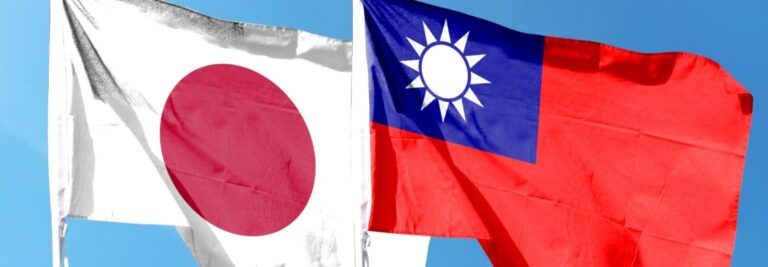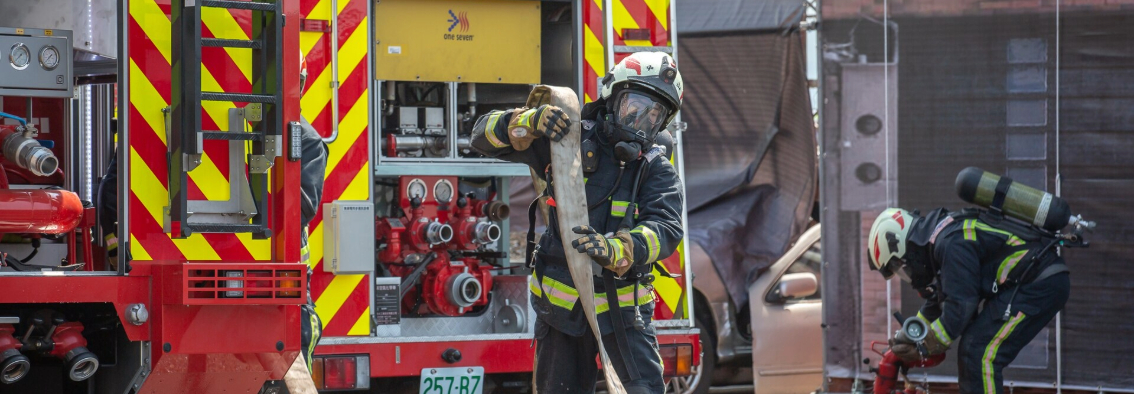

In 2026, Taiwan has demonstrated how it prioritized disaster prevention, management, and preparedness at home and abroad. The “ 2026 Disaster Response and Flood-Season Preparedness (115年救災及汛期整備)” plan, announced by the Ministry of the Interior (內政部, MOI), encouraged cross-agency collaboration, set up projects for emergency supplies and remote communication for isolated areas, and further developed search and rescue capabilities. Additionally, the 2026 Han Kuang exercises in August showcased Taiwan’s increased attention toward a two-level response to disasters: it demonstrated the military’s ability to respond to crises— as well as the capacity of local governments and civilians to adapt—by establishing emergency operations centers, while dealing with a massive slowdown in internet speed.
Most notably, the government hosted its annual “Disaster Prevention Day” (國家防災日) on the anniversary of the 7.7-scale Jiji Earthquake (集集大地震 or 921大地震), a 1999 tragedy that left 2400 deceased, 10,000 injured, and 100,000 homeless. This year, the event featured testing of emergency broadcast systems (including cell phones, television, and radio) and technology, as well as the mobilization of almost 200,000 civilian disaster responders, plus 5000 volunteer first responders, for local training. On that same day, President Lai Ching-Te (賴清德) met with Taiwan’s diplomatic partners, inaugurating the “World Alliance for Disaster Management” (世界災害管理聯盟, WADM). He stated that the WADM is the “first intergovernmental organization spearheaded and established by Taiwan in 55 years.”
These milestones allow Taiwan to strengthen its relations with the US and European Union (EU), and partner with its diplomatic allies, especially those in the Pacific. Thus, Taiwan can strengthen a network of democratic friendly nations, share information and strategies for disaster management, and ensure civilians’ protection in disaster scenarios.

President Lai Ching-Te (center) with representatives from member states of the World Alliance for Disaster Management (WADM) and other governmental observers. (Source: Wikimedia Commons)
Taiwan’s International Cooperation in Disaster Prevention
The United States
The Trump Administration has avoided acting as a world leader in disaster management. In doing so, it has left a vacuum of authority that has been filled by countries such as the People’s Republic of China (PRC). The 2025 Myanmar earthquake is an example, where the PRC was first in providing monetary aid, and on-the-ground personnel assistance–compared to the late, ad-hoc response of remaining US organizations. This was largely attributed to the United States Agency for International Development’s (USAID) virtual extinction, which otherwise would have taken the reins in providing relief from the West.
This trend, however, is contrary to the US’ long history of leadership in the Indo-Pacific. Take, for example, the US’ assistance in the wake of the Boxing Day Tsunami in 2004: the US military provided humanitarian aid, utilizing more than USD 841 million in government funding from USAID, the Department of Agriculture, and the Department of Defense. At the tail end of the Biden Administration, US actors were on call to provide assistance following the 2024 Hualien earthquake. At the grassroots level, donations were directed through fundraising efforts by Taiwanese American civil society organizations.
Public Taiwanese collaboration with the US Federal Emergency Management Agency (FEMA) has been limited to superficial signaling, with the sole instance of in-person activity being the invitation of the National Science and Technology Center for Disaster Reduction (國家災害防救科技中心, NCDR) to the 2018 National Level Exercise International Observer Program. While some of Taiwan’s disaster-focused institutions, such as the Taiwan Community Emergency Response Team (臺灣民間自主緊急應變隊, T-CERT), are based on FEMA initiatives, these counterparts are facing opposite fortunes when it comes to government relevancy in their home countries. The American organization is facing top-down pressure as executive calls continue for states to take up the mantle of local emergency response.
Recently, though, the US and Taiwan’s disaster management partnerships have found a new level, operating with the help of various US state entities. The Taipei Economic and Cultural Office (TECO) in Miami met in March with the Florida Division of Emergency Management to discuss “collaboration on disaster management and resilience initiatives.” Even in the first year of the Trump Administration, Taiwan itself highlighted its outward viewpoint as the US was turning inward: TECO in Houston donated 350,000 USD to relief efforts in the aftermath of the debilitating 2025 Texas floods.
Civil society on both sides are also facilitating funding or garnering support for local and global disaster management initiatives. American NGOs such Spirit of America are helping fund a “mesh network of communications” across the island, and a drone training program to boot. Across the Pacific, The Taiwan-Asia Exchange Foundation (台灣亞洲交流基金會, TAEF) is helping facilitate inter-civil society organization (CSO) dialogue and stronger cross-sector partnerships. The non-governmental aspect should especially be emphasized, noting that the actions of some other countries’ NGOs remain firmly influenced by state desires.
It goes without saying that Washington understands Taipei’s importance to the US from an economic and geopolitical point of view. Nevertheless, a natural disaster might create the same consequences as a foreign attack, thereby putting critical industries and supply chain nodes at risk.
The European Union
Taiwan’s relations with the Europe and the EU in particular rest on the the ideals of common democratic values, and is marked in economic terms by the ties between Taiwan Semiconductor Manufacturing Company (TSMC, 台灣積體電路製造公司) and the European Semiconductor Manufacturing Company (ESMC).
In terms of disaster prevention and civil defense, the European Parliament has recognized Taiwan’s “whole-of-society resilience” initiative in the face of PRC coercion. Additionally, a group of organizations concerned with resilience initiatives—the European Economic and Trade Office in Taiwan (EETO), Forward Alliance (a Taiwanese think tank for civil defense), and Samaritan International (a European-based NGO network)—met in September this year to workshop civilian solutions to disasters in both areas. Lutz Gullner, head of the EETO, called Taiwan “one of the reference points for anything related to natural disasters”, citing their expertise.
Diplomatic Allies in the Pacific
Taiwan’s allies in the Pacific are already suffering from some of the worst effects of climate change. In response, Taiwan has organized international action pathways: along with the US, Taiwan hosted a Global Cooperation and Training Framework (GCTF) workshop “Disaster Management in the Pacific” in New Zealand, bringing about public-private partnerships from a host of Pacific-facing countries. It also highlighted Taiwan’s technical and logistical capabilities in combatting earthquakes, hurricanes, and floods, and its practices and resources that can be shared across the Indo-Pacific.
In Tuvalu, Taiwan worked with the US under the Biden Administration to fund climate response projects. While these initiatives have faded in Trump’s second term, Taiwan can still assume a leading role in organizing similar plurilateral funding projects for its island partners across the Pacific, using its own history and experience of natural disaster recovery as a diplomatic strategy.
Challenges to Taiwan’s Growing Role in Disaster Management
The PRC pressures Taiwan, limiting its international partnerships in all sectors. In the field of disaster management, this manifests in Beijing having long blocked Taiwan’s full membership in the World Health Organization (WHO). It has also used its network of state-funded, controlled, and affiliated media to advocate for its global leadership role, showing off Chinese progress in “global disaster governance” during International Day for Disaster Reduction on October 13. Furthermore, the PRC’s Belt and Road Initiative (BRI, 一帶一路) features the “Belt and Road International Cooperation Mechanism for Disaster Risk Reduction and Emergency Management” (一帶一路自然災害防治與緊急管理國際合作機制,), which aims to increase investment and good governance measures with regards to combating the risk of disasters in affiliated nations.
However, the PRC’s history of humanitarian work has not been consistent, as shown by examples across Asia, and is often tied to its own resource security. China’s disaster help in Southeast Asia has been tinged by conditional questions of South China Sea sovereignty in the case of the Philippines, and for Indonesia, claims of restrained help. China has also failed to fully address domestic disaster relief, such as the cases of flash floods on the Tibet-Nepal border earlier this year. While China did provide emergency supplies and cash assistance to the Nepali government, much more could have been done proactively to mitigate the effects of the disaster, or at least work with authorities to evacuate locals beforehand. Moreover, Beijing concealed the extent of the damage on the Tibetan side.
In this regard, inviting the PRC’s assistance in disaster relief is akin to inviting Beijing to pursue initiatives that prioritize the flow of at-risk goods into Chinese hands. Thus, Taiwan can promote its less conditional and more equitable framework for disaster assistance.
Policy Recommendations
Based on the aforementioned, Taiwan should:
1. Expand the World Alliance for Disaster Management
The Ministry of Foreign Affairs (外交部, MOFA) should seek to expand the number of observers and partners of the WADM beyond the likes of the United States, Japan, Poland, and the Philippines. This momentum should be harnessed to gather support from the free world, and counter the pressure of China’s similar organizations, incentivizing non-interventionist support for countries’ disaster preparation.
2. Strengthen Initiatives of Disaster Prevention and Management with the United States
Taiwan should invite US federal and local representatives to future iterations of Disaster Prevention Day, to exchange insights and lessons learned in this field. Furthermore, while the 2026 Han Kuang exercises officially featured American observers, these were featured mainly in military components. Taiwanese disaster management personnel should play a role in directly inviting American guests and other willing participants to take part in civilian components, too. Having friendly observers thinking about, and even participating in a whole-of-society Taiwanese response—to include managing severed communication lines, rescuing those in isolated areas, or even an evacuation of the president—by experiencing it firsthand is critical experience that can help the US and others respond most effectively in a time of need.
The MOI should seek to work further with FEMA to drum up support, exchange techniques and capabilities, and partner on research initiatives for disaster prevention and management. Organizing collaboration with the National Disaster and Emergency Management University (NDEMU) would help both sides strengthen communication and the ability to move populations before disasters strike. Encouraging a reversal of the Trump Administration’s push to minimize national response funding is key for getting their assistance in case of any Taiwan contingency. In this same vein, funding can be delegated to cooperation through civil society organizations, and to joint training of T-CERT with American equivalents and other interested parties.
This does not mean, though, that Taiwan should ignore US states’ willingness to cooperate. On a subnational level, Taiwan should locate more places to host private and public events—not just in cities with a TECO Office like San Francisco or Seattle, but also in smaller municipalities across the Pacific, Atlantic, and the Gulf of Mexico. A focus should be placed on liaison activities such as those conducted by the TECO Miami office with the Florida government. Workshops with American locales and further local governments across Asia and the Pacific should highlight Taiwan’s disaster response strengths, and encourage these places to exchange best strategies for preparation and real time response.
3. Seek Further Collaboration with the European Union
Given the experience of the EU, Taiwan should seek opportunities for collaboration regarding the use of nuclear power and other energy sources that allow self sufficiency under threatening conditions. It should take advantage of a changing culture around nuclear energy, even if the reasons for this are not expressly from a disaster response point of view. It can also look to co-fund projects within its borders with interested EU partners–expanding the reach of, for example, the National Fire Agency (消防署, NFA), which has sought to expand its assistance into the larger Indo-Pacific region.
Additionally, in light of the European Parliament’s language supporting “contingency planning” for Taiwan, MOFA should seek more detailed agreements with the EU (or even willing individual nations such as the Baltic states). Such agreements could cover a number of functional areas, to include infrastructure reconstruction and food security.
4. Sign MOUs with Pacific Allies
Taiwan should sign memoranda of understanding with Pacific research and development-based partners, collaborating with experts who know of specific islands’ vulnerabilities—thereby strengthening Taiwan’s position in the region amid PRC pressure, and further building connections with its diplomatic allies in the region. It can target both academic groups such as the University of Auckland’s Pacific Climate Research Team, as well independent organizations like the Pacific Resilience Partnership. In the same vein, it should look to monitor and get involved in up-to-now bilateral frameworks for tsunami relief, such as in the case of Hawaii and Samoa’s National Disaster Preparedness Baseline Assessment (NDPBA).
Conclusion
Natural and geopolitical factors compel Taiwan to be ready for disasters. However, Taiwanese people are not isolated from the goodwill of the rest of the world. Given its geography and aforementioned history, Taiwan has the capabilities to become a reliable partner in disaster management around the world. Taiwan should leverage its capabilities and share its expertise, thereby strengthening both its own resilience and its relationships across the democratic world.
The main point: Taiwan should further collaborate with the US and the EU with regards to disaster prevention and management, especially utilizing its mastery of subnational and civil society-based diplomacy, while taking a leadership role in disaster preparation and as a research collaborator amongst its diplomatic partners in the Pacific. This outreach will help skirt the challenges it faces in terms of pressure on the global stage.