


Tuesday, October 20 2026 from 9:30 AM – 10:30 AM (ET)
In-person and Webcast
Event Summary
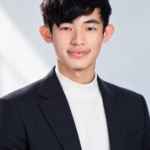
Li-Yi Chen
Li-Yi Chen, Deputy Executive Director of Citizen Congress Watch (公民監督國會聯盟, CCW) in Taiwan, introduced the mission of the organization. Believing that a well-functioning parliament is essential to a well-functioning democracy, the CCW has been evaluating Taiwan’s legislature since 2008. The organization promotes long-term, institutionalized civil participation by organizing and publishing comprehensible data collection on legislators’ performance. The outcome of the congress watch movement has been substantial in improving the participation of oral questioning and leading to legislative reforms. Still, Chen observed a few institutional challenges lying ahead of Taiwan’s government accountability. First, the Legislative Yuan has experienced major budget gridlock. In response, the CCW tracks proposals, procedures, and public records, aiming to produce machine-readable, accessible data. Second, the expansion of legislative power has resulted in vacancy in the Constitutional Court as well as the Control Yuan. The CCW endeavors to protect constitutional checks by monitoring procedures and documenting legislation. Last but not least, the CCW is also advocating for transparency and disclosures of publicly-funded staff and conflicts of interests.
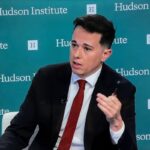
Robert McGuire
Robert McGuire was the second speaker, the VP for Research and Data at Citizens for Responsibility and Ethics in Washington (CREW). He compared Li-Yi Chen’s work in “pushing forward democracy” to his own work in “preventing [American democracy] from being dismantled,” which has historically been bipartisan but has seen much more filing of complaints and violations under President Trump than ever before. This includes ongoing lawsuits, and the tracking of government conflicts of interest and Freedom of Information Act (FOIA) violations under Trump. CREW, he said, also advocates for new policies “to fight the violations we’re seeing.” He explained that while what they investigated was specifically campaign finance related, most of their work now is “monetary conflicts of interest.” They also file criminal investigations. His work in particular also revolves around quantifying the breaking of the laws that their legal teams discover. He discussed Supreme Court inaction, dropping cases after he left office. Generally speaking, CREW is trying to point out all of the taxpayer money that is going into Trump’s properties, as well as his wealthy allies abroad.
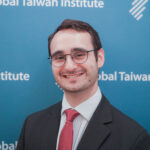
Scott Greytak
Scott Greytak, Deputy Executive Director for Transparency International US, was the third speaker on this panel. He described the primary work of Transparency International to prevent the United States from being used as a safe haven for illicit money laundering. Reform in this area not only requires certain expertise in the international system, but also ensuring that proposals are politically viable and bipartisan in support so that reform might endure changes between administrations. His examples for this approach included the Corporate Transparency Act, Foreign Extortion Prevention Act, and opposition to the lack of guardrails in the CLARITY Act.
While Scott admits that there have been a few setbacks concerning implementation of corruption reform broadly (due in large part to political polarization), he remains optimistic that meaningful progress can be made, has been made, and will continue to benefit all of the businesses, legal, and political institutions it touches.
Daryl Lobban
Daryl Lobban, Senior Vice President for Common Cause, was the fourth speaker on this panel. He focused primarily on anti-corruption reform from a bottom-up approach. Measurement, disclosure, and law are, while necessary instruments, useless without an actor to wield them. In this situation he believes citizens are the primary wielders. Interestingly, he places some fault on an inactive citizenry for allowing appointed leaders to: 1) Believe that they can abuse power; and 2) Abuse their power without repercussions. He describes the work of Common Cause as litigating what is unlawful, informing the public of abuses of power, and nurturing organic, grassroots mobilization. Daryl stresses that credibility is built upon standards that are clear and applied consistently amongst all who practice politics.
He draws parallels in the work done between Common Cause and CCW to keep citizens informed and active. He warns that institutions, organizations, and citizens that ignore stating where they stand on corruption will invite authoritarianism infringing upon democracy.
This event was supported by a grant from the Taiwan Foundation for Democracy.
Event Details
Date: Tuesday, October 20, 2026
Time: 11:15 AM – 12:30 PM (ET) (Doors open at 11:00 AM)
Location: Global Taiwan Institute
1836 Jefferson Pl NW, Washington, DC 20036
RSVP is only required for in-person attendance. The event will also be livestreamed on GTI’s Youtube channel for virtual participants.
Doors will open at 11:00 AM, and the event will begin at 11:15 AM. If you plan on attending in-person, please RSVP by October 16, as seating is limited.
Media Inquiries
Members of the media planning to attend with additional crew or equipment should contact Ben Levine, Programs Coordinator, at blevine@globaltaiwan.org to ensure proper accommodation.
About GTI
The Global Taiwan Institute is a 501(c)(3) think tank dedicated to deepening understanding of Taiwan, and strengthening US-Taiwan relations through research, policy outreach, and public engagement.