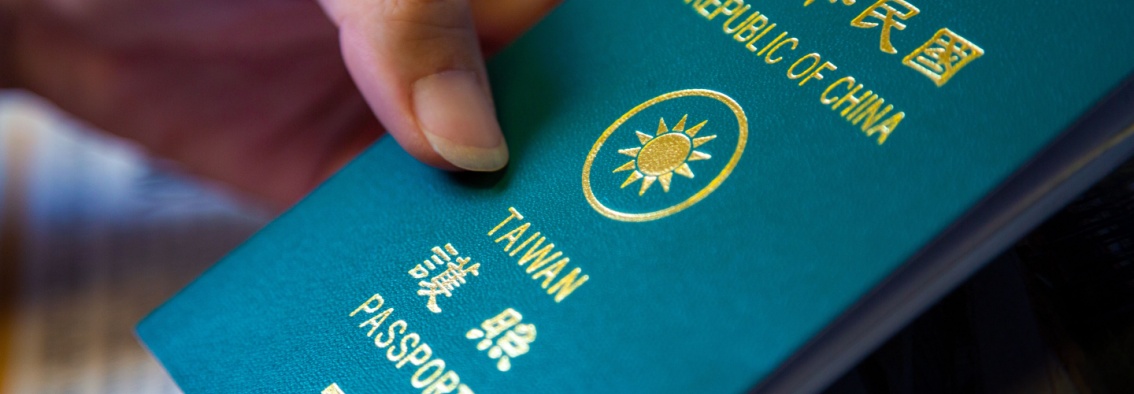

In 2025, several cases involving the revocation of residence rights held by Chinese immigrants drew public attention in Taiwan. Against the backdrop of escalating geopolitical tensions and concerns over potential annexation by the People’s Republic of China (PRC), immigrants from the PRC—who are mostly the spouses of Taiwan citizens—have come under increased scrutiny from both the Taiwanese general public and the government. In April 2025, Taiwanese authorities required Chinese immigrants to prove that they had relinquished their household registration in China.
In Taiwan, household registration functions as a core infrastructure of citizenship, which links individuals to fundamental rights—including access to political rights such as voting. While most foreign nationals are required to renounce their nationality in order to naturalize in Taiwan, Chinese immigrants are instead asked to relinquish their household registration in the PRC. This raises important questions about Taiwan’s contested sovereignty and citizenship regime: What does the household registration requirement signify in legal terms? And more broadly, how does Taiwan’s citizenship system position Chinese immigrants within its legal framework?
Historical Framework of the Legal Status of Chinese People in Taiwan
The legal standing of Chinese immigrants in Taiwan is reflective of how Taiwan’s legal system has adapted to its contested political status. These issues are rooted in the historical foundations of Taiwan’s legal and constitutional order. Following its defeat in the Chinese Civil War, the ROC government retreated to Taiwan after 1949. Taiwan, which was under Japanese colonial rule until 1945 and subsequently experienced unresolved sovereignty transitions under international law, entered a prolonged period of martial law under the ROC regime that lasted until 1987. Although Taiwan underwent incremental democratization from the late 1980s onwards, this transition did not involve the adoption of a new constitution. Instead, amendments were introduced to the ROC Constitution (中華民國憲法), redefining the concept of sovereign people under the constitution.
Through these amendments, full citizenship rights—including voting rights—were effectively limited to individuals holding household registration in Taiwan. This shift has been interpreted as a transformation of the ROC’s sovereign subject from “Chinese people” to “Taiwanese people.” Nevertheless, under the ROC constitution, individuals living on the “Mainland Area”—that is, persons from the PRC—are still considered “nationals” of the ROC. As a result, a structural gap emerged between the category of “nationals” under the constitutional framework, and “citizens” who enjoy full political rights.
Categorization of Chinese People under Taiwanese Law
Under the constitution, Chinese people are categorized as “People of the Mainland Area,” a status distinct from “People of the Taiwan Area (Free Area).” Their entry, residence, and legal rights in Taiwan are governed by special legislation rather than by general nationality or immigration law.
The primary statute regulating this status is the Act Governing Relations between the People of the Taiwan Area and the Mainland Area (臺灣地區與大陸地區人民關係條例). Article 1 states that the law governs relations between people of the Taiwan Area and the Mainland Area for reasons of national security and public welfare, under the statutory framework governing cross-strait relations during the period officially described as “prior to national unification.” Instead of explicitly denying Chinese people the status of ROC nationals, the Act substantially restricts their access to citizenship rights by subjecting them to immigration-style controls over entry, residence, and settlement.
This ambiguity is further reflected in the Immigration Act (入出國及移民法), which classifies individuals into several categories:
(1) Nationals with household registration in Taiwan;
(2) Nationals without household registration;
(3) Foreigners; and
(4) People of the Mainland Area, as well as Hong Kong and Macau residents.
While the Immigration Act primarily regulates the first three categories, certain provisions applicable to nationals without household registration or to foreigners may apply mutatis mutandis to “People of the Mainland Area and Hong Kong and Macau residents.” Under the Immigration Act, “nationals without household registration” are individuals who possess ROC nationality by descent, but have not been incorporated into Taiwan’s household registration system and therefore do not enjoy full citizenship rights. This category mainly covers people born abroad or in cross-Strait exceptional circumstances (children born in the Mainland Area to Taiwanese parents who neither hold household registration in China nor possess a PRC passport). This legal categorization is distinct from “people of the Mainland Area or Hong Kong and Macau residents,” thereby reinforcing the latter’s ambiguous legal position.
Judicial and Administrative Inconsistencies
Ambiguity surrounding the legal status of Chinese people in Taiwan has resulted in inconsistent interpretations between administrative authorities and the courts. A 2023 state compensation case decision illustrates this tension. In 2018, a Chinese tourist was electrocuted by a malfunctioning streetlight while cycling in Kaohsiung. His family filed a state compensation claim. The Taiwan High Court Kaohsiung Branch (臺灣高等法院高雄分院) ruled that “people of the Mainland Area” should be regarded as ROC nationals for the purpose of state compensation, relying on the Act Governing Relations between the People of the Taiwan Area and the Mainland Area, as well as a 1993 Ministry of Justice(法務部) administrative interpretation stating that Chinese individuals should be considered ROC nationals.
The ruling triggered public controversy and prompted several administrative bodies to clarify that people of the PRC are not citizens of Taiwan. The Kaohsiung City Government later reached a settlement with the family, and the case was withdrawn from the Supreme Court (最高法院). Subsequently, the Executive Yuan (行政院)issued an administrative interpretation stating that “people of the Mainland Area” should not be considered ROC nationals and that earlier interpretations should no longer apply.
While recent administrative practice increasingly treats them as foreign immigrants, Taiwanese law neither fully recognizes Chinese people as foreign nationals nor accords them citizenship. Instead, it places them in an exceptional category shaped by unresolved sovereignty, constitutional continuity, and political contingency. While this ambiguity enables policy flexibility, it also exposes individuals to shifting interpretations and legal uncertainty.
Recent History of Legal Ambiguity
The positioning of Chinese people as neither full foreigners nor citizens produces a form of institutionalized ambiguity within Taiwan’s citizenship regime. Changes in Taiwan’s political leadership may alter policies affecting this group. For decades, Chinese marriage migrants faced stricter requirements than marriage migrants from other countries, including longer residence periods before eligibility for household registration. Following the 2008 presidential election and a change in governing party, the Ma Ying-jeou (馬英九) Administration relaxed several restrictions: facilitating Chinese tourism, Chinese student mobility, and shortening the residence period before household registration eligibility for marriage migrants from eight years to six.
More recently, heightened cross-Strait geopolitical tensions have led to renewed scrutiny of Chinese immigrants, including requirements to prove the relinquishment of household registration in China. Such policies carry significant implications for an immigrant’s family life, legal identity, self-identification, and sense of belonging. Rather than resulting from constitutional amendment, these shifts occur through changes in administrative regulation and enforcement practices within the existing legal framework. This regulatory ambiguity enables selective enforcement and allows the state to recalibrate its governance approach without formal constitutional and legal change, shifting the burden of geopolitical conflict onto individual migrants.
Comparative Perspective: Transitional Citizenship Beyond Taiwan
Taiwan is not unique in confronting contested and layered citizenship arrangements following regime change or transformations of sovereignty. Comparable challenges have arisen in transitional regimes, such as in post-conflict and post-Cold War contexts, where states have sought to redefine political membership under conditions of geopolitical tension.
In some cases, these transitions led to entire categories of stateless persons. For example, Ethiopia denationalized ethnic Eritreans in 1998 following armed conflict with Eritrea, rendering many long-term residents stateless. In Estonia, after the dissolution of the Soviet Union and the restoration of independence, citizenship laws required residents to demonstrate pre-World War Two Estonian lineage. As a result, many Soviet-era migrants were excluded from citizenship and became persons with undetermined citizenship, leading to statelessness. Although Estonia amended its Citizenship Act in 2015 and the number of stateless persons has since declined, persons with undetermined citizenship continue to face long-term legal insecurity and restricted political rights.
Latvia took a similar approach by creating the legal category of “non-citizens” for Soviet-era migrants. The Latvian government has justified this framework as part of restoring sovereignty after a period of occupation between 1940 and 1991, arguing that its continuity of statehood was legally preserved. This temporary status was granted to persons who had immigrated during Soviet rule and lost USSR citizenship upon its dissolution. However, the non-citizen category has been criticized for producing durable rights deficits, particularly in political participation and access to certain forms of employment. Nonetheless, “non-citizen” status has become a normality of many Soviet-era immigrants.
In addition to its non-citizen population, Latvia was also home to individuals who, despite being long-term residents, were not eligible for non-citizen status and were subject to expulsion. A case before the European Court of Human Rights, Slivenko v. Latvia (2003), examined the legality of expelling long-term residents following a regime change. The case concerned the removal of applicants with familial associations to the former Soviet military, whom the Latvian authorities considered ineligible for residence after independence. In its assessment under Article 8 of the European Convention on Human Rights, the Court accepted that Latvia was entitled to pursue legitimate aims relating to national security and public order. However, it found that the applicants’ expulsion was not “necessary in a democratic society,” given the absence of any concrete or individualized security threat. The Court emphasized that blanket removal measures based on group affiliation or historical association failed to meet the proportionality requirement, and that expulsion decisions affecting long-term residents with established private and family life should be grounded in individualized assessments. The Court ordered Latvia to pay each applicant €10,000 as compensation for non-pecuniary damage.
Although arising in a distinct legal and political context, Slivenko underscores a broader principle relevant to transitional citizenship regimes: appeals to sovereignty and security cannot dispense with the obligation to assess the lived ties, legal expectations, and individual circumstances of those affected.
Although the contexts of Taiwan and Latvia differ substantially, the Latvian experience offers relevant considerations for understanding shifts in citizenship regimes under conditions of political transition. Latvia’s sovereignty is internationally-recognized and its independence marked a formal rupture from Soviet rule, whereas Taiwan’s international status remains unsettled. Moreover, Latvia’s non-citizens were largely long-term residents without alternative nationality, whereas modern Chinese immigrants to Taiwan are citizens of the PRC and have not resided in Taiwan long-term before migration. Nonetheless, these comparisons are instructive. Slivenko illustrates how sovereignty-based measures affecting long-term residents should remain subject to proportionality and individualized assessments—principles that are equally relevant when evaluating policies affecting Chinese immigrants in Taiwan.
These comparative experiences suggest that transitional citizenship regimes often coincide with historic changes in political sovereignty. However, when temporary or exceptional legal statuses remain in effect over time, they risk becoming an institutionalized form of exclusion.
Conclusion
Taiwan’s citizenship system places Chinese people in a legally-exceptional position that is neither fully foreign nor fully domestic. Rooted in constitutional continuity and unresolved sovereignty, this ambiguity has enabled flexible cross-Strait governance, but at the cost of legal certainty and coherent interpretations of individual rights. Recent requirements for Chinese immigrants to prove their relinquishment of household registration in China illustrate how geopolitical tensions are translated into administrative measures.
Judicial and administrative responses to the 2023 state compensation case further expose the instability of this framework, with shifting interpretations producing unpredictable legal outcomes for affected individuals. Comparative experiences from other transitional citizenship regimes such as Latvia suggest that prolonged reliance on exceptional legal categories risks entrenching exclusion and long-term legal uncertainty. As Taiwan continues to navigate its contested status, clearer legal standards and careful attention to proportionality and individual circumstances are essential to preventing citizenship governance from becoming a vehicle through which geopolitical conflict is deflected onto individuals.
The main point: Taiwan’s current approach to categorizing Chinese immigrants relies on legal ambiguity that enables policy flexibility but produces instability, inconsistent enforcement, and heightened uncertainty for individuals. Such a citizenship regime demonstrates the inherent tension between national security objectives and the protection of individual rights in the context of contested sovereignty.