
Drones are increasingly central to modern warfare—a fact illustrated by the widespread use of such weapons in Russia’s ongoing invasion of Ukraine. In order to modernize its military and counter growing Chinese aggression, Taiwan is aiming to become a drone manufacturing powerhouse. However, unlike previous indigenous defense production projects, Taiwan’s Ministry of National Defense (MND, 國防部) is relying more on the private sector than state-owned enterprises (SOE). While this effort is largely succeeding at its early stages, material costs and stymied international cooperation pose challenges to industrial growth.
Drones in Modern Warfare
As the war in Ukraine has demonstrated, drones are highly-effective weapons platforms that can cause disproportionate damage to a much larger enemy force. Within two years of Russia’s invasion into Ukraine, the Ukrainian military destroyed approximately one-third of Russia’s Black Sea fleet, primarily with its own indigenous sea drones (USVs). As drones have become more prevalent in the war, Ukraine’s yearly domestic drone output has increased from approximately 5,000 units in 2022, to over 4.3 million units in 2025.
Ukraine is not alone. Indeed, global interest in military drones has grown exponentially since Russia’s invasion of Ukraine. By 2033, the global military UAV market is projected to more than double.
Taiwan’s UAV Initiative
Taipei has taken note of Ukraine’s example and aims to rapidly build up its drone arsenal in the face of a similar existential threat from China. To do this, the Taiwanese government has established a three-tiered unmanned aerial vehicle (UAV) procurement strategy: purchasing larger military drones from the United States; developing mid-size military drones built by SOEs like the National Chung Shan Institute of Science and Technology (NCSIST, 國家中山科學研究院); and obtaining small dual-use drones from Taiwan’s domestic private sector. While Taiwan has certainly made significant purchases from the United States and ramped up SOE drone production, it has seen greater success in dual-use drone production.
Unlike defense-specific military drones, dual-use UAVs are designed for both civilian and military purposes, yielding manufacturers a larger customer base and greater demand when compared to military UAVs alone. This higher demand allows manufacturers to rapidly scale up production. To help build up the country’s dual-use drone industry, Taipei has implemented several policy initiatives.
Following Russia’s invasion of Ukraine, the Taiwanese government, under President Tsai Ing-wen (蔡英文), rapidly launched the “Drone National Team” (無人機國家隊), an initiative to scale up Taiwan’s commercial drone manufacturing capability. As part of this initiative, the Tsai Administration opened a UAV development and production center in Chiayi and created a special budget of NTD 50 billion (USD 1.5 billion) to procure indigenous drones and subsidize half of private drone companies’ research and development (R&D) costs.
In 2024, President Lai Ching-te (賴清德) expanded this program with the goal to make a Chinese component-free drone industry, capable of producing 180,000 drone units a year by 2028. The administration seeks to achieve this goal through several initiatives ranging from investing directly in domestic industry to providing frameworks for coproduction with partner nations.
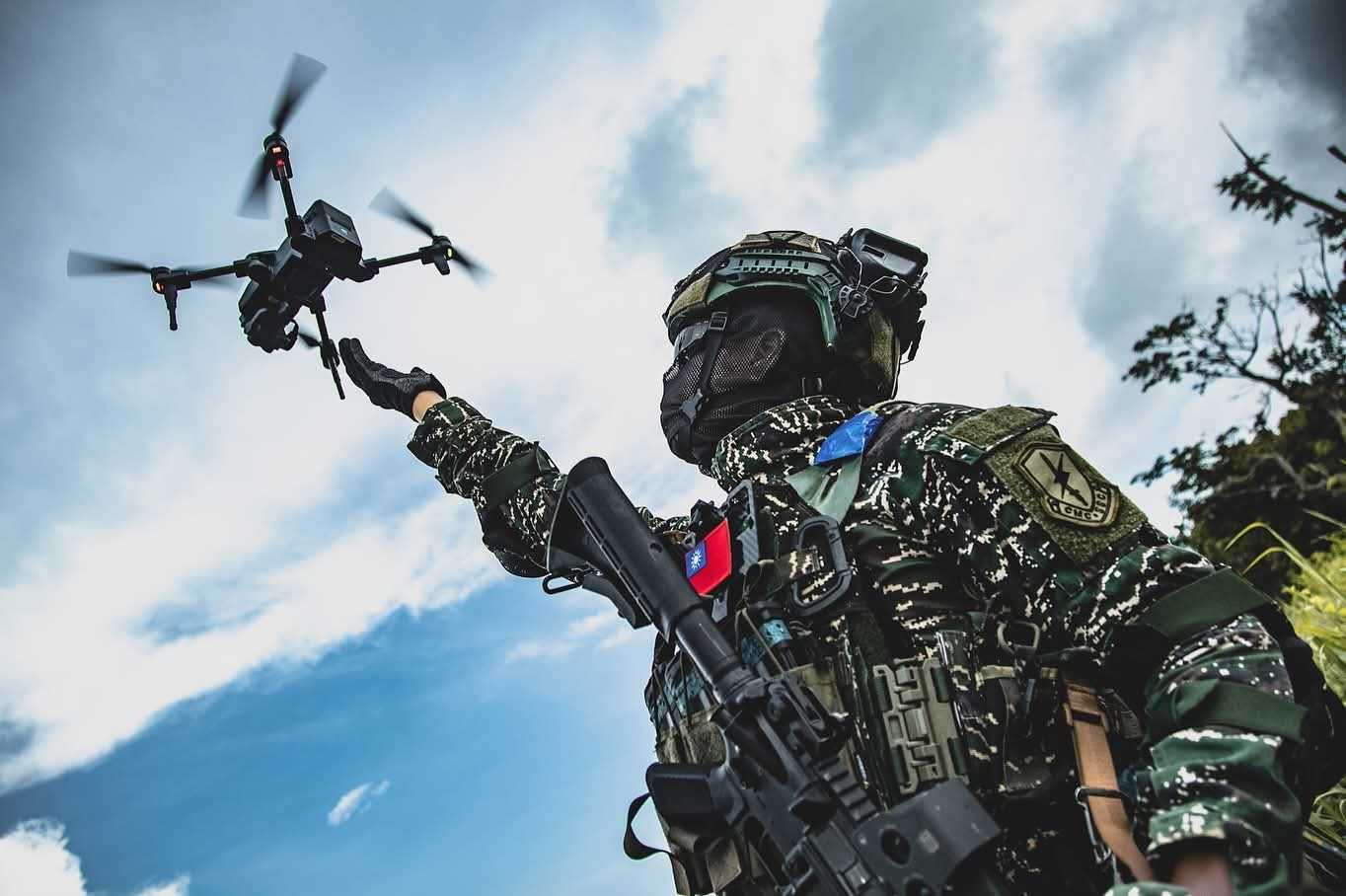
Image: An ROC Servicemember launches a hand-held drone. (Image source: Taiwan Military News Agency)
TEDIBOA
In September 2024, Taiwan’s Ministry of Economic Affairs (MOEA, 經濟部), under its SOE Aerospace Industrial Development Corporation (AIDC, 漢翔航空工業股份有限公司), established the Taiwan Excellence Drone Industry Business Opportunities Alliance (TEDIBOA, 台灣卓越無人機海外商機聯盟)—an alliance between the government and domestic drone companies that facilitates private sector collaboration with MND goals.TEDIBOA oversees and coordinates with a group of over 200 Taiwanese companies that specialize in different aspects of UAV supply chains. These include everything from component manufacturers to drone producers.
With the AIDC at its head, TEDIBOA aims to connect Taiwanese drone and component manufacturers with foreign customers and governments to increase demand, reinforce a China-free or “non-red” supply chain, and further integrate Taiwan into partner and allied countries’ defense industrial bases.The TEDIBOA framework also promotes innovation by creating a platform for domestic manufacturers—including small and medium enterprises—to collaborate and share knowledge and technology.
MOEA Investment
In January 2025, the MOEA announced an NTD 348 million (USD 11.05 million) investment plan for drone chip R&D. As part of this, the MOEA allocated a USD 3.4 million budget to support domestically-produced AI image chip modules, low-cost flight control boards, and other advanced drone chip R&D—a move that takes a significant financial burden off of startup UAV manufacturers.
Executive Yuan Investment Plan
On October 16, the Executive Yuan (EY, 行政院) approved an MOEA-proposed plan to spend NTD 44.2 billion (USD 1.43 billion) through the year 2030 to increase market demand, spur innovation, and expand the domestic drone industry. In addition to direct drone orders, this investment plan largely focuses on improving indigenous drone chip production and software development by involving research institutions and spurring industry cooperation, combined with international technology transfers.
As part of this plan, the Taiwanese government has already secured memoranda of understanding with eight countries including the United States, Poland, the Czech Republic, and Japan to gain access to advanced UAV technology. These agreements provide the bases for future coproduction initiatives with foreign firms—something Taiwanese companies have long struggled to achieve.
MOFA Drone Diplomacy Task Force Initiative
To further promote Taiwan’s ambitious drone production goals, the Ministry of Foreign Affairs (MOFA, 國際部) announced in October 2025 that it would initiate a two-phased “drone diplomacy task force” (無人機外交工作小組). The taskforce has the mission of seeking foreign government customers for Taiwan’s drones.Under the program’s first phase, MOFA will donate drone platforms to its diplomatic allies for civilian purposes, including logistics, infrastructure, coastal protection, healthcare, disaster response and prevention, and agriculture. These efforts aim to increase Taiwan’s foreign government customer base and boost its reputation.
After Taiwan’s drone industry has achieved international recognition, MOFA intends to sell the nation’s drones under phase two of the program. In particular, MOFA has targeted drone sales to the European countries most threatened by Russian aggression.
Taiwanese Government Investment in Domestic Drone Production
In addition to these initiatives, the Lai Administration seeks to increase indigenous drone output by directing the MND and other government agencies to make direct purchases from domestic manufacturers that meet MND “non-red” standards (i.e. products that do not involve any parts made in the PRC). Up until last year, indigenous drone purchases by the government were practically non-existent, with the MND only purchasing about 3,400 units in 2023. Since the beginning of 2025, however, the Lai Administration has made two major domestic drone purchases, in July and October 2025, totaling more than 100,000 UAVs that are due to be delivered by 2027.
July 2025 Procurement Plan
On July 23, 2025, the MND announced a NTD 50 billion (USD 1.68 billion) order for nearly 50,000 military drones from domestic private industry over a two-year delivery timeframe. The order, which totals 48,750 units, will see 11,270 units delivered in 2026 and 37,480 units delivered in 2027. The order includes five different kinds of UAVs ranging from multi-rotor vertical take-off and landing (VTOL) drones to fixed-wing variants. While the MND has not yet awarded the contracts, major Taiwanese drone companies like Thunder Tiger, Coretronic, and Aerospace Industrial Development Corporation (AIDC) are likely to be major contenders.
October 2025 Budget Rollout
As part of the EY’s October 16 special budget rollout, Taipei announced orders for over 50,000 additional domestically-produced dual-use drones. The additional UAVs, which the Executive Yuan primarily intends for use by civil government agencies, will include surveillance drones for maintaining energy and transportation capabilities. Such assets will complement the MND’s order and help Taiwan maintain critical civilian infrastructure in a contingency scenario.
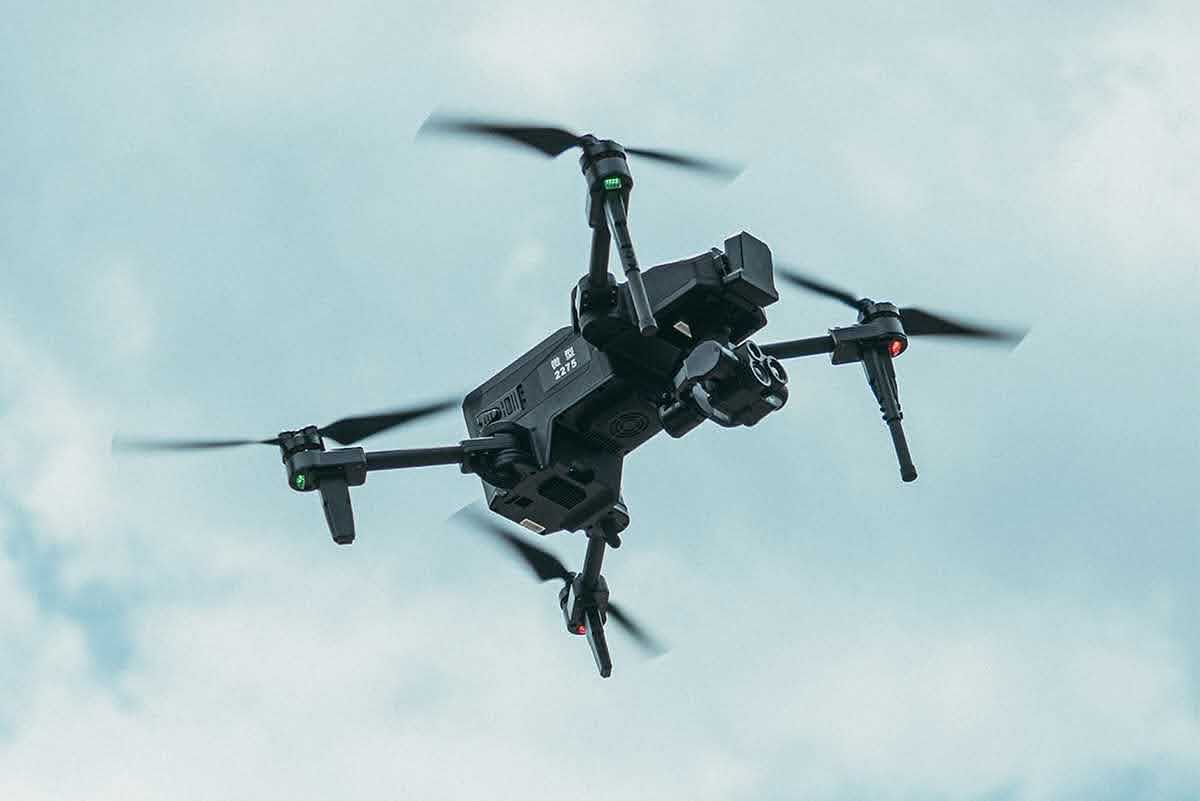
Image: A Taiwanese military drone in operation. (Image source: Taiwan Military News Agency)
International Markets
While the government is the domestic drone industry’s largest consumer, Taiwan cannot achieve its UAV production goals through government contracts alone. To reach its goal of increasing production capacity to 180,000 units a year, the Lai Administration is working to encourage and facilitate the export of drones to foreign markets.
China, under its SOE Da-Jiang Innovations (DJI, 大疆创新), currently sells UAVs at prices between 50 and 75 percent cheaper than comparable US-made drones. Because of this, China dominates the drone market, with about 90 percent of the global market share. This oversaturation has led many Western militaries, such as that of Ukraine, to grow reliant on PRC-made variants.
However, Chinese drones pose significant security and privacy risks, encouraging many Western countries to look elsewhere. Taiwan, whose growing UAV industry offers one of the world’s only true China-free supply chains, sells its drones at prices only 25 percent more than Chinese-made ones.
Taiwan’s industry is growing to meet new demand. According to the Research Institute for Democracy, Society and Emerging Technology (DSET, 科技、民主與社會研究中心), Taiwan exported approximately 26,000 drones between January and July 2025—a 749 percent increase from 2024. Europe made up the vast majority of Taiwan’s exports—with Poland, which borders Ukraine, making up about two-thirds of the total export volume.
Coproduction
The Taiwanese government is also seeking to increase UAV production through facilitating and encouraging coproduction agreements between Taiwanese drone companies and foreign counterparts from countries like the United States. Doing so not only increases Taiwanese companies’ market opportunities, but also helps firms address supply chain vulnerabilities.While Taiwan can mass-produce advanced chips and many dual-use components necessary for drone production, there are still parts that it cannot source on its own. These parts can be provided by partners from like-minded countries. Likewise, Taiwan’s China-free supply chains, and its ability to mass-produce components largely dominated by Chinese manufacturing, makes coproduction a win-win scenario.
Moreover, because the Taiwanese UAV industry is new to the scene, it lacks much of the field-tested tactical knowhow possessed by many well-established foreign companies. Coproduction can help Taiwanese firms develop these skills.Indeed, some Taiwanese companies have begun to strike coproduction deals with US companies—many of which involve NCSIST and US defense contractors like AeroVironment, Anduril, and Auterion. However, a growing number of Taiwanese private companies are finding success as well, exemplified by Thunder Tiger’s prominent co-production agreement with Virginia-based UAV firm RapidFlight.
Successes and Continued Challenges
Taipei’s efforts to grow its country’s drone output are paying off. Between June 2024 and June 2025, Taiwanese producers manufactured approximately 10,000 UAV units. By September, exports alone grew to about 50,000. While Taiwan’s UAV industry is growing exponentially, material costs and limited international cooperation continue to pose challenges.
Material Costs
Maintaining a non-red supply chain is not cheap. While Taiwan mass-produces many advanced dual-use components necessary to UAV supply chains, China—due to its ability to steeply undercut competitor’s pricing—has long dominated global markets for many raw materials necessary for weapons and technology.
For decades, the Chinese Communist Party (CCP, 中國共產黨) has heavily subsidized SOEs in strategic industries in order to oversaturate the global market with cheap Chinese products and run most competition out of business. Two prominent examples include steel and rare earth metals, in which China controls over 50 percent and 80 percent of the global market respectively. The Chinese SOE China Baowu Group (中国宝武钢铁集团有限公司) produces steel 76 percent more cheaply than its US competition and ten percent more cheaply than its closest competitor in India. Likewise, Chinese rare earths are 50 percent less pricey than the second cheapest option in the United States.
Limited International Cooperation
While Taiwan is making progress towards coproduction agreements with some companies in partner countries, PRC espionage risks pose a major hurdle in securing these agreements. PRC espionage cases in Taiwan have significantly increased over the past few years, making it more dangerous for foreign companies to share trade secrets with the island’s drone manufacturers. So far, only Thunder Tiger has been able to achieve the US Department of Defense’s Defense Innovation Unit (DIU) Blue UAS certification—assigned to products secure enough for US government use.
Technology espionage is a major issue in Taiwan; lax punishments for spying on behalf of the PRC government contribute to ongoing leaks and undermine industrial security. While the Lai Administration has stepped up prosecutions and worked to increase penalties for espionage, prison sentences for guilty parties are still comparatively short compared to those of partner countries like the United States. In September of last year, four former Democratic Progressive Party (DPP, 民進黨) employees, including a former aide to President Lai, were convicted of spying for the CCP, but the longest prison sentence of the four was only ten years. By comparison, similar cases in the United States often lead to decades-long sentences.
Policy Recommendations
- Implement Longer-Term Procurement Agreements – To address the high overhead costs of maintaining a China-free supply chain, the Taiwanese government must continue to make major drone purchases to increase demand. While the two major government purchases are critical, more procurement agreements that extend beyond 2028 will provide producers with a greater sustained demand signal, motivating Taiwanese drone manufacturers to invest more.
- Invest in Overseas Non-Red Supply Chains – To help lower critical material costs, the Taiwanese government may consider investing in rare earth extraction and refinement startups in partner countries like the United States. Not only could this lower the cost of non-Chinese rare earths over time, but it could further improve relations with the US government by aligning more with the Trump Administration’s America First agenda.
- Raise Penalties for Espionage and Improve Vetting – If Taipei hopes to assuage prospective coproducers, it will need to drastically increase penalties for intellectual theft and espionage to mirror those of the United States. Besides increasing prison sentences, the Taiwanese government should consider revamping its security clearance adjudication standards. As it stands now, security clearance regulations are not standardized across government agencies, leading to major security gaps—a problem that has facilitated leaks of classified information.
The main point: As drone technology is gaining more prominence in warfare, Taiwan is working to meet the demands of the modern battlefield by ramping up its indigenous drone industry. While it is still making use of US foreign military sales and Taiwanese state-owned defense companies, Taipei is for the first time largely relying on the civilian drone market to achieve its defense readiness goals. However, the Lai Administration must still address high material costs and better incentivize international cooperation by continuing government investment and further cracking down on technology espionage.