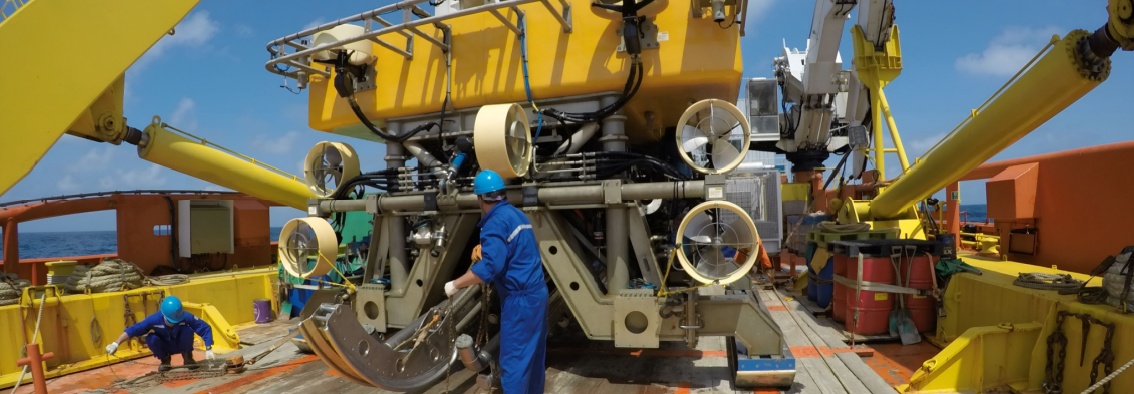

In 2025, as reported in a Nikkei Asia investigation, Taiwan experienced an unprecedented surge in subsea cable disruptions. These incidents were widely attributed to People’s Republic of China (PRC, 中华人民共和国) gray zone tactics, designed to test the island’s maritime security and connectivity resilience. Indeed, over the past five years, most cable incidents around Taiwan have been caused by human activity, often involving vessels carrying flags of convenience from other countries. As these disruptions transition from isolated events into a persistent campaign of coercion, Taiwan’s ability to secure its future depends on building a resilient system that ensures its connection to the world—while simultaneously maintaining the fundamental right to information.
In March 2026, former Taiwanese legislator Jason Hsu testified before the US-China Economic and Security Review Commission, warning that Taiwan’s connectivity is surgically vulnerable. Cutting just three primary subsea cable clusters could effectively sever 99 percent of Taiwan’s external bandwidth. While the recent deployment of Low Earth Orbit (LEO) satellite services such as the partnership between Chunghwa Telecom (中華電信) and Eutelsat OneWeb can offer a vital fallback option, it remains a narrow pipe for bandwidth.
Amid this intensifying threat, Taiwanese policymakers argue—for the sake of national security—that the governance, decision-making, implementation processes and the redundancy planning of critical infrastructure should remain “invisible” to the public. However, in the era of hybrid warfare, invisibility does not guarantee protection. Instead, it may become a source of vulnerability. In this regard, only through transparency, accountability, and substantive participation of civil society can Taiwan demonstrate its most formidable resilience to PRC coercion.
The Psychological Battlefield
The goal of the PRC targeting Taiwan’s subsea cables has been to isolate the island from the inside out. Blocking information flows creates a devastating rupture in trust, both among citizens who lose access to reliable information and between the public and institutions that fail to explain what is happening. Yet, in recent policy fora, senior Taiwanese experts have argued that the government’s priority should be to “pacify society” rather than simply “disclose information.” Stakeholders even suggested that the public’s right to know should be curtailed in the name of national security to prevent exposing weaknesses. However, international human rights law holds that national security justifications should not be used to restrict access to information that serves the public interest.
While this national security logic may seem rational at first glance, it inadvertently achieves the PRC’s objectives. Cutting subsea cables is designed to instill fear by blocking access to information, which affects an open society’s ability to disclose more information. When governments fail to provide genuine explanations to citizens during internet slowdowns or outages, suspicion quickly spreads and disinformation may thrive in an information vacuum. Citizens may ask: “Is the government incompetent?” “Is this an enemy attack?” “Has Taiwan been abandoned by the world?” The panic and uncertainty bred by opacity constitute one of the principal objectives Taiwan’s adversaries seek to achieve.
Recognizing the severity of these gray-zone threats, Taiwan attempted a legislative solution in early 2026. The implementation of a series of amendments, including revisions to the Telecommunications Management Act (電信管理法) and the Law of Ships (船舶法), has significantly stiffened penalties for intentional cable damage, with offenders now facing up to seven years in prison and fines of up to NTD 10 million (approximately USD 300,000). Crucially, these reforms mandate that all vessels operating within Taiwan’s territorial sea, as well as vessels prohibited from operating in restricted waters under Taiwan’s jurisdiction, must keep their Automatic Identification Systems (AIS) switched on at all times. As a navigational tracking system, AIS transmits a vessel’s identity, location, and direction in real time. Its mandatory activation is particularly significant given that vessels suspected of involvement in gray-zone operations around Taiwan have been repeatedly documented as disabling their AIS transponders to conceal their movements and avoid accountability. While these amendments provide the government with more robust tools for maritime attribution, they do not address the need for timely and systematic information-sharing with the public when connectivity disruptions occur.
Transparency as Defense
Ukraine’s wartime experience offers a starkly different lesson. When Russia devastated Ukraine’s power grid in the winter of 2022, its energy company did not choose concealment. Instead, it adopted a strategy of radical transparency, providing daily updates on damage details and precise power rationing schedules. This transparency did not lead to collapse. Rather, it allowed the public to reorganize their lives with predictability and transformed potential anger into collective support for the repair crews.
Taiwan’s vibrant civic tech community has demonstrated a similar form of resilience, grounded in transparency with bottom-up initiatives. One example is the g0v community, a decentralized network of civic tech activists dedicated to solving social issues with open-source transparency. They have initiated rounds of hackathon-style meetings to map consequences of systemic internet disruptions and potential civil society responses. Other civil society members launched projects such as the “Taiwan Submarine Cable Real-time Map,” which successfully compelled government agencies to publicly disclose the latest status of cable disruptions and create public awareness regarding the danger of subsea cable disruptions.
These initiatives prove that civil society can play an active role in defense that increases public awareness and seeks solutions. The government should embrace this momentum by proactively incorporating civil society actors. While the surge in cable disruptions was aimed at exposing Taiwan’s fragility, institutionalized transparency and a resilient approach could provide a new, feasible global norm for critical infrastructure protection.
Beyond the Black Box of Bandwidth
However, Taiwan’s current approach to resource allocation remains worrying. Frequent cable damage has forced Taiwan to actively turn to LEO satellites as a backup system to keep Taiwan connected. Nevertheless, LEO satellites can provide only a fraction of the bandwidth of subsea cables. Therefore, how—and for whom—this limited resource is prioritized during a crisis is critical. As of now, there is no publicly available information on these protocols, though it appears that connectivity will be restricted primarily to the defense sector and core national security functions.
However, Taiwan’s designation of bandwidth in a national crisis cannot be shielded from oversight simply in the name of “national security.” Taiwan urgently needs a more transparent and inclusive model that addresses the challenges at different levels.
First, transparency stabilizes trust within society. Providing open data on latency and cable damage directly counters the psychological attacks that adversaries use to destabilize a society. When people understand the “why” and “how long,” they can adapt rather than react with fear. While transparency cannot physically repair a severed cable, it is the only mechanism that prevents a technical failure from escalating into a total breakdown of trust. One possible approach is to further utilize the Whole-of-Society Defense Resilience Committee (全社會防衛韌性委員會) under the Office of the President. The committee should expand its focus from technical redundancies towards an institutional mechanism that can provide transparency and include broader civil society experts.
Second, transparency turns security into a collective effort. The government can work alongside civic tech experts, civil society, and service providers to identify which of Taiwan’s critical services—spanning daily livelihood, economic activity, and social functions—would be compromised in a total cable severance scenario, and to what extent. This collaborative approach ensures that bandwidth allocation planning is more resilient than a top-down, military-only strategy.
Third, openness fulfills Taiwan’s commitment to international human rights law. This also upholds the right to seek and receive information, as protected under Article 19 of the International Covenant on Civil and Political Rights, the right to seek, receive, and impart information and ideas of all kinds.
Hybrid warfare specifically targets social cohesion. Replacing the outdated “invisible infrastructure” mindset with a radical transparency framework will further enhance resilience. By leading efforts to provide the public with real-time information, civil society can be included as partners in defense. Ultimately, trust driven by transparency and civic participation remains the foundation upon which Taiwan’s true resilience is built.
The main point: PRC grey-zone tactics are increasingly targeting Taiwan’s subsea cables. Instead of shielding infrastructure governance from the public, Taiwan should adopt a multistakeholder approach. The government should provide timely information on disruptions and involve civil society in resilience planning. Taiwan’s most durable defense against hybrid coercion is trust through transparency.