
All views expressed in this article are solely those of the authors.
The Strait of Hormuz crisis, sparked by the advent of full-scale war between the United States and Iran, has precipitated spikes in energy costs and deep concerns regarding the stability of global supply chains. For Taiwan and South Korea, which are heavily involved in semiconductor production, interruptions in the flow of energy and petrochemical byproducts are not just minor shocks, but direct threats to their core economic systems. Both economies face similar risks but have pursued different strategic responses.
The article explores the different approaches that Taiwan and South Korea have taken to secure their semiconductor supply chains amid the Strait of Hormuz crisis, and where they may have responded differently. The two economies’ policy responses underscore differences in their industrial structures and geoeconomic orientations as two of the world’s leading semiconductor producers.
Shared Risks
On February 28, 2026, the United States and Israel launched military strikes against Iran in an effort to “eliminate threats posed by the Iranian regime.” Tehran responded by closing the Strait of Hormuz on March 4 and launching attacks on Gulf energy facilities, particularly Qatar’s Ras Laffan Industrial City—the world’s largest liquefied natural gas (LNG) export hub. The crisis immediately pushed Brent crude prices close to 120 USD per barrel and severely disrupted global energy supply chains.
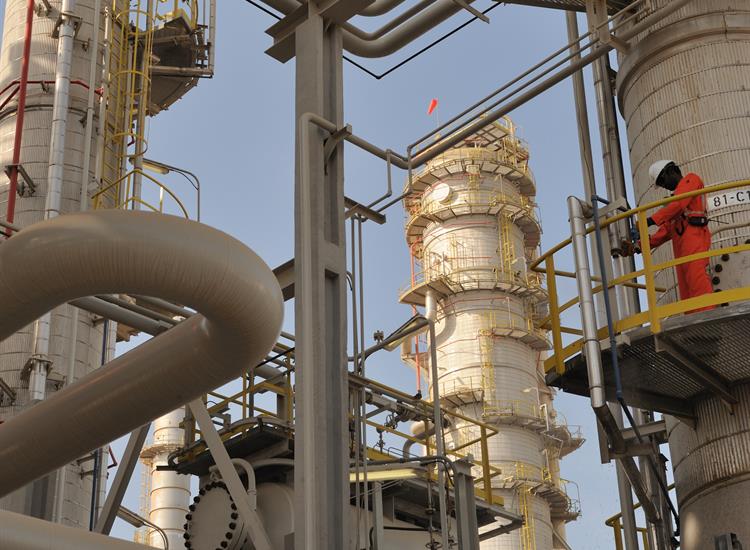
Image: A worker at Qatar’s Ras Laffin refinery complex (undated). The Ras Laffin facility is the world’s largest liquefied natural gas (LNG) export hub, and attacks on the facility and diminished merchant traffic through the Strait of Hormuz in the ongoing Middle East conflict have negatively impacted exports. (Image source: Qatar Energy LNG)
In this context, South Korea and Taiwan’s semiconductor manufacturers were among the most vulnerable entities, given their heavy reliance on imported energy and petrochemical inputs. South Korea’s Samsung Electronics and SK Hynix are dominating the global market for HBM and DRAM memory chips. Meanwhile, Taiwan’s TSMC is the world’s most important player in advanced foundry manufacturing, producing about 90 percent of all advanced chips. The Strait of Hormuz crisis therefore exposed structural weaknesses inherent in both semiconductor ecosystems.
The conflict in the Middle East also triggered an immediate supply shock for raw materials used in the manufacturing of semiconductors—namely helium, a critical gas used in multiple stages of chip fabrication. Iran’s attacks on Ras Laffan Industrial City disrupted Qatar’s LNG and helium exports, choking off about 14 percent of the world’s helium supply. At the same time, the Iranian military’s strikes on ships passing through the Strait of Hormuz paralyzed regional shipping. Subsequently, the price of helium rocketed, sparking fears of latent shortages in key chip-producing centers across East Asia.
The Middle East crisis has served as a major threat to the energy security of South Korea and Taiwan. Both economies rely heavily on imported LNG to power their semiconductor clusters and artificial intelligence (AI) data centers. South Korea imports about 14.5 percent of its LNG from Qatar, while Taiwan relies on Qatar for approximately 33.7 percent of its LNG imports. Since the chip fabs of Samsung, SK Hynix, and TSMC consume huge amounts of electricity, any disruption in LNG supply or fluctuation in energy prices could directly impact production costs and the stability of the semiconductor supply chains in East Asia.
Different Vulnerabilities
While the Strait of Hormuz crisis presented major threats to the energy security of both South Korea and Taiwan, the two economies have also differed in their vulnerability to disruptions in petrochemical products and other raw materials. In particular, South Korea has faced more imminent shortages of helium, bromine, and naphtha. Taiwan was relatively more secure in its supply of petrochemical inputs, and was more preoccupied by its exposure to disruptions in LNG supply.
Indeed, Taiwan showed relative strength on helium, thanks to a more diversified supply chain and higher recycling rates at advanced fabs. TSMC and other major companies, such as UMC (聯華電子) and Winbond (華邦電子), have stressed that they still had healthy inventories and adequate short-term supplies of helium. In addition to importing helium from a range of partners, Taiwanese semiconductor makers have invested heavily in helium recycling systems, which have achieved recovery rates of around 60-75 percent. However, should disruptions in Qatar continue for a prolonged period, Taiwan could still face increasing competition for the remaining helium volumes supplied by the United States and Algeria.
By contrast, South Korea has been more exposed to the helium shock, as Samsung Electronics and SK Hynix use up the gas in large quantities to make memory chips. While companies still have stockpiles that can last for months, much of the reserve is spread across supply chains rather than stored directly at fabs, which means production operations still rely heavily on continuous imports. [1] South Korea has lagged behind Taiwan in adopting helium recycling technology, increasing risks in the event of a prolonged crisis. More than 70 percent of Taiwanese fabs already use helium recycling systems, while Samsung Electronics was only one of the first Korean companies to implement the technology in 2024.
South Korea and Taiwan have acted quickly to safeguard their semiconductor supply chains and energy security. Seoul has sought to diversify raw material and LNG sources by increasing purchases from the United States, Australia, and other non-Middle East partners. It has also set in motion nuclear power, renewable energy, and financial assistance remedies for impacted companies. Meanwhile, Taiwan focused on increasing LNG imports from the United States, strengthening strategic reserves, shifting toward renewable and nuclear energy, and maintaining electricity price stabilization policies.
The Rationales of the Response Measures
Immediately after the Strait of Hormuz crisis broke out, South Korea and Taiwan implemented policies to mitigate disruption. But the key difference in the two economies’ strategies lay in who led the response. South Korea stressed government coordination, while Taiwan had a much more corporate-driven response—especially through TSMC.
South Korea’s Ministry of Trade, Industry and Resources (MOTIR) quickly held emergency meetings to evaluate the impact on energy, trade, and supply chains. President Lee Jae Myung also requested that relevant ministries closely monitor the situation and prepare necessary countermeasures, without ruling out the possibility of emergency economic relief packages. The South Korean government then provided support measures for more than 1,600 companies. The Lee Administration also sought to reduce dependence on the Strait of Hormuz for imports of helium, bromine, and semiconductor inspection equipment.
By contrast, Taiwan’s response had a much stronger corporate, market-oriented character. Responding to questions on March 5, TSMC affirmed that it did not forecast any significant short-term impact, while the Taiwanese government under President Lai Ching-te (賴清德) rapidly accelerated plans to increase LNG imports from the United States to limit reliance on the Middle East. According to Minister of Economic Affairs Kung Ming-hsin (龔明鑫), Taiwan’s LNG imports from the United States could increase from 10 percent of its total to 25 percent by 2029.
Unlike South Korea’s vertically-integrated model, Taiwan’s semiconductor industry operates through a pure-play foundry structure, with TSMC playing the central role. [2] This structure enables Taiwan to disperse risks through the expansion of external production and partnership networks. For example, TSMC has established two semiconductor fabrication plants in Kumamoto, Japan. The company’s first Kumamoto fab entered operation in 2024 with the support of Japanese firms such as Sony and Toyota, while a second fab is scheduled to be completed in 2027. In addition, TSMC and other semiconductor firms have also established manufacturing facilities in the United States, Germany, and Southeast Asia. Even before the Hormuz crisis occurred, Advanced Semiconductor Engineering (ASE, 日月光半導體製造股份有限公司), Taiwan’s leading OSAT (Outsourced Semiconductor Assembly and Test) company, had already announced plans to expand its operations in Penang, Malaysia—reflecting a broader trend of relocating packaging and testing functions to other regions in order to reduce concentration risks. Although these initiatives do not directly eliminate the disruptions associated with the Hormuz crisis, they help distribute production and supporting functions across multiple locations and partners—rather than concentrating them entirely within Taiwan.
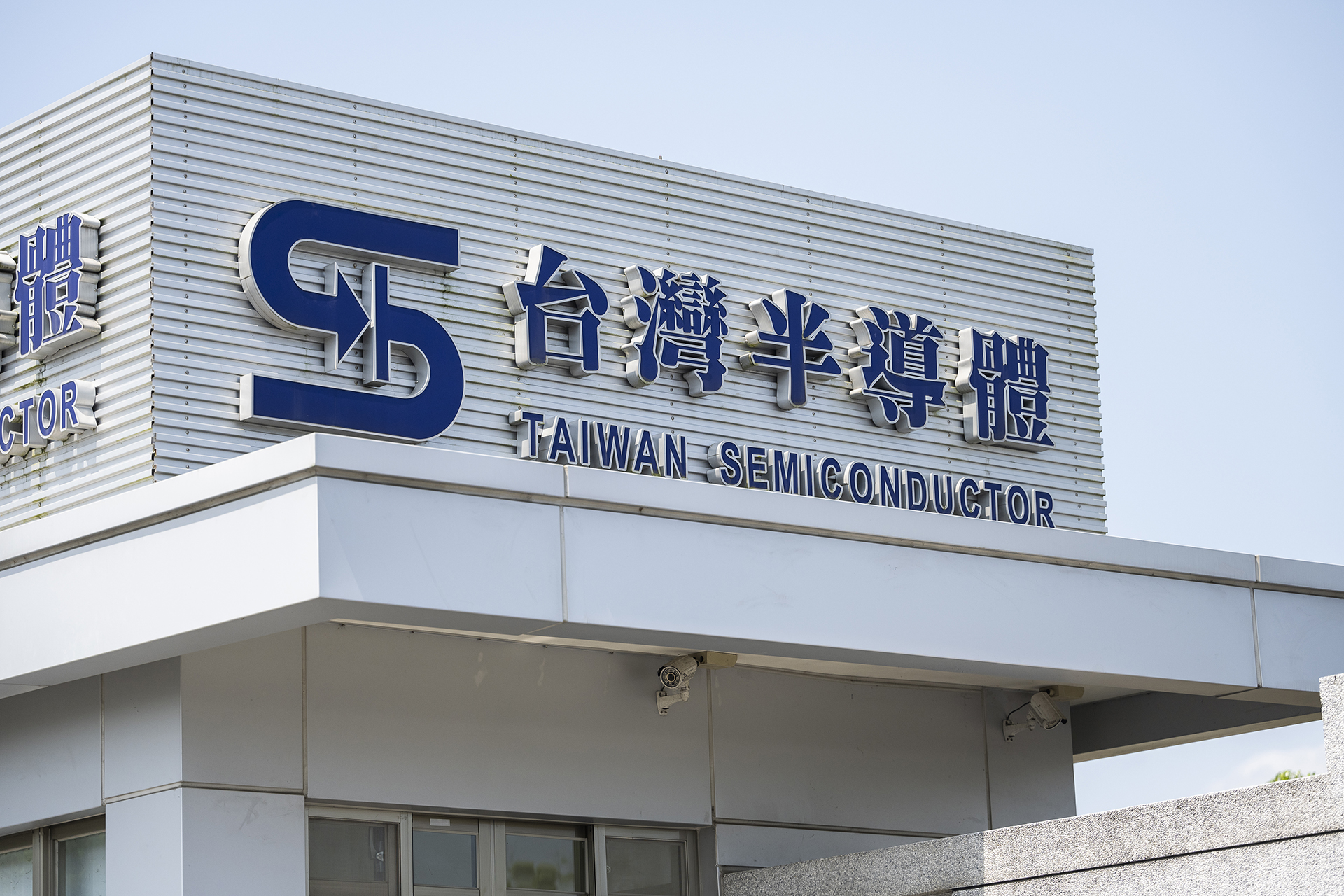
Image: The Taiwan Semiconductor manufacturing facility in Yilan (eastern Taiwan), circa 2023. (Image source: Wikimedia Commons)
Broader Structural Differences between Taiwanese and South Korean Chip Industries
Both South Korea and Taiwan reacted quickly to the risk of disruptions affecting energy and semiconductor supply chains. However, their responses reflected different approaches to resilience, rooted in the structure of their semiconductor industries and their broader geoeconomic orientations.
South Korea maintains an “integrated device manufacturer” (IDM) structure, wherein chaebols such as Samsung and SK Hynix control nearly all of the production process. While this model allows for cost optimization and the protection of technological advantages, it also produced two major vulnerabilities during the crisis. First, South Korea’s heavy reliance on its leading chaebols became the country’s “Achilles’ heel” because disruptions affecting these firms could have far-reaching consequences for the broader economy. As a result, the government was compelled to act quickly to stabilize the economy. Second, South Korea’s semiconductor fabs are extremely dependent on the country’s own energy infrastructure and electricity supply. In the wake of the Strait of Hormuz crisis, Samsung and SK Hynix were compelled to undertake emergency electricity-saving measures at production sites.
On the other hand, Taiwan operates a “pure-play” foundry structure (純晶圓代工)—the most famous example of which is TSMC. Instead of following a “closed” production model, Taiwan has established what might be called a global “symbiotic” semiconductor ecosystem. This architecture enables the island to carry out a strategy of risk diversification through international semiconductor networks. In this way, Taiwan has been able to distribute the risk of supply disruptions across its overseas customer base, instead of absorbing all the strain domestically. While this approach has boosted Taiwan’s economic security in times of crisis, this model also exposes the island to increasing pressure from protectionist policies in host countries, as well as strategic competition among major powers.
This divergence has also resulted in differing strategic orientations toward external partners. South Korea’s leading position in memory chips has placed Seoul in a geopolitical bind between the United States, which retains leadership in core semiconductor technologies; and China, which consumes around 40 percent of South Korean semiconductor exports and hosts several major Korean production facilities. This structural dilemma has forced South Korea to pursue a hedging strategy, seeking to maintain balanced relations with both powers despite its continued dependence on each. [3] Hence, during the Middle East crisis, Seoul’s responses have reflected this broader hedging strategy. The government emphasized strengthening domestic resilience, while diversifying partners to reduce excessive dependence on either the United States or China.
Meanwhile Taiwan has become increasingly entrenched within a US-led semiconductor ecosystem, as reflected in the shift in LNG imports away from the Middle East, and towards suppliers in the United States and Australia—as well as growing investment in production facilities in the United States. Taiwanese firms have also signed preliminary agreements to participate in a USD 44 billion Alaska-based LNG project.
As the global semiconductor industry gradually shifts from an “efficiency-first” (效率至上) model toward a “resilience-first” (韌性至上) approach, Taiwan has chosen to expand external linkages and internationalize supply chains as a way to maximize the advantages of its pure-play foundry structure when facing geopolitical shocks.
These differences reflect two different logics regarding semiconductor supply chain protection between Seoul and Taipei, as articulated in the table below:
Comparison Criteria | South Korea | Taiwan |
| Primary Coordinating Actor | Government-led coordination | Industries play a more proactive role |
| Response Pattern | Immediate state-led response | Firms respond more proactively after initial government actions |
| Industrial Structure | Vertically-integrated chaebol structure centered on memory chips (Samsung, SK Hynix) | Pure-play foundry ecosystem centered on advanced chip manufacturing (TSMC) |
| Key Vulnerability | Strategic materials (helium, bromine, naphtha) | Energy security and LNG dependence |
| Main Response Measures |
|
|
(Source: Authors’ compilation)
Conclusion
Although both South Korea and Taiwan seek to safeguard semiconductor supply chains from geopolitical shocks, the two economies evince different resilience logics. South Korea focuses on strengthening domestic capacity and stabilizing vertically-integrated production systems, while Taiwan tilts toward risk dispersion through supply diversification and expanding external linkages within the global semiconductor ecosystem.
The Strait of Hormuz crisis has also revealed that Taiwan’s resilience is not about decoupling from globalization, but rather embedding itself more deeply in semiconductor and energy supply networks led by the United States and its partners. As global semiconductor supply chains increasingly adopt a “resilience-first” outlook, Taiwan’s pure-play foundry model and diversification overseas could serve as a model for how to effectively withstand geoeconomic shocks.
The main point: The Strait of Hormuz crisis has exposed the divergence in responses between Taiwan and South Korea in safeguarding the semiconductor supply chains. The crisis has also revealed the differences in industrial structure and geoeconomic orientation that shape how both economies approach semiconductor resilience under geopolitical pressure.
[1] Although industry sources show that Samsung Electronics and SK Hynix currently maintain sufficient helium reserves for about four to six months, it should be noted that helium supplies are not physically stored at semiconductor fabrication plants. Rather, much of these “reserves” are distributed across the supply chain. Because liquid helium must be maintained at extremely low temperatures and inevitably experiences continuous boil-off during storage and transport, it cannot be stockpiled in large quantities at fabrication facilities for extended periods. Consequently, semiconductor fabs operate largely on a just-in-time model, relying on a continuous flow of imported helium rather than large on-site strategic inventories. The disruption of the Strait of Hormuz therefore did not immediately deplete existing reserves, but it interrupted the continuous replenishment of helium supplies. Shipments that had already left the Middle East before the conflict allowed fabs in South Korea and Taiwan to continue operating until early April 2026. However, once these shipments were exhausted, manufacturers began facing increasing risks of delivery delays and helium shortages. If the Strait of Hormuz remains closed, vessels must take a longer route, adding about two weeks to the journey. The longer transit time also increases helium losses, reducing the amount of helium that ultimately reaches semiconductor manufacturers.
[2] The pure-play foundry model focuses primarily on manufacturing chips for external customers. In contrast, the vertically integrated Integrated Device Manufacturer (IDM) model covers the entire semiconductor value chain, including chip design, manufacturing, packaging, testing, and product sales. See: Sil Jin and Jin-young Kim, “Switching Lanes? South Korea’s Shifting Hedging Behavior in the U.S.–China Rivalry,” Australian Journal of International Affairs 80, no. 2 (2026): 143–165, https://doi.org/10.1080/10357718.2025.2588415.
[3] Sil Jin and Jin-young Kim, “Switching Lanes? South Korea’s Shifting Hedging Behavior in the U.S.–China Rivalry,” Australian Journal of International Affairs 80, no. 2 (2026): 143–165, https://doi.org/10.1080/10357718.2025.2588415.