
Taiwan’s advanced chip manufacturing industry—commonly referred to as its “silicon shield” —provides for much of its security. As China intensifies efforts isolate the island, Taiwan may have to learn to wield the silicon sword.
Powerful authoritarian states support China’s efforts to isolate and weaken Taiwan, seemingly without response from Taipei. Despite its central role in global technology supply chains, Taiwan is generally unwilling to employ its unique economic strengths to constrain its adversaries. This allows such actors—primarily China and its key partners, such as Russia and the Myanmar junta—to work against Taiwan’s interests with little resistance, and to use Taiwan as a means of evading sanctions introduced by other democracies.
To better defend its own interests, and avoid undermining partner sanctions, Taiwan should develop a comprehensive sanctions strategy of its own.
Taiwan’s Current Approach to Sanctions Policy
While Taiwan has been rhetorically supportive of Western sanctions, it currently lacks an independent, comprehensive sanctions regime of its own. Taiwan’s export controls are managed by the Ministry of Economic Affairs (MOEA, 經濟部), with its current approach mainly centered on export controls of high-tech goods. The Strategic High-Tech Commodity (SHTC, 戰略性高科技貨品) List is Taiwan’s primary vehicle for applying export restrictions. The SHTC List designates foreign entities for export controls to prevent them from using Taiwanese technological products for producing weapons of mass destruction—including chemical, nuclear, and biological weapons, or related military activities. Put simply, Taiwan applies restrictions to the export of technological products that could be used for offensive or illicit purposes, and the entities that may use these products for such purposes.
Taiwan tends to follow, rather than lead, the implementation of restrictions. Following criticism over its ongoing importation of Russian fuel sources in 2025, the Taiwanese government stated that it would “cooperate” on further restrictions of Russian energy imports if other democratic actors, such as the United States and EU, introduced them. Due to its lack of recognition as a state, Taiwan is unable to participate in multilateral export control bodies like the Wassenaar Arrangement, but it still adheres to the group’s definitions and restrictions on military and dual-use technologies.
Taiwan has recently begun to experiment with a firmer sanctions approach, demonstrating that decisionmakers in Taipei recognize the importance of a more assertive foreign policy. In 2025, for the first time, Taipei instrumentalized its unique position in the global semiconductor supply chain to apply export controls to South Africa-bound goods, following a diplomatic dispute over the location of Taiwan’s de facto embassy. These controls were later rolled back, following the agreement of further negotiations.
Additionally, Taiwan has applied export controls to Chinese tech giants such as Huawei, with any sales to such companies now requiring a license. Taiwan is now reportedly planning to introduce curbs on advanced chips to all customers in China, instead of only the specific companies previously designated. Despite these reports, Taiwanese officials still seem reluctant to restrict exports in the primary sector driving Taiwan’s rapid economic growth.
A detractor might argue that a more thorough sanctions approach would risk antagonizing sanctioned actors. But those likely to be sanctioned are already firmly acting against Taiwan’s interests anyway. The lack of a comprehensive approach causes indirect support to adversarial states who would support an attempt by China to change the cross-strait status quo by force.
The Strategic Cost of Weak Sanctions
This current, list-based approach leads to inevitable gaps, including the failure to fully account for dual-use exports—products intended for commercial use that are repurposed for military applications. Taiwanese-manufactured components are regularly found in Russian weapons and equipment used in its full-scale invasion of Ukraine. For example, one Taiwanese audio-visual technology company still appears to be actively selling products on the Russian market; the same company’s components have been found in Russian reconnaissance drones destroyed in Ukraine.
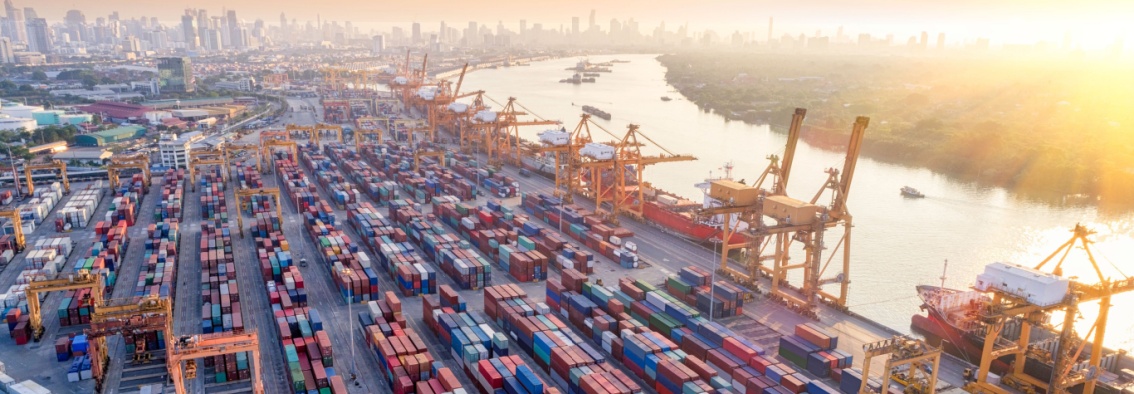
Taiwan is also a major destination for the transshipment of sensitive goods into Russia, a process whereby goods are shipped to their final destination via Taiwan as a stopover in order to conceal a product’s true origin or destination. In spite of this strategic service to Russia, Moscow is supporting China with preparations for possible military action in Taiwan, by providing China with airborne infiltration equipment and the training of paratroopers in employing this equipment.
Likewise, Taiwan has not placed restrictions on any officials linked to the Myanmar military junta. The SHTC List only names two entities connected to Myanmar: a telecommunications company part-owned by the Myanmar military, and a North Korean individual connected to the Myanmar arms trade. Taiwan is reportedly used by the Myanmar military as a destination for the repair of arms manufacturing equipment, allowing the junta to bypass European sanctions. The same junta enthusiastically backs Beijing’s claims and narratives around Taiwan, with a December 2025 statement outlining the junta’s view that “the Taiwan issue is China’s internal affairs and that Taiwan is an inalienable part of China”.
These gaps provide adversarial actors an avenue to evade these sanctions through exploiting Taiwanese technology and capabilities, lessening the impact of sanctions designated by other democracies.
How Taiwan Could Strengthen Its Approach
As demonstrated by these examples, Taiwan’s current approach, and its reliance on deadlocked international standards bodies, is inadequate. A new policy should look beyond the rather narrowly defined criteria of SHTC, including stricter measures to prevent the use of Taiwanese ports for transshipments of sanctioned goods, and the use of Taiwan as a venue for actors sanctioned by other democracies to secure goods and services they could not do so elsewhere.
This may require Taiwanese policymakers to move to a broader model whereby whole countries as well as their territories and industries are subjected to controls and bans. Sanctions measures should be employable in direct response to actions that harm Taiwan’s interests and security, including diplomatic and public support for Beijing’s efforts to distort narratives that erase and delegitimize Taiwan. Such measures could prove hugely effective, as Taiwan controls more than 90 percent of advanced semiconductor process capacity. Measures to prevent—or even slow down—access to these components could have a significant impact on the economies and development of states acting against Taiwan.
A major roadblock could lie in the potential need for new legislation. The SHTC regulatory regime, as the name suggests, is specifically limited to strategic high-tech commodities. Other existing legislation is narrowly constrained to tackling terrorist financing and money laundering.
Meanwhile, the clauses relevant to trade and exports in Taiwan’s wide-ranging National Security Act (國家安全法) primarily concern the disclosure of trade secrets, rather than sanctions more broadly. These contrast with, for example, the United Kingdom’s 2018 Sanctions and Anti-Money Laundering Act, which affords the UK authorities broader powers to implement sanctions based on foreign policy objectives, national security, human rights, and a range of other issues. In contrast, Taiwan’s current legislation may not provide the government sufficient powers to implement a more ambitious regime, necessitating new laws to be passed.
Taiwanese politics are bitterly divided, with Taiwan’s Legislative Yuan controlled by the opposition Kuomintang (KMT, 國民黨). The KMT has a strong tendency to frustrate government-initiated bills and budgets, most recently by passing President Lai Ching-te’s proposed NTD 1.25 trillion (USD 40 billion) special defense budget at a drastically watered down size of NTD 780 billion (USD 25 billion), with cuts focused primarily on domestic defense programs. Any efforts to build a stronger sanctions regime could face similar obstructionism, as the KMT generally supports closer economic integration between Taiwan and China—though it should be noted that the party has previously voiced support for sanctions against Russia over its invasion of Ukraine, meaning there could be support for measures targeting third countries.
While Taiwan would clearly be unable to completely match Beijing’s economic coercive capabilities, its specific strengths could still be used to complicate other actors’ decisions that threaten Taiwan’s core interests or its status quo. As it stands, such actors can do so largely without restraint or response, undermining both Taiwan’s security and sanctions introduced by other democracies.
The main point: Taiwan has historically refrained from instrumentalizing its prodigious economic strength through sanctions regimes imposed on antagonistic foreign countries. Yet in a recent case involving South Africa, Taipei showed the influence of sanctions based around semiconductor export controls. To truly develop a sanctions strategy, Taiwan’s legislature will likely need to pass legislation to support government policy.