
In the event of a Taiwan Strait crisis, the fate of a liquid natural gas (LNG) cargo bound for Taichung, or one of Taiwan’s other major ports, could turn into a commercial question: can it still obtain war-risk cover? As naval planning receives most of the attention in relation to a potential blockade, marine insurance is barely covered in either NATO’s maritime strategy or the European Union’s economic security agenda.
However, an insurer’s decision could affect Taiwan as much as a naval deployment. Events in 2026 have demonstrated this: After the February 28 strikes against Iran, shipping through the Strait of Hormuz halted. No blockade was declared, but insurers canceled, requoted or sharply repriced war-risk cover, and traffic fell by more than 80 percent in a week. Lloyd’s List data showed just 181 vessel transits in March, mostly Iranian-linked, compared with 138 vessel transits a day before the conflict. Six months later, traffic has still not recovered. Lloyd’s List Intelligence counted 117 non-Iranian-linked transits in the week of September 14–20, fewer than on a single day before the conflict.
The consequences also affected Taiwan, since more than a third of its gas goes through Hormuz, and about 96 percent of its energy resources are imported. While gas-fired plants generate more than half of Taiwan’s electricity, its working LNG stocks can only last for 11 days. Currently, the government requires a security stockpile of 11 days, and will raise it to 14 in 2027. Storage capacity is expected to rise from 20 to 24 days over the same period. All three receiving terminals are on the west coast, facing the People’s Republic of China (PRC).
This leaves Taiwan with a very short clock: If LNG deliveries stop, load shedding (i.e., planned rolling blackouts) would begin within days, and the grid would also be needed to support the island’s defense.
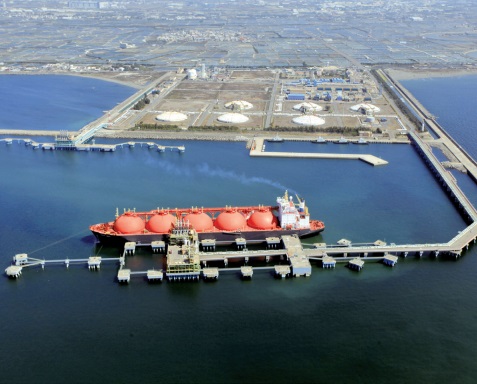
Image: The Yongan LNG Terminal in Kaohsiung, Taiwan (undated file photo). (Image source: Wikimedia Commons)
How Marine Insurance Could Close the Taiwan Strait
A merchant vessel normally has hull and war-risk insurance for the ship, and protection and indemnity (P&I) for liabilities, such as crew injuries, pollution, wreck removal and damage to third parties. Banks will not finance an uninsured ship, and charterers will not hire one.
The Joint War Committee (JWC), a London-based organization with representatives from the Lloyd’s Market Association and the International Underwriting Association, brings together the underwriters who write marine hull war risk. This Committee publishes a list of geographical areas where vessels are considered at increased risk of war-related perils. Thus, shipowners must notify their insurers before entering the zone, and underwriters may charge an extra risk premium. Moreover, war-risk clauses in charter parties allow owners to refuse a voyage into a listed area, even when cover is available.
The market can move before a crisis fully materializes: in February 2022, before the Russian invasion of Ukraine, the JWC added the Black Sea and the Sea of Azov to its Listed Areas in response to an anticipated situation that subsequently did materialize. When the Red Sea was listed at the end of 2023, operators diverted around the Cape of Good Hope in South Africa, instead of paying the surcharge.
However, standard war-risk wording carries a larger consequence: If war, declared or undeclared, breaks out between any two of the five permanent members of the UN Security Council, insurance cover ends automatically. Therefore, a conflict between the People’s Republic of China and the United States over Taiwan would fall within the automatic termination clause of the standard Institute War and Strikes Clauses. France and the United Kingdom could also act as contractual triggers rather than distant observers.
Lessons from the Hormuz Strait
The Hormuz conflict shows how quickly this can happen. War-risk rates for Gulf transits were at 0.25 percent of hull value pre-conflict, but rose sharply within days. Marine insurers Gard, Skuld, NorthStandard, the London P&I Club, and the American Club issued cancellation notices on March 1. Two days later, the JWC extended the Listed Areas across the Gulf littoral, and maritime traffic collapsed.
Underwriters in London pushed back against the claim that insurance had closed the Strait, claiming that insurance cover remained available. Instead, cancellation notices were deemed a contractual way to renegotiate terms. Owners kept ships in port because they feared for the safety of their crews and vessels, not because insurance could not be bought. However, insurance contracts had a political impact on shipping decisions around the world within 48 hours, even though no closure orders were issued. Changing the price and terms of risk was enough to halt maritime traffic without a naval blockade.
Washington tried to fill the gap: On March 11, the US International Development Finance Corporation named Chubb as lead underwriter for a USD 20 billion maritime reinsurance facility, expanded to USD 40 billion on April 3. Despite this, the measure had limited effects: It covered the Strait but not the surrounding waters, and excluded loss of life and environmental damage, liabilities of greatest concern to P&I clubs and shipowners.
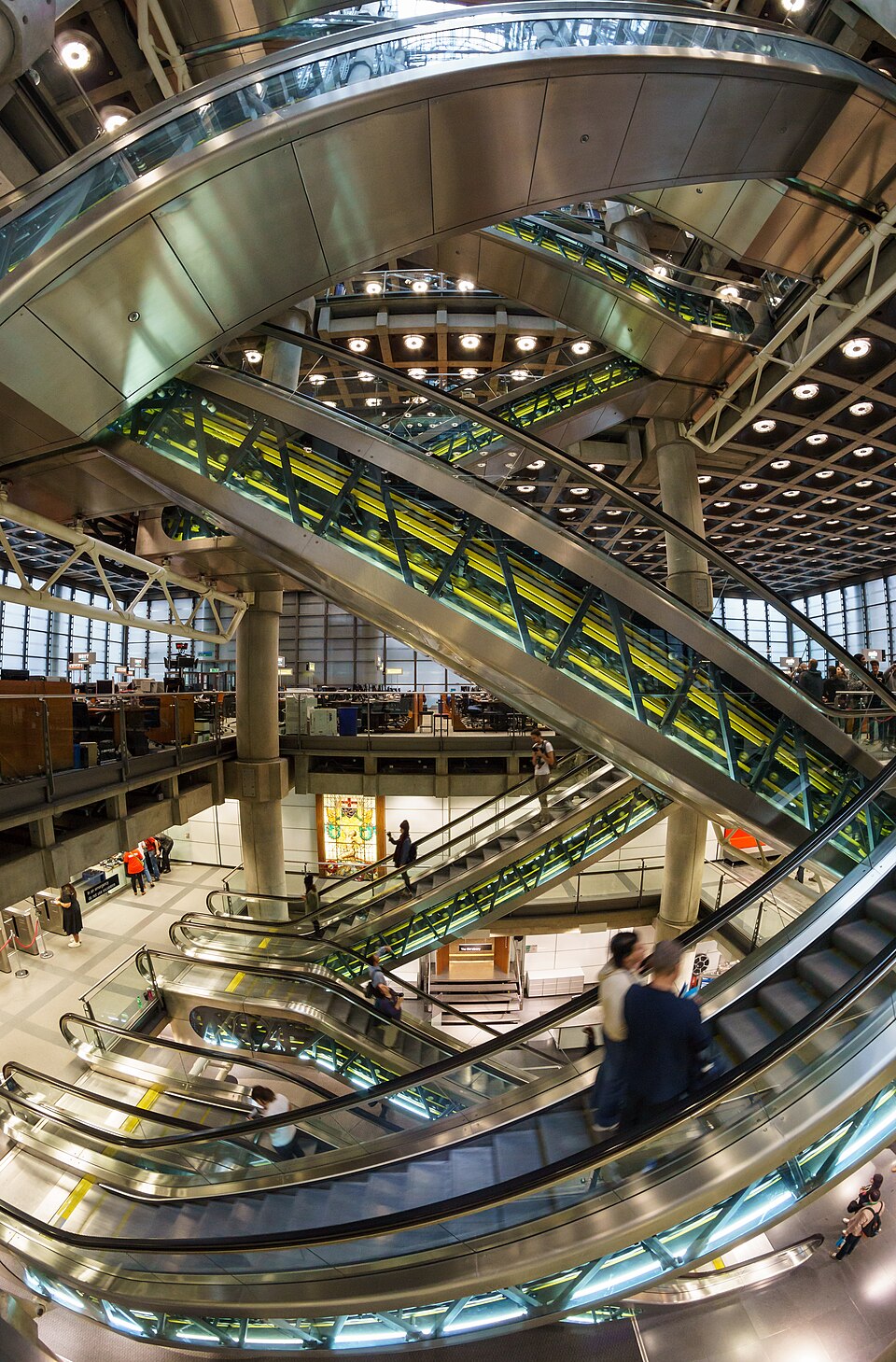
Image: An interior shot of the Lloyd’s Building in London, headquarters of the maritime insurance conglomerate Lloyd’s of London (Sep. 2014). (Image source: Wikimedia Commons)
Inserting Taiwan into the Marine Insurance Ecosystem
Taiwan lacks institutional channels with key decisionmakers. The JWC works with security advisers, officials and shipping companies, but Taiwan has no standing in the process because it is not formally recognized by most European institutions. Despite this, Taiwanese companies Evergreen, Yang Ming, and Wan Hai rank among the world’s larger carriers. However, in the first week of a crisis, private entities acting in their own commercial interests would decide whether LNG carriers keep sailing, as their choice would be based on Beijing’s capacity to exert influence and coercion.
This gap does not necessarily imply bad faith from insurers. Governments have used insurance as a tool of coercion for more than a decade: In 2012, the European Union banned P&I cover for Iranian oil cargoes; and Security Council Resolution 2321 (2016) prohibited insurance for North Korean vessels. Thus, the PRC knows how these mechanisms work.
A permanent forum could close the gap. It should bring American, Taiwanese, British, French and Nordic officials together with the JWC, the International Group, and the main war-risk underwriters. The purpose is to ensure that the committee knows what escort plans, port measures and public guarantees are actually available in the Taiwan Strait, rather than relying on signals Beijing sends. It could be based on the example of counter-piracy coordination off Somalia, where governments and industry representatives met and the London market adjusted its Listed Areas as conditions changed.
Opportunities for US-Taiwan Collaboration
The US government also needs a public backstop before a crisis. Senator Pete Ricketts’s Taiwan Energy Security and Anti-Embargo Act, reported out of committee in January 2026, and Representative Pat Harrigan’s companion House bill would authorize the US Maritime Administration to insure foreign-flagged vessels carrying critical goods to Taiwan if commercial cover were withdrawn.
Nevertheless, a Taiwan facility would have to cover the approaches, adjacent waters, crew liability, and environmental damage from day one—and not two weeks later, as it happened in Hormuz. This facility would also have to state in advance how public insurance operates when the five-powers clause ends commercial cover, as this cannot be improvised during a quarantine.
Taiwan should be part of those preparations, whether or not it is formally recognized: information about terminal resilience, escort plans, and grid capacity would affect an underwriter’s assessment. Taipei could also negotiate in advance with LNG suppliers and their European insurers on the conditions under which deliveries would continue, which is more cost-effective before a crisis.
Marine insurance should be part of Taiwan’s agenda when engaging with Europe, alongside semiconductors. Even though insurers and shipowners did not formally acknowledge the closure of Hormuz in 2026, the events that followed made the Strait unusable for most commercial traffic. Taiwan should start coordinating with the committee in London now to establish a strategy ahead of any future contingency.
The main point: Decisions by war-risk underwriters in London could halt LNG deliveries to Taiwan before any naval blockade, as the 2026 Hormuz crisis has showed. Taiwan has no channel to the committee that lists high-risk areas, and a war between the United States and the PRC would end commercial cover automatically. Taipei and Washington should open a standing dialogue with the London market now, and define in advance the public insurance that would take over.