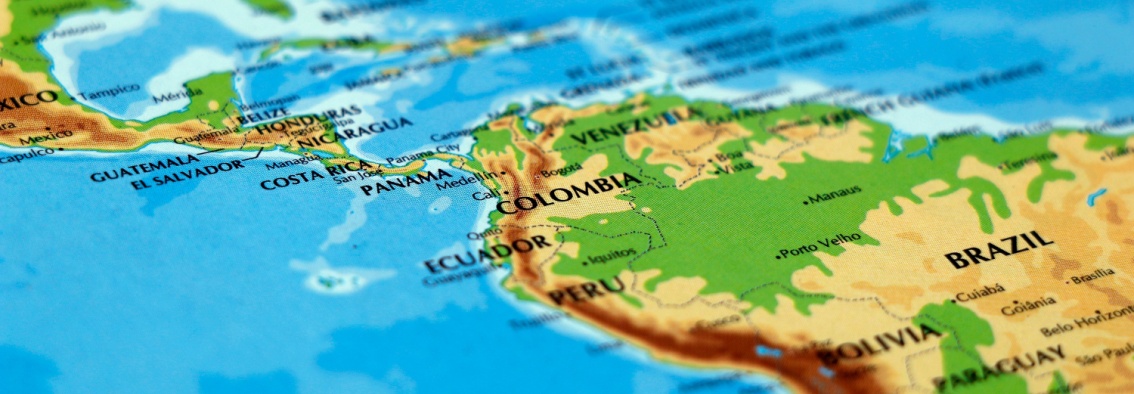

Latin America is a critical region for Taiwan’s diplomacy. Seven of its 12 remaining diplomatic allies—Paraguay, Guatemala, Belize, Haiti, St. Vincent and the Grenadines, St. Kitts and Nevis, and St. Lucia—are located in the Americas. During a time of growing Chinese aggression directed against the island, these countries host Taiwanese embassies and support Taiwan in multilateral organizations.
Even though the remainder of Latin American countries have switched diplomatic recognition to the People’s Republic of China (PRC), several of these countries have still increased government-to-government cooperation with Taipei. Costa Rica, Colombia, and Panama—which all recognize the PRC—each sent delegations to meet with Taiwanese officials and entrepreneurs in 2025.
These visits occur as the US government has named countering PRC influence and preserving Taiwan’s diplomatic allies as top foreign policy priorities in the Americas, and as growing numbers of Latin American governments are diplomatically aligning with Washington. Part of some countries’ alignment strategies has included diplomatic engagement with Taiwan.
Costa Rica, Colombia, and Panama’s growing diplomacy with Taiwan demonstrates how Taipei can maintain global engagement despite Beijing’s diplomatic isolation efforts, and how Latin American countries—even without formal diplomatic relations—can explore new opportunities with Taiwan.
Costa Rica: Intelligence Training and the Pursuit of Semiconductor Cooperation
In May 2025, Costa Rica sent five intelligence officials to Taipei for training, the first official intelligence exchange since the Central American country severed relations with Taiwan in 2007. The officials—from the Costa Rican Directorate of Intelligence and Security (DIS)—spent more than three weeks in Taiwan while attending a basic intelligence course. Costa Rica’s presidential office indicated that the opportunity to collaborate with Taiwan was significant given Costa Rica’s small intelligence service budget.
Over the same period, Costa Rica’s Foreign Trade Promoter (PROCOMER), a government agency promoting foreign investments and exports, sent two officials to Taiwan to attract investment focused on semiconductor industry cooperation. PROCOMER’s press office commented that “Taiwan plays an extremely relevant role in the agenda of attracting firms from the semiconductor industry.”
These trips were not the only ones made by Costa Rican officials to Taiwan this year. In September, a PROCOMER delegation attended SEMICON Taiwan, representing the first ever Costa Rican attendance, and hosted one of 17 country pavilions. The chip convention included 100,000 visitors from 65 countries, 1,200 exhibitors, and 4,100 booths at Taipei’s Nangang Exhibition Center (南港展覽館), with firms showcasing the entire semiconductor supply chain. Costa Rica’s delegation aimed to position the Central American country as a provider of global chips, and to attract new industry investments to create jobs domestically. Manuel Tovar, Costa Rica’s Minister of Foreign Commerce, stated that “We look to position Costa Rica more in this ecosystem and attract investment and employment for Costa Ricans.”
Chip cooperation with Taiwan is a natural fit for Costa Rica, whose semiconductor industry dates to the late 1990s, when Intel opened the largest microchip factory in Central America near San Jose and invested USD 390 million in operations, creating several thousand jobs and earning Costa Rica the nickname the “Silicon Jungle”. In September 2023, Intel announced a USD 1.2 billion planned investment in Costa Rica; and the following March, Costa Rica’s government announced a new National Semiconductor Roadmap to develop further its lucrative and globally-critical industry. As the producer of 60 percent of total chips and nearly 90 percent of the most complex semiconductors, Taiwan has much to offer Costa Rica’s chip industry in ways of inspiration, investments, and supply chain integration.
While Costa Rica continues to promote its semiconductor industry and insulate itself from China-linked cyberattacks, opportunities for cooperation with Taiwan on chips and intelligence continue to present themselves.
Colombia: Congressional and Commercial Opportunities
Twice last year, Colombian congressional delegations visited Taipei. The first was a six-member team led by Jose Luis Pérez, the former chair of the Colombian Senate’s Foreign Affairs Committee. The group met with several Taiwanese officials in September 2025 to discuss deepening bilateral cooperation. The delegation’s members were part of the Colombia-Taiwan Parliamentary Friendship Group, one of more than 50 such groups worldwide.
When meeting with the Colombian representatives, Taiwanese Foreign Minister Lin Chia-lung (林佳龍) thanked the delegation for supporting Taiwan, and noted major potential for bilateral cooperation and strengthened economic ties. Pérez, in return, pledged to continue advocating for Taiwan’s international participation in Colombia’s congress and at global fora. The delegation also met with a parliamentary counterpart, Legislative Yuan Vice President Dr. Johnny C. Chiang (江啟臣). During the meeting, the delegation invited representatives of the Legislative Yuan to make a reciprocal visit to Colombia, and expressed a desire to reopen a representative office in Taipei. (Colombia’s government had opened a representative office to promote bilateral commerce in 1993, but closed it in 2002 due to a lack of funding.)
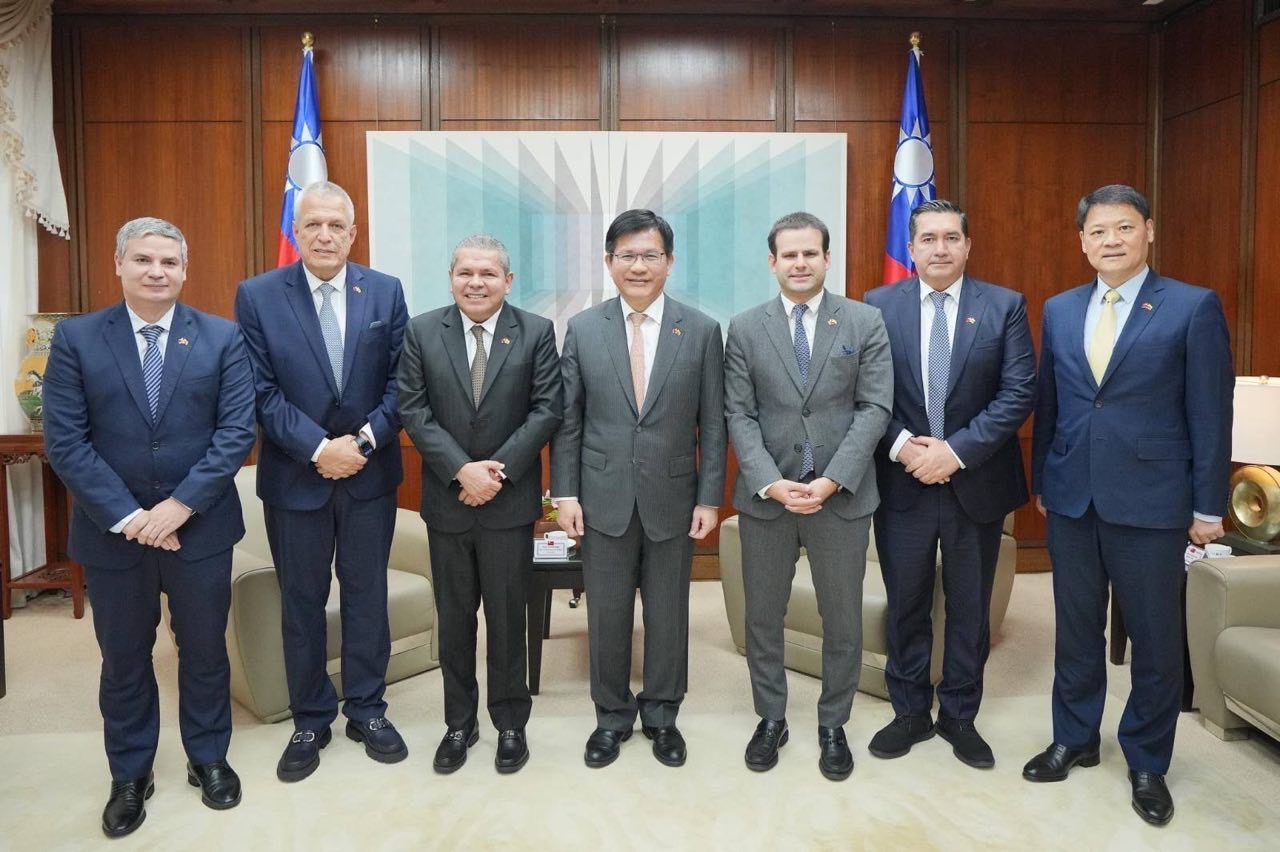
Image: Minister of Foreign Affairs Lin Chia-lung (林佳龍), center, meets with delegation of Colombian lawmakers in Taipei (September 26, 2025). (Image source: ROC-Taiwan.org)
These congressional ties have strengthened in both Taiwan and Colombia. On October 10, 2025, Taiwan’s Commercial Office in Colombia hosted a celebration for the National Day of the Republic of China with more than 200 attendees, including more than 10 Colombian legislators. The next month, another Colombian congressional delegation—including the chairs of Colombia’s Senate and House foreign affairs committees—visited Taipei and met with Foreign Minister Lin.
These visits have been testaments to Taiwan’s economic significance to Colombia. Just weeks before the first congressional visit this year, the “Taiwan Trade Mission to Latin America 2025”visited Colombia, along with Brazil, Peru, and Chile. In Colombia, representatives from more than 30 Taiwanese companies met with 95 Colombian firms, facilitating 142 business talks across diverse economic sectors. For years, Taiwan has sent thousands of tourists and provided millions in investments to Colombia. In July, Colombia’s Institute of Technical Standards and Certification signed a bilateral agreement with the Taiwan Testing and Certification Center (台灣商品檢測驗證中心) to facilitate bilateral commerce. The agreement highlighted the exchange of industrial technology from Taiwan; and minerals, energy inputs, and agricultural products on the part of Columbia.
Colombia currently faces a watershed political moment with an upcoming presidential election in May. Given the sub-40 percent approval rating of President Gustavo Petro—who hitched Colombia to Beijing’s Belt and Road Initiative (一带一路) this year after disputes with US President Trump—the outlook is dim for incumbents and bright for candidates promising change, including mending relations with the United States. As the second Trump Administration has pledged to defend Taiwan’s diplomatic standing in Latin America, an administration more aligned with the United States in Bogotá could also strengthen ties with Taipei.
Panama: Promoting Commerce and Democracy
In November 2025, a group of Panamanian National Assembly representatives visited Taiwan for the first time since the country switched diplomatic relations from Taiwan to the PRC in 2017. The nine-member delegation was made up of congressional representatives led by Manuel Cohen and Ronald Ameth De Gracia Moreno. The lawmakers are all members of the Inter-Parliamentary Alliance on China (IPAC, 對中政策跨國議會聯盟), an international coalition representing 44 parliaments—including those of Bolivia, Brazil, Colombia, Paraguay, Uruguay, and Panama in Latin America—formed in 2020 to demand “accountability from China.” The Panamanian representatives joined IPAC in August, a move that the US Ambassador to Panama publicly supported.
In Taipei, the lawmakers met with Vice President Hsiao Bi-khim (蕭美琴), Legislative Speaker Han Kuo-yu (韓國瑜), and Foreign Minister Lin Chia-lung (林佳龍). The group also visited government agencies—including Taiwan’s Ministry of Economic Affairs (MOEA, 經濟部), the International Trade Administration (國際貿易署), the Industrial Technology Research Institute (ITRI, 工業技術研究院), and the International Cooperation and Development Fund (ICDF, 國際合作發展基金會).
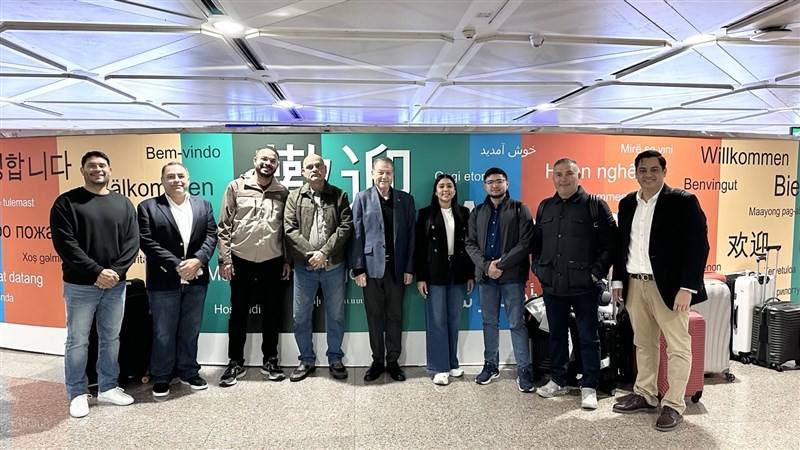
Image: A group of Panamanian legislators arriving in Taiwan for a delegation visit (Nov. 25, 2025). (Image source: ROC OCAC)
In bilateral meetings, the delegation discussed technological cooperation, clean energy, and bilateral commerce. The Panamanian representatives noted that Taiwan is Panama’s second largest export market, importing Panamanian bananas, coffee, shrimp, and other seafood products. Their visit did not only entail economics, with Cohen commenting at a banquet that Panama views Taiwan “as an example in the promotion of democracy, freedom and respect for human rights.”
The Panamanian legislature was not the only government branch that endorsed deepening ties with Taipei. While Panamanian President Raúl Mulino tweeted that he did not approve of the visit, he stated shortly before the trip that he would consider allowing Taiwan to open a commercial office in Panama. In a press conference, Mulino criticized China’s attempt to bar Panama from opening such an office when it switched relations in 2017. Referencing the 104 years of bilateral relations between the Republic of China and Republic of Panama, Mulino stated that one could not forget that “Panama was a great friend of Taiwan and Taiwan a great friend of Panama… Taiwan got involved in Panama, bet on it, and gave us money and support.”
While Mulino’s government has since dismissed the idea of allowing Taiwan to open a commercial office in Panama, opportunities remain for Central American country to continue exploring and deepening partnerships with Taiwan.
Against Beijing’s Wishes, Delegations Continue Visiting Taipei
Unsurprisingly, these visits drew sharp rebukes from Beijing, which continues to oppose any diplomatic contacts between Taiwan and other countries. In response to the Costa Rican intelligence training initiative in Taipei, China’s embassy in San Jose issued a statement declaring that “China opposes firmly to any form of official contact between Costa Rica and Taiwan.” Meanwhile, while Colombian legislators were visiting Taipei, Colombia’s foreign minister met with China’s Ambassador to Colombia Zhu Jingyang (朱京阳), and promptly issued a communiqué endorsing the One China Principle. The PRC Embassy in Bogotá reshared that communique on X, and Zhu tweeted that “The issue of Taiwan is an internal Chinese issue and does not allow foreign interference.”
In response to the Panamanian parliament’s visit to Taiwan, the Chinese Ambassador to Panama went further. The ambassador, Xu Xueyuan (徐学渊), allegedly sent WhatsApp messages to the Panamanian delegates urging them to cancel the trip and warning of “a great negative impact” on bilateral relations.
Despite Beijing’s efforts, all three countries completed one or multiple visits, exploring opportunities for deeper cooperation across a wide range of government and economic sectors.
Increasing Alignment with Washington
The significance of these visits, however, go beyond bilateral relations with Beijing and Taipei. Since the first Trump Administration took office in 2017, Washington has consistently sought to counter China’s growing influence in Latin America, to include defending Taiwan’s diplomatic standing in the region. In March 2020, Trump signed into law the Taiwan Allies International Protection and Enhancement Initiative (TAIPEI) Act, which formally endorses preserving Taiwan’s diplomatic allies and encourages the US government to consider “altering” relations with countries whose actions “undermine the security or prosperity or Taiwan.”
Meanwhile, in 2025, on his first overseas visit as US Secretary of State, Marco Rubio thanked Guatemala’s president for maintaining relations with Taiwan and cautioned the presidents of Panama, El Salvador, Costa Rica, and the Dominican Republic against aligning with China. In September 2025, he declared that the United States was “committed to countering China’s corrupt influence in Central America,” and would restrict US visa access to any Central American nation that deepened ties with China. In May 2025, the US Ambassador to Panama, Kevin Marino Cabrera, identified “countering the malign influence of China” as one of the United States’ top priorities in Panama. Cabrera also publicly opposed China’s attempts to prevent the Panamanian delegation from traveling to Taiwan, commenting that China’s embassy “shouldn’t be involved in those issues.”
For Latin American governments, engaging with Taipei demonstrates alignment with Washington. At a time when the second Trump Administration has prioritized the Western Hemisphere over any other region in its new National Security Strategy, many Latin American governments are betting on Washington.
The main point: Congressional delegations from Costa Rica, Colombia, and Panama visited Taiwan in 2025, meeting with Taiwanese officials and looking to boost economic development through bilateral cooperation. These visits show that even in the absence of formal diplomatic relations—and despite pressure from the PRC—Taiwan can still cultivate meaningful bilateral relationships in Latin America.