
The views expressed in this article are those of the author, and do not necessarily reflect the official policy or position of any agency of the US Government.
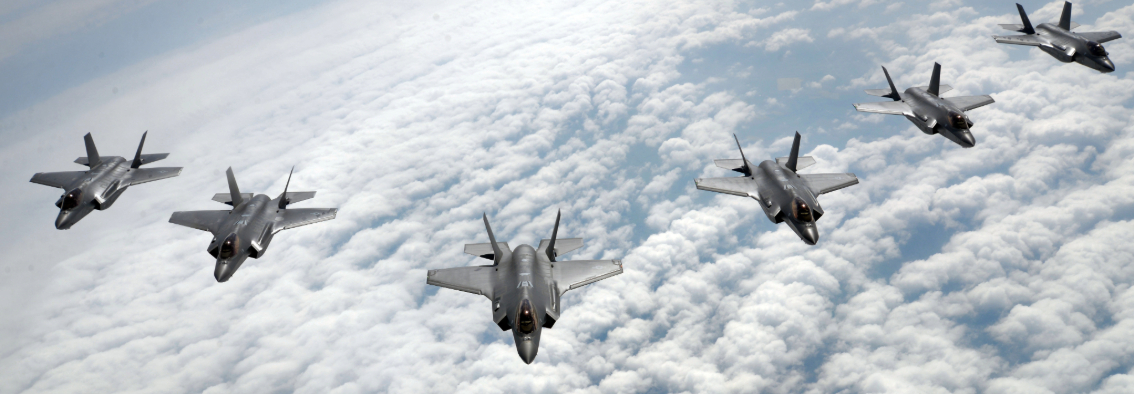
Under the threat of a potential existential conflict for Taiwan, Taiwan and the United States continue to be at odds over an appropriate defense acquisition strategy. While both governments are seeking to advance their asymmetric capabilities, the Taiwan Air Force (TAF) faces challenges in strategic operational development. The TAF fleet primarily comprises fighter jets, transport planes, and early warning and surveillance platforms. Meanwhile, the TAF has upgraded its existing F-16A/B fighters, and will benefit from future deliveries of F-16C/D Block 70 jets and MQ-9Bs unmanned combat aerial vehicles (UAVs). The TAF is also responsible for air defense, fielding systems like the Patriot and other indigenous surface-to air missile systems like the Tien Kung (天弓). These large-scale, prestige military platforms are expected to deter and counter the PRC’s adversarial gray zone actions.
However, the operational resilience of these systems during a conflict remains in question. In an all-out war with the PRC, sustaining these large-scale weapons systems may prove costly or futile. At the same time, the People’s Liberation Army Air Force’s (PLAAF, 中国人民解放军空军) capabilities have mostly surpassed the technical capacities of the TAF. Amid ongoing critical air force modernization, the TAF’s acquisition of conventional platforms such as MQ-9B UAVs may appear incongruent with an asymmetric strategy. But as retired US Navy Admiral Scott Swift argues, asymmetric strategies can be enhanced by conventional systems. In this light, the TAF must develop a coherent strategy to adequately define both the conventional and asymmetric functions of its various platforms.
Force Categorization
In order to modernize its force in both capabilities and thought, the TAF must integrate lessons learned from modern warfare into its development strategy. Concurrently, the United States Air Force (USAF) can improve its advisory efforts to define a durable path forward, ensuring that strategies and desired combat effects align with procurement and training. The new USAF One Force Design (OFD)—described by the previous USAF Chief of Staff General David Allvin as the “North Star” for modernization—may serve as a blueprint for the TAF. General Allvin outlines three contexts that forces must operate under: contested environments with constant attack and no sanctuary; contested environments with the potential to operate out of sanctuaries; and peaceful environments where a steady state force is needed for everyday operations.
Given that during an invasion scenario, the PLA is likely to render Taiwan a contested airspace, the TAF must analyze its own forces and determine whether they have the capacity and capability to operate in each of the three threat environments identified by the OFD. The TAF must adopt a strategy whereby different assets are utilized in various stages of a potential PLA invasion. To achieve this, the TAF should categorize its capabilities under three attributes: asymmetry, conventional asymmetry, and steady state. Drawing inspiration from the TAF’s F-16 modernization program (titled “Peace Phoenix Rising”), this author proposes to designate these attributed forces as follows: Phoenix 1 (P1) asymmetry; Phoenix 2 (P2) conventional asymmetry; and Phoenix 3 (P3) steady state. The TAF must then develop strategies for how to use these assets under each of the OFD-defined threat environments.
Phoenix 1 (P1)
In conflict, it is assumed that Taiwan will likely face continuous missile strikes and other combat effects that will either reduce the survivability of conventional military equipment or render them obsolete. This is problematic for the TAF, whose airpower projection relies heavily on fixed-wing aircraft and large, less-mobile ground equipment. It is essential that the TAF adapts its strategies, concepts, and equipment to the assessed threat, and restructures itself into a mostly asymmetric, P1 force.
P1 requires systems and capabilities that can absorb the initial shock of war, while projecting credible air power in a heavily-contested environment. Taiwan’s defense capacity must be sustained long enough to deny a swift enemy victory, provide potential openings to utilize conventional systems, and hold out until third party help arrives. This “porcupine” strategy should lean on large-quantity, low-cost assets that can survive the adversary’s initial targeted strikes. However, the majority of TAF equipment does not meet this standard and cannot be utilized during the initial phases of combat. Most TAF assets lack survivability due to reduced mobility and runway dependence.
Should the TAF’s fighter jets be required to disperse and bunker down, Taiwan’s only recourse to project power would be through mobile ground equipment or runway-independent systems. The TAF needs to reimagine its force to stay relevant and contribute to the initial and most important phases of conflict—when airspace is highly contested. Mobile surface-to-surface systems are typically operated by the other services, so if the TAF intends to be the tip of the spear, it should reinvest in alternative air power (such as unmanned combat aerial vehicles) to maneuver offensively. Therefore, the TAF should pursue runway-independent, low-cost UCAVs that can be outfitted to carry air-to-air, or air-to-surface missiles, and could also serve as one-way attack drones or carry a non-kinetic payload. This capability can serve to contest air superiority, enable air denial, engage in long range strikes, and greatly complicate air defenses.
While projecting airpower is crucial in disrupting adversarial movement and calculations, the TAF must also ensure an enduring air denial capability. The Ukraine War has demonstrated how denying an adversary air superiority is key to modern warfare. In a 2023 US Naval Institute article, Lieutenant Colonel Herbert Bowsher, US Marine Corps Reserve, argued that the Ukraine War “underscores that in the missile era, ground-based air defense, employed effectively by a maneuver force using mission command and a strong will to fight, can have decisive effects on an overall campaign against a numerically superior force.” Ukraine’s success in denying air superiority to the Russian invading force demonstrates that conventional systems, employed asymmetrically through maneuvers and other tactics, can be effective air denial assets.
Phoenix 2
P2 systems are assets that are considered conventional but can be used in asymmetric ways—such as fighter jets. In the initial phases of conflict, the TAF will likely have to disperse and hide these assets to protect them. However, if the TAF can weather the initial attack through P1 assets, it can create windows of opportunity to mindfully leverage P2 forces, further complicating the adversary’s calculus. As P1 forces deny adversary air superiority and slow an invasion fleet, they may create windows of opportunity for TAF fighter jets to conduct operations out of mountain bunkers. In strikes on PLA assets, air-delivered munitions coupled with ground fires could help saturate air defenses and increase strike efficacy. However, the TAF must be able to rapidly repair its runways in order to launch and recover aircraft when needed. With possible TAF fighter sortie generation, TAF airfields will need to be constantly surveilled and restruck. As the TAF moves from heavy use of P1 assets to P2 ones, revealing these new capabilities to the adversary could further stress the PLA’s intelligence and strike resources, and create breathing room for other Taiwan forces under attack.
In addition to air-to-air and surface-to-air capabilities, the TAF can also develop other P2 force capabilities: notably, command and control (C2) and intelligence. Both capacities are crucial in defensive and offensive operations. While much focus is placed on countering adversarial approaches with kinetic force, there must be an equal—if not greater—focus on the ability to collect and effectively disseminate that data to strike units. Mobile and passive systems will ensure the greatest degree of survivability. Therefore, equipment mobility, personnel preparedness for rapid maneuvers, and an adaptable concept of operations are essential for achieving an effective P2 force.
Phoenix 3
P3 are conventional systems used in routine operations to deter and react to incursions, gray zone activities, and any other type of peacetime airpower applications. Such missions typically require heavy, expensive equipment, such as large radar sites. While these systems may have limited use should full-scale conflict break out, their capability to provide pre-strike warnings may serve as the critical trigger for a strategic transition to a P1 and P2 emphasis.
Nonetheless, to ensure force balance, most P3 assets should also have P2 applicability. While there is no definite metric for the efficacy of particular assets, we can reference the Ukraine War as an example: data clearly demonstrates how P1 assets have predominantly sustained Ukraine’s combat operations.
In order to sustain Taiwan’s defense during a period of existential threat, the TAF should ensure that P2 and P3 assets should comprise no more than half of the force, and invest heavily in P1 capacities such as UCAVs.
The main point: In order to adapt its force structure for various degrees of contestation to Taiwan’s airspace, the Taiwan Air Force must categorize its existing assets and capabilities based on their survivability. Classifying survivability under the tiered levels of P1, P2, and P3 will help the TAF determine areas of weakness and strength, and identify areas for operational improvement. This framework identifies the need for alternative airpower, asymmetric use of conventional systems, and capabilities that enhance conventional systems through asymmetric means.