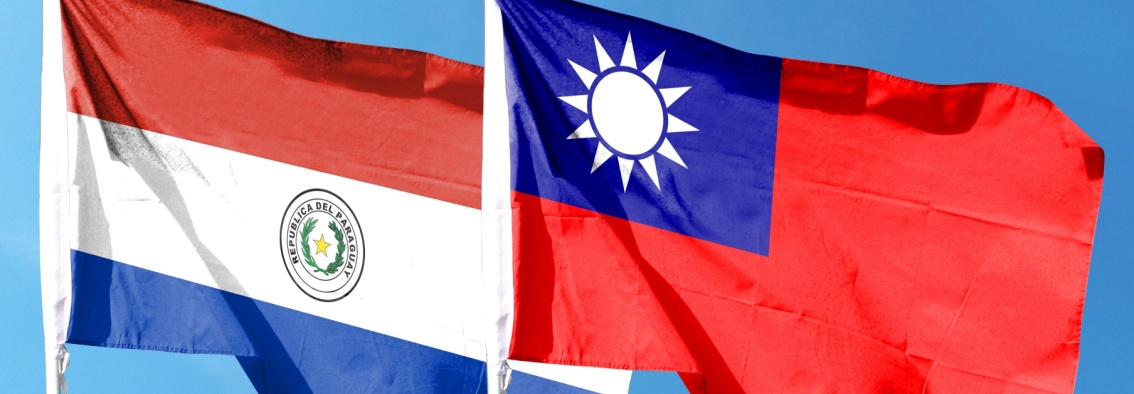

Should Paraguay switch diplomatic recognition from the Republic of China (Taiwan) to the People’s Republic of China (PRC), it would constitute a grave strategic setback for Taipei. Paraguay is the largest country out of Taiwan’s remaining diplomatic partners, and a change in loyalties could catalyze a knock-on effect whereby other allies reconsider their ties. Besides the symbolic impact of such a move, Taiwan would lose a strategic partner in its international engagement in Latin America. Beyond emphasizing shared values and a recent democratic transition, Taiwan presently cooperates on a variety of development projects with Paraguay, covering the agricultural, medical, educational, and green technology sectors.
While these projects—as well as a recent opening to certain meat imports from Paraguay—signal strong relations, Taiwan may need to increase its ambitions in order to make the partnership more sustainable. In particular, Taiwan should open up its markets to Paraguayan agricultural products and raw materials, expand educational exchanges, and invest in digital infrastructure that leverages the South American country’s cheap electricity.
Challenges For Taiwan In Paraguay
Taipei’s overt support for the dominant Colorado Party risks eroding Paraguayan public backing for the diplomatic partnership. The Colorado Party has faced accusations of corruption and favoritism towards elites already connected to the party. In addition, recurring Paraguayan debate on the so-called “Taiwan cost,” addressing the estimated losses in potential Chinese investments and loans, continues to put the partnership at risk. Likewise, Taipei is confronted with a “Paraguayan dilemma” as groups within the Latin American country favoring recognition of the PRC create a persistent threat to the partnership. The opposition Liberal Party (PLRA), the left-wing Frente Guasú coalition, and powerful agricultural lobbies have made the argument that a switch to the PRC would unleash enormous export opportunities, foreign direct investment and loans—claims that are somewhat overstated. According to a 2023 survey, 55 percent of Paraguayans favor switching recognition to Beijing, expecting economic benefits, while another question found that 58 percent still support relations with Taiwan. The primary driver for weaker support seems to be that the diplomatic relationship is perceived as symbolic, fragmented, elite-focused, and not tangibly beneficial to the broader population.
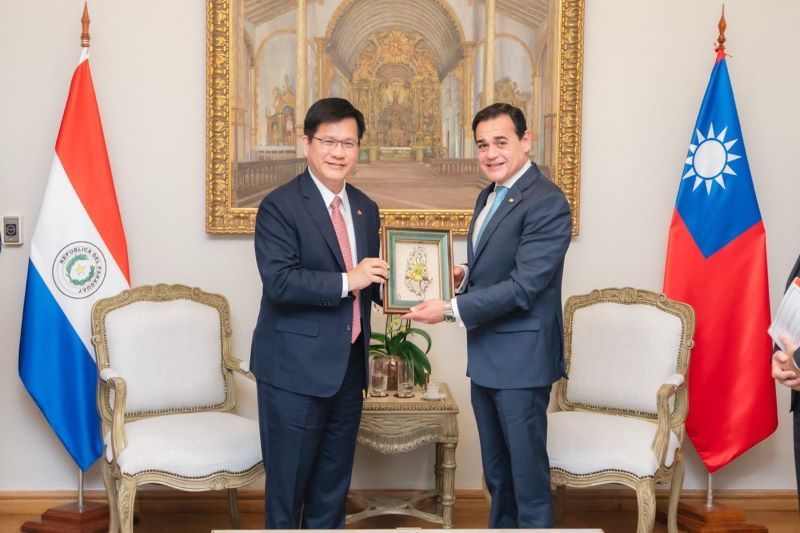
Image: Taiwan Foreign Minister Lin Chia-lung (left) meeting with Paraguayan Foreign Minister Rubén Ramírez (right) in Asuncion, Paraguay (July 11, 2025). (Image source: ROC Ministry of Foreign Affairs)
Strategies for Taiwan to Raise Paraguayan Support for Diplomatic Ties
In order to offset weakening Paraguayan support for the diplomatic relationship, the Taiwanese government should focus on three avenues: upgrading its meat exports and opening its markets to Paraguayan raw materials, enhancing educational exchanges, and investing in the Latin American country’s digital infrastructure.
Upgrading Agricultural Exports, Targeting Premium Markets
To improve Taiwan’s image, Taipei should facilitate greater imports from Paraguay. Strategic export expansion could extend to the sectors of Paraguayan processed beef, sustainable wood, and biomass products. These products stand out because they combine Paraguay’s comparative advantages with the potential to move beyond raw commodity exports into more value-added, job-creating, and diversified export sectors. Additional opportunities lie in medical and biotech exports via the maquila regime (through which foreign investors can circumvent certain tariffs), or joint ventures in organic agriculture (e.g. chia, sesame, sugar). Paraguay could boost its fresh and frozen beef exports to Taiwan through branding campaigns, as well as by emphasizing premium cuts for health-conscious consumers. Such a policy would appeal to the Paraguayan Industrial Union (UIP), which is already highly critical of China. The UIP has advocated for elevating beef exports by targeting premium markets such as the EU, Gulf states, and South Korea. In addition, Taiwan should accept Paraguayan products that are higher in the value chain. For example, instead of exporting raw soybeans, Paraguay could sell Taiwan higher value-added products such as oils, biodiesel, and plant-based proteins, raising income and generating skilled local employment.
According to Robert Evans Ellis, Research Professor of Latin American studies at the United States Army War College, Paraguay’s pro-trade orientation, low tariffs, low labor and electricity costs, and stable currency render the country an advantageous trade partner. Similarly, the country’s central location and access to large neighboring markets through Mercosur (a South American trade bloc) create opportunities for Taiwan to employ Paraguay as a regional distributor of products from joint investments. As the EU-Mercosur interim Trade Agreement enters into force on May 1 2026, Taiwan could help Paraguay strengthen the compliance, traceability, and certification capacities needed to meet the EU’s stringent sanitary and sustainability rules.
Talent Formation and Coalition Building
Training engineers and technicians stands out as one of the most tangible ways Taiwan can contribute to Paraguay’s economy. The benefits of such an action extend beyond Paraguayan political elites, and draw on programs that Taiwan is already executing in the country. In interviews this author conducted in Taipei, experts argued that a stronger “talent pipeline” connecting Taiwan and Paraguay—linking education, hands-on training, and real industry connections—would help more Paraguayans recognize the upsides of a close relationship with Taiwan. Expanding and internationalizing the Taiwan-Paraguay Polytechnic University (UPTP) could serve as a concrete step in that direction. The UPTP was established in 2018 to train high‑skilled engineers and support Paraguay’s long‑term industrial development, but has so far only produced 218 graduates. An upscaled talent-focused policy would gradually shift the diplomatic relationship away from elite-focused engagement and towards measurable results for Paraguay’s human capital: skilled graduates, professional networks, and practical projects to enhance local knowledge.
To enhance these policies, Taiwan can link training efforts to investment facilitation and a few targeted joint ventures, potentially co-sponsored by Japanese investors and the European Union’s Global Gateway framework connected to the Mercosur bloc. Investment in talent and innovation promises not only to strengthen, diversify, and modernize the Paraguayan economy, but also its democratic system. This is important as diplomats in Asunción and Taipei are concerned about the fragility of Paraguay’s democracy. Endemic corruption, institutional weaknesses, and persistent income inequality offer the PRC opportunities to exploit popular disenchantment with the elites.
Energy-Powered Digital Infrastructure
Paraguay‘s energy surplus generated by the Itaipú Dam (a large hydroelectric power plant on the Paraná River bordering Brazil and Paraguay) provides new opportunities. The dam produces much more electricity than Paraguay needs. Yet, Paraguay is entitled to half of the output, and unused electricity is currently sold to Brazil. Through affordable energy, Paraguay could attract greater Taiwanese investment in energy-intensive industries. Data centers and cryptocurrency mining facilities represent potentially lucrative projects that could capitalize on the region’s affordable energy production. From a domestic perspective, these types of projects also deliver visible benefits: AI services, digital government tools, cybersecurity systems, and IT infrastructure upgrades that improve productivity in government agencies and private firms. Given that Taiwan’s foreign aid budget is limited in comparison to the PRC, its strategy must focus on targeted, high-visibility, and high-impact initiatives rather than large, expensive projects. Taiwan does not need to fund mega-projects to make a difference; one or two flagship pilots with local partners and built-in training can demonstrate results, create local skills, and create opportunities for scaling.
Challenges and Mitigation
Even as Taiwan is encouraged to expand its relationship with Paraguay, there are limits to the degree of economic engagement that can bear fruit. Governance risks (especially corruption and clientelism) can undermine projects or generate local resistance, where new projects threaten established interests. External competition is also a factor. Competing diplomatic influence efforts, including by the PRC, may seek to delegitimize cooperation with Taiwan. Meanwhile, overly visible external branding with Japanese and European partners could create political sensitivities on two fronts. In Latin America, critics could cast a stronger European role as yet another version of dependency or soft neocolonialism. Meanwhile, in Washington, greater European involvement might cause unease in a Trump Administration that has revived the Monroe Doctrine and is wary of outside powers gaining a larger foothold in the hemisphere.
Ultimately, the ideal strategy for Taiwan is to rebalance the relationship toward sustainable grassroots economic cooperation, while maintaining necessary elite-level channels. In practice, this means prioritizing initiatives that broaden domestic constituencies receiving support (such as by emphasizing education and training, public-facing digital infrastructure, and greater market access). This strategy will reduce the risk that Taiwan-Paraguay cooperation is perceived as elite-centric or purely symbolic. While this strategy would not eliminate the “Taiwan cost” debate in Paraguay—nor would it stop political elites from wielding the PRC as a bargaining chip—it could make the relationship harder to dismiss as symbolic.
The main point: In order to preserve the diplomatic partnership with Paraguay, Taiwan has conducted elite-focused engagement and messaging campaigns that highlight shared values. But this engagement has failed to secure sustainable grassroots support in Paraguay. Taiwan should recalibrate its approach by adopting a more visible economic engagement strategy that will appeal directly to working Paraguayans.