


In recent years, Giant Manufacturing (巨大機械工業股份有限公司), a Taiwanese company known as the world’s largest bicycle manufacturer, has faced a series of mounting challenges. In early 2025, the company reported a whopping 60 percent decline—equivalent to USD 57.6 million—in operating profits for the year prior. Giant said the downturn was triggered after a re-evaluation of their inventory, as a result of a decline in value from discounting. After that announcement, Giant had been looking forward to healthier balance sheets for 2025. However, in September, Giant hit another major setback when it became the first Taiwanese manufacturing company to be slapped with a Withhold Release Order (WRO) from US Customs and Border Protection (CBP) “due to violations of (laws) prohibiting goods made with forced labor from entering the US.”
The order—which is valid until Giant can prove otherwise—covers bicycles, bicycle parts, and accessories made at Giant’s factories on home soil. It also allows US agents to seize Giant’s “Made in Taiwan” products, regardless of the US port of entry. At the time, it was estimated that the WRO could cost Giant as much as five percent in lost revenues. A Giant spokesperson denied the charges of forced labor against the company, insisting that the Taiwan Giant headquarters were a “model factory,” and that US officials “never conducted an on-site inspection or asked for information.”
While the CBP did not cite specific evidence that tied Giant to explicit instances of forced labor, the order lists five alleged forced labor indicators as set by the International Labour Organization: the abuse of vulnerability, abusive working and living conditions, debt bondage, withholding of wages, and excessive overtime. The charges may have been a shock to some, but they were not surprising to those familiar to Taiwan’s industrial landscape and the labor dynamics underpinning its economy. Only months prior to the CBP action, Danish investigative journalist Peter Bengtsen published Speed Up!, a study identifying which manufacturing sectors were most likely to experience incidents of forced labor. The report compiled interviews from 200 migrant workers conducted between 2022 and 2025, and name-checked 13 firms—including Giant and rival firm Merida (美利達工業股份有限公司) —as having benefited from forced labor. The results of Bengtsen’s investigation casts aside the argument that Giant invited scrutiny because it is a global leader in the bicycle manufacturing industry. Instead, they draw attention to the prevalence of forced labor across Taiwan’s industrial sector.
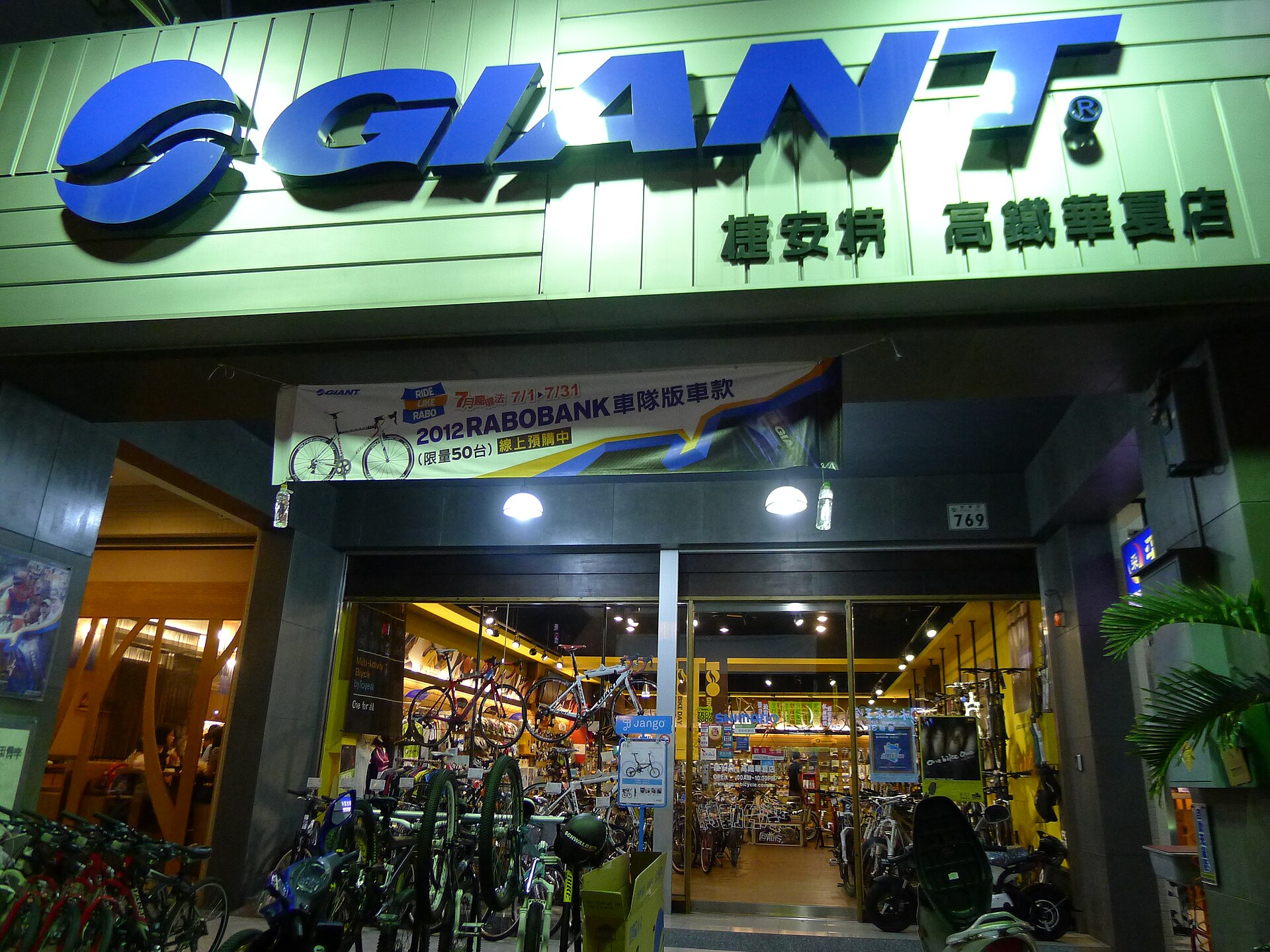
Image: A Giant bicycle shop in the Tso-ying District of Kaohsiung City (高雄市左營區). (Image source: Wikimedia Commons)
The CBP’s order proved to be a portent of things to come. Just weeks after Taipei signed its Agreement on Reciprocal Trade (ART) with the United States, the country was named by the United States Trade Representative’s Office as one of 60 economies in which industries are accused of engaging in the practice of forced labor. This is in addition to a Section 301 investigation which was—in the USTR’s words—triggered by “concerns” over what it called “structural excess capacity and production in specific manufacturing sectors,” including semiconductors, electronics, and machinery.
The idea that people work under slave-like conditions in the 21st century might seem archaic, but it is a situation in which millions around the globe find themselves. Statistics from the International Labour Organization show that 27.6 million men, women, and children are trapped into forced labor worldwide—most of them in the Asia Pacific region—with migrant workers facing a risk roughly three times higher than others. To this day, the practice is lucrative. Globally, illegal forced labor is estimated to generate as much as USD 236 billion in illicit profits. And while Taiwan has a reputation of upholding democratic values in the Indo-Pacific region, the island has for years been repeatedly tied to accusations of forced labor across different industries, from fishing to manufacturing.
Taiwan’s Legal Infrastructure for Labor Rights
Taiwan’s forced labor problems do not stem from the lack of a legal framework that governs the hiring process and retention of migrant labor (外籍勞工). Rather, it comes from weak laws—and at times a reluctance to enforce the laws that do exist—to ensure that both Taiwanese and migrants are treated fairly. But this is a systemic problem that predates even Taiwan’s Martial Law Era, which not only restricted constitutional rights including free speech and assembly, but also prohibited the formation of opposition groups.
Martial law made it impossible to form labor unions, whose existence was sanctioned by the 1929 Labor Union Law (工會法)—as pointed out by Dorthy S. Liu et al. in analysis of the 1992 Employment Service Act (就業服務法). Liu further cites other labor-related legislation also gathering dust, including the 1928 Labor Disputes Law (勞資爭議處理法) and the 1930 Collective Agreement Law (團體協約法): both measures may have appeared to be pro-labor, but in practice had the opposite effect. The former made it difficult for workers to strike; and the latter, which gave unions a say in the hiring process, presented exemptions that made this unlikely. The 1984 Labor Standards Law (勞動基準法) is seen as a more recent example of this, as it gave workers the right to strike on paper—even though it was not allowed in practice until martial law ended in 1987.
A similar lack of oversight and enforcement is at the core of Taiwan’s problem with migrant labor. Before the 1990s, most blue-collar migrant workers came from Malaysia, the Philippines, Sri Lanka, and Thailand, and most were in Taiwan illegally. These workers found employment by violating the terms of stay for their visitor visas, and worked in a variety of industries including manufacturing and construction. Because they had been hired by small companies, they were difficult to track down—so estimates involving their numbers varied, ranging from 50,000 to as much as 200,000.
The perennial labor shortage triggered by Taiwan’s economic growth forced the government to fill the gap by legalizing their presence through the Employment Service Act (就業服務法), which was passed in 1992. While the law did allow migrant workers into the country, it also passed several provisions that were intended to protect the local labor market. For instance, the law did not allow migrant workers to change jobs after they arrived in Taiwan, regardless of the conditions to which they were exposed.
Taiwan’s Murky Broker System
The Employment Service Act also allowed private firms to “manage” and charge “broker fees” (服務費) for these workers, creating a murky and potentially exploitative situation for migrant workers. To enter Taiwan as a member of the blue-collar workforce, applicants from Southeast Asia go through recruitment agencies in their home countries, who work with counterparts in Taiwan. The recruitment counterparts in Taiwan then match them with employers. Together, these agencies are responsible for matching workers with jobs and handling all their paperwork, from visas and work permits to health check-ups. For decades, these brokers did not operate under any government oversight, which allowed them to collect exorbitant job placement fees or “labor costs” that often exceeded several times a worker’s salary.
Although the government has since banned brokers from collecting “broker fees,” it still permits “monthly service fees,” which are also being charged to workers—often saddling them with debt as much as tens of thousands of US dollars. In 2018, the international labor rights group Verite estimated that migrant workers could be charged anywhere from USD 1,500 to USD 6,000 each—amounts these workers could not afford given they typically earn monthly salaries of less than USD 500. These charges subsequently become debt, and it is estimated that a migrant worker needs a minimum of a year to pay off the amount owed.
The clause that had banned migrant workers from changing jobs also ensured that they had to remain with the same employer effectively until the debt was paid off, regardless of work conditions. This situation has been seen across manufacturing sectors and in the fisheries industry, which the Stella Maris International Migrants Service Center estimated in 2022 to account for about 32,000 migrant workers. The fishing industry gained international notoriety after the media exposed instances of abuses, injuries, and death. Most of the fisheries workers are considered as cheap labor, doing “difficult, dirty, and dangerous” work that is necessary for keeping one of the world’s biggest distant water fishing fleets afloat.
While the Ministry of Labor (勞動部) has been quick to point out that there are laws protecting these migrant workers, the workers are hamstrung by a host of shortcomings: including language barriers, a lack of understanding of local laws, little organization and representation, and a insufficient support. Rights groups say that, regardless of the political party in charge, there has also been an unwillingness on the part of the government to address the problem in the past—suggesting an “if it ain’t broke, don’t fix it” mentality.
The Impacts of the Giant Bicycle Case
Giant’s WRO appears to have been a blessing for Taiwan’s migrant labor workforce. In December 2025, the company said it had provided refunds to its existing migrant workforce and created “grievance mechanisms” for workers to give feedback about their working conditions. Also in December, a labor broker was fined about USD 320,000 for illegally charging job-placement fees to migrant workers. Ministry of Labor officials said it was the tenth agency that was fined for overcharging, and that it was planning to conduct 2,500 inspections this year. After the ART was signed in February 2026, the government promised to strengthen protections against migrant workers, starting with the release of a reference guide informing businesses how to avoid conditions that might lead to forced labor accusations.
Remedial actions may be enough for Giant to shake its WRO and for the government to get Taiwan off the USTR Section 301 list, but only time will tell if it will actually provide equitable conditions for its migrant workers, who are sorely needed as Taiwan’s population ages. The country already has a track record of creating laws and then discarding them at will—which means that for labor groups, the real test will lie not in the statute books, but whether or not new regulations are actually enforced.
The main point: In September, the prominent Taiwanese manufacturer Giant was hit by US sanctions over alleged forced labor practices. The sanctions have raised awareness regarding labor rights violations baked into Taiwanese law, forcing a reckoning on Taiwan’s treatment of migrant workers.

.jpg)