

On June 1, 2026, Kuomintang (KMT, 中國國民黨) chairwoman Cheng Li-wun (鄭麗文) embarked on a 15-day journey to the United States, her first such visit since assuming the party leadership in October 2025. This trip came after her highly publicized April trip to China, which included a meeting with Chinese Communist Party (CCP) General Secretary Xi Jinping. It also followed long and controversial debates in the Taiwanese Legislative Yuan (LY, 立法院) over a proposed special defense budget.
As the chairwoman of Taiwan’s main opposition party, Cheng has sought to position herself as an advocate for the “normalization of peace in the Taiwan Strait” (台海和平常態化). She has repeatedly argued that peaceful dialogue, rather than military confrontation, would be the best path for stability in the region. In this regard, her polarizing discourse has directed constant criticism towards the ruling Democratic Progressive Party (DPP, 民主進步黨): arguing that excessive reliance on military acquisitions to provide deterrence would only increase misunderstandings between Taiwan and the People’s Republic of China (PRC).
Despite the expectations, Cheng’s visit yielded few tangible results and little attention from Washington. The trip was primarily a domestic political exercise of leadership consolidation, and was intended to present a message of reassurance regarding KMT-US relations. The trip did not substantially alter external perceptions of the KMT, nor reshape either US-Taiwan relations or cross-Strait dynamics.
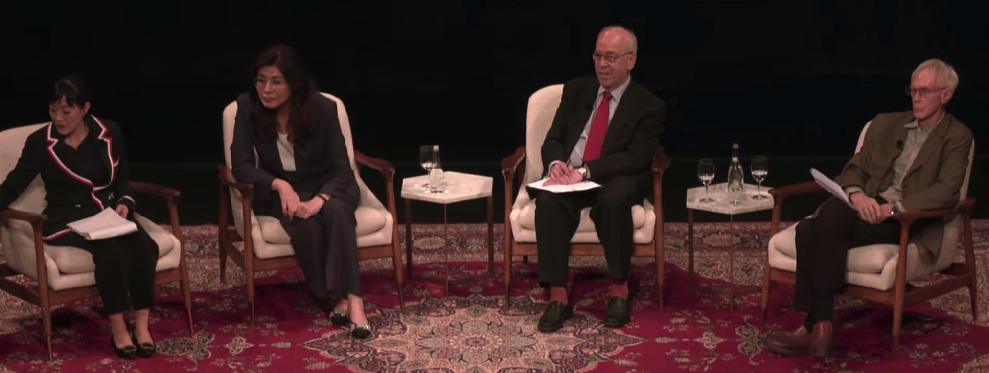
Image: Cheng Li-wun (second from left) speaking at a forum hosted by the Asia Society in New York (June 9, 2026). (Image source: Asia Society / YouTube)
Major Themes of Cheng’s Visit
According to the KMT, Cheng’s visit was designed to explain the party’s cross-Strait policy to an American audience, and to reassure the US on concerns after her April meeting with Xi Jinping. The itinerary included stops in San Francisco, Boston, New York, Washington D.C., and Los Angeles, in the course of which Cheng met with members of Congress, policymakers, universities, think tank scholars, and overseas Taiwanese communities.
In these engagements, Cheng’s discussions centered around the narrative of “institutionalizing peace and prosperity,” wherein she continued to advocate for a paradigmatic shift: instead of a front line of geopolitical contestation, the First Island Chain should be transformed into a “chain of peace and prosperity.” Moreover, Cheng remarked that restarting dialogue in the Taiwan Strait would be the only way to avoid “Taiwan becoming the next Ukraine.”
Additionally, another major theme was Cheng’s insistence that Taiwan should not be treated as a “pawn” by great powers–meaning that it should not be used as leverage in competition between the United States and the PRC negotiations. [1] Specifically, regarding President Trump’s comments on American arms sales to Taiwan as a chip, she stated that “Taiwan can never become or be reduced to a pawn tradedaway at a negotiating table by great powers.”
Regarding cross-Strait relations, Cheng framed her April meeting with Xi Jinping as part of the “1992 Consensus”(92 共識), suggesting that Taiwan and China could coexist peacefully, building mutual trust and cooperation mechanisms. To address US concerns about the KMT’s decision to cut the special defense budget, Cheng stated that the DPP proposal lacked transparency and violated legislative principles, while also calling for an AI-based defense strategy: Taiwan should leverage its semiconductor advantages to develop low-cost asymmetric capabilities, such as AI-driven drone systems and intelligence analysis.
Cheng’s interactions with US counterparts included Congress members Dan Sullivan, Brian Mast, and Young Kim. She participated in private sessions at the Hoover Institution, the Council on Foreign Relations, Stimson Center, CSIS, and the Brookings Institution, and appeared in a public event held by Asia Society. However, her requests for meetings with administrative officials from the National Security Council and representatives from the American Institute in Taiwan (AIT) were reportedly cancelled–without public explanation, but possibly as an indication of displeasure over her role in blocking passage of the defense budget.
The messages promoted by Cheng and the party bureaucracy under her control stand in sharp contrast to Taichung Mayor Lu Shiow-yen (盧秀燕), whose March 11-21 visit to the United States was characterized by more institutionally oriented meetings–including meeting with Ingrid Larson, the managing director of the AIT’s Washington office. Lu also publicly expressed support for higher defense spending, aligning her policy views with longstanding US expectations regarding Taiwan’s defense posture. As one of the leading potential KMT presidential candidates in 2028, Lu’s visit was widely viewed as part of her broader efforts to cultivate international visibility.
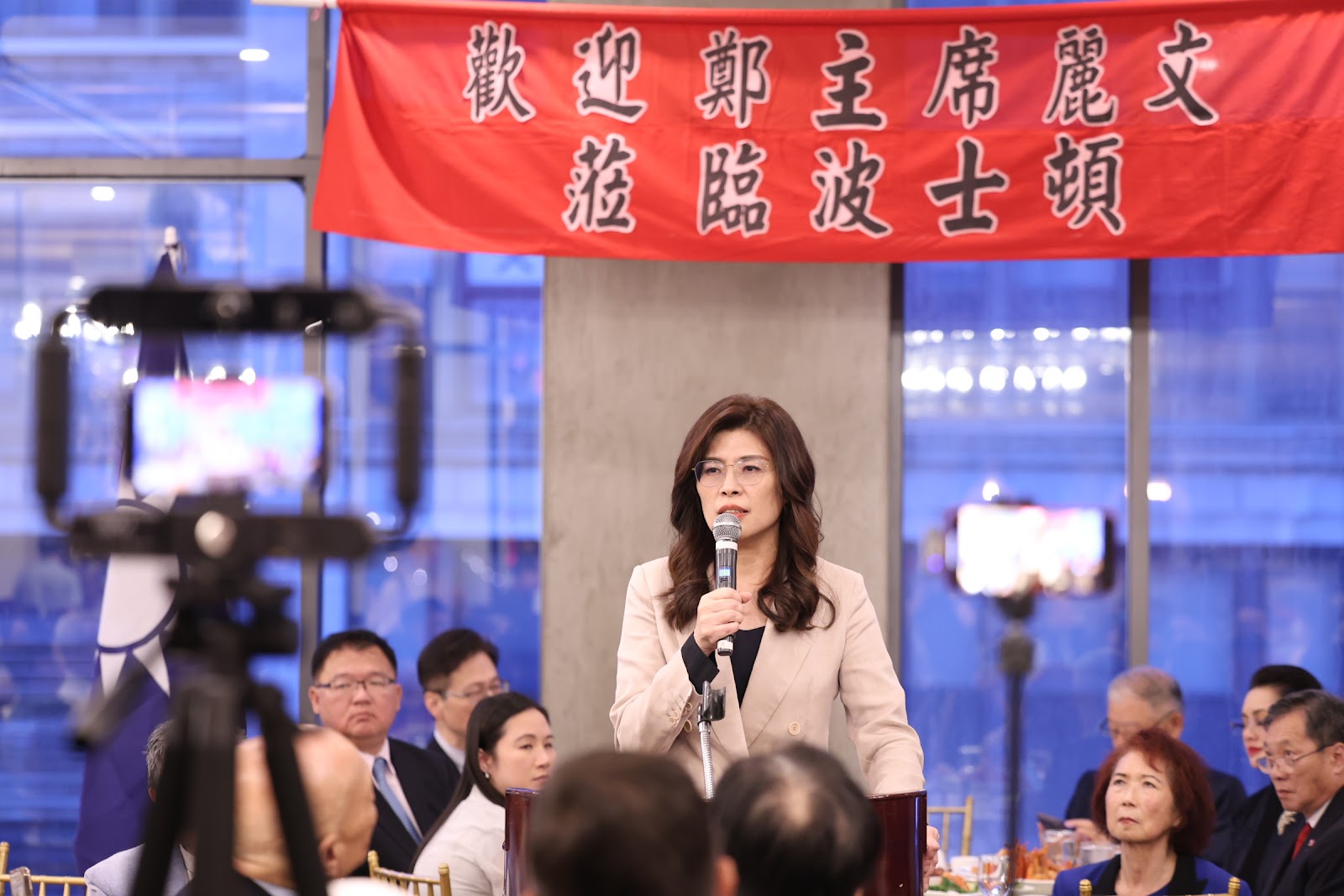
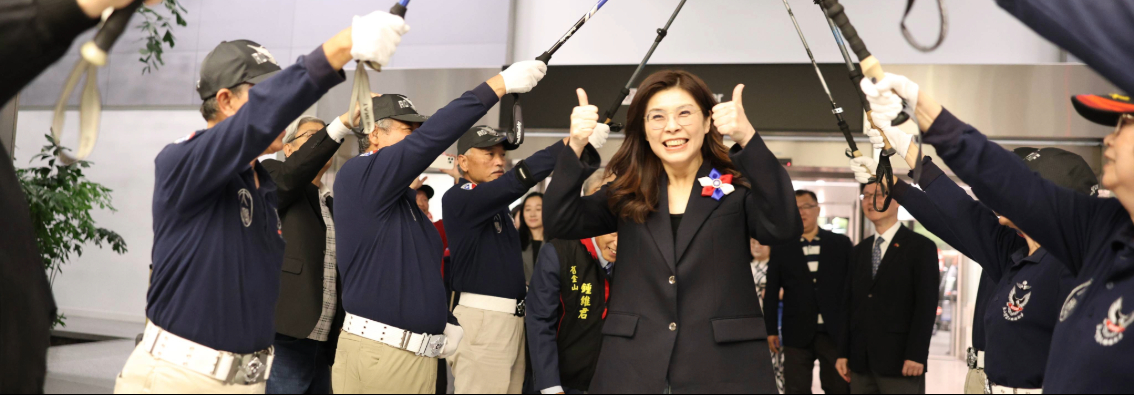
Image: Cheng Li-wun speaking at an overseas community banquet in Boston (June 6, 2026). (Image source: KMT Official Website)
The Outcomes of Cheng’s Visit to the USA
Task 1: Consolidate Leadership within the KMT (Partial Success)
Cheng’s tour through the USA allowed her to portray herself as someone capable of engaging with both Beijing and Washington–in contrast to President Lai Ching-te, who was denied a stopover in New York in 2025 and who is derided by the CCP as a “Taiwanese separatist.” In doing so, Cheng sought to strengthen her position within the party and reinforce her credentials as a potential presidential candidate in 2028.
Furthermore, Cheng’s visit demonstrated noteworthy support from parts of the Taiwanese American community in the United States. Significant attendance of diaspora representatives in both the New York and Los Angeles banquets allowed her to test her presidential ambitions, since the overseas community is usually seen as a source of election donations. Nevertheless, the presence of Chinese-affiliated united front organizations at these banquets–such as Jiao Sheng-an (焦聖安), the president of the New York chapter of the Council for the Promotion of the Peaceful Reunification of China (紐約中國和平統一促進會會長)∫raised concerns that Cheng could be “exploited by Beijing.”
In this regard, the visit achieved a partial success in consolidating her leadership within the KMT. While her China trip generated extensive domestic media coverage and sparked debate within Taiwan, the US visit attracted considerably less attention. Notably, it generated little public commentary from other senior KMT figures, as Taiwan’s political media has largely been focused on other issues, such as the Taipei mayoral elections campaign. In contrast with the reactions that followed her meeting with Xi Jinping, KMT elected officials and party elites, by and large, have not offered public opinions on Cheng’s US trip. Rather, the media and political figures have mostly focused on the meetings that US counterparts cancelled on Cheng, portraying it as a failure from the KMT chair to secure bilateral partnerships–and possibly, eroding American trust in Taiwanese leaders.
Task 2: Mitigating Concerns in KMT-US Relations (Mixed Results)
This trip also represented an effort to reassure the United States following the concerns raised by Cheng’s meeting with Xi Jinping, and the recent supplemental defense spending debate in the LY. Before her visit, Cheng emphasized that the KMT remains committed to “deepening US-Taiwan relations and promoting peace and stability across the Taiwan Strait.” Many in Washington remain willing to engage with the KMT despite persistent concerns over the KMT’s policy approach toward Beijing. One example of this was Cheng’s meeting with Senator Dan Sullivan, who criticized the KMT in February 2026 for blocking the special defense budget. Sullivan’s discussion with the KMT chair in the course of this trip further reiterates US policymakers’ willingness to cooperate with the Taiwanese main opposition party.
However, the visit remained largely within existing congressional channels and policy-community engagement. This limited its broader relevance, and did not appear to alter Washington’s perception of either Cheng or the KMT. Taiwanese media coverage devoted significant attention to the speculation that Cheng might meet President Donald Trump, but no such meeting occurred. As a result, the trip generated more attention in Taiwan than it did in Washington itself.
Conclusion: No Significant Impact on Cross-Strait relations
Despite Cheng’s efforts to position herself and her party as a bridge between Washington and Beijing, the visit had little impact on broader cross-Strait relations. Beijing’s Taiwan policy continues to be driven by its assessment of the Lai Ching-te administration, US-China relations, and long-term strategic considerations. In terms of the PRC government response, Cheng’s trip was reduced to an answer in a press conference by the Chinese Ministry of Foreign Affairs, where spokesperson Mao Ning indicated that it would be handled “in accordance with the One China Principle.”
Similarly, US policy towards Taiwan remains focused on ensuring deterrence, US-Taiwan defense cooperation, and regional stability. During Cheng’s earlier visit to Beijing, both sides signaled interest in institutionalizing cross-Strait exchanges and improving communication mechanisms. However, no formal institutional framework or concrete agreement was announced following the trip.
Cheng’s two trips in April and June differed in terms of intended audiences, and in their political salience. Cheng’s visit to China generated greater domestic media attention and KMT intra-party discussion within Taiwan. By contrast, her US visit was more limited in its media visibility and policy reach, remaining largely confined to congressional and think tank interactions. They both demonstrated her ambition to position herself and the KMT as capable of maintaining dialogue with both major powers. Yet beyond the symbolic value of these engagements, there is little evidence that the US trip substantially altered either cross-Strait relations or the broader strategic environment. Instead, the greatest significance of the June trip is to be found in Cheng’s efforts to strengthen her own domestic political standing and shape the KMT’s future direction as a party.
The main point: KMT Chairwoman Cheng Li-wun’s visit to the United States generated significant political attention but produced little institutional or policy substance, underscoring the symbolic nature of the visits as an attempt to position the KMT as a bridge between the United States and China.
[1] This is a longstanding narrative theme employed widely in KMT / Pan-Blue discourse regarding Taiwan’s relations with the United States. For fuller discussion of this issue, see: John Dotson, Chinese Information Operations against Taiwan: The “Abandoned Chess Piece” and “America Skepticism Theory”, Global Taiwan Institute (August 2023), OR_ASTAW0807FINAL.pdf.