
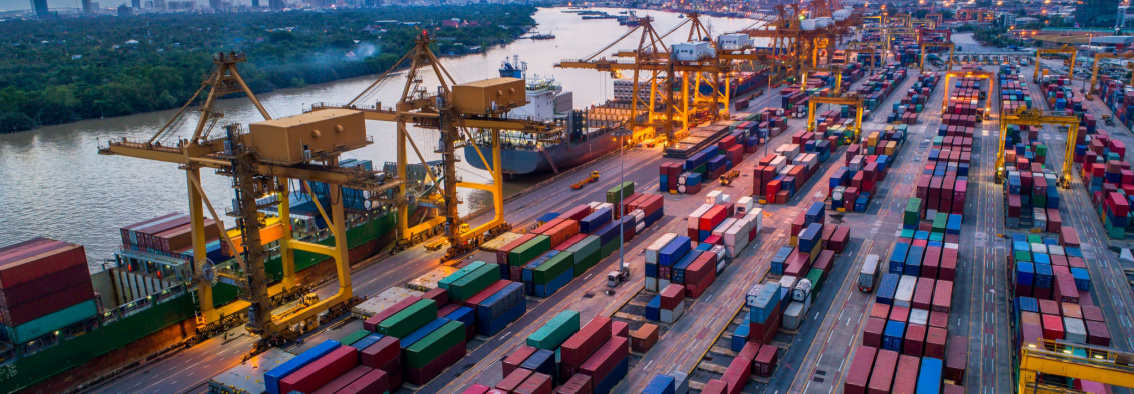

The Republic of China (Taiwan) has done much to reset how diplomacy stands as a viable approach in Southern Africa. In a region where it runs fewer embassies or representative offices and faces intense pressure from the People’s Republic of China (PRC), Taiwan has followed a familiar playbook, that of building influence through economics as opposed to competing through politics. This is not unique to Southern Africa alone, Taiwan uses the same logic behind the New Southbound Policy in dealing with matters towards Southeast and South Asia, where formal diplomacy is the same, narrow. What sets Southern Africa apart is the extent of the economic footprint in terms of the massive production facilities, businesses, skills and supply chain presence that exist beyond trade ties alone. This type of industrial diplomacy strategy often will lead to the integration of Taiwan into the production systems of partner economies in the region.
Taiwan’s diplomatic space in Africa has closed significantly in the last three decades, in that only Eswatini still maintains formal diplomatic ties with Taiwan. Most of the other countries (such as South Africa) shifted their recognition to Beijing in the late 1990s and early 2000s to fall strictly in line with the One China policy. This recalibration took place with the substantial growth of China’s economic footprints on the continent. Africa-China trade had surpassed USD 280 billion by 2023, making Beijing the biggest friend to trade with in the continent.
That said, Taiwan refused to be bogged down. Instead, it has leaned towards enabling economic ties as the crux of its foreign policy. Research from the United Nations Conference on Trade and Development has shown that relationships built on investments and production pipelines are more likely to generate lasting economic ties than ones relying on trade alone. Accounting for a sizable portion of Africa’s industrial output, with South Africa alone responsible for one-fifth of the continent’s value-added manufacturing, Southern Africa is the right place for this approach to blossom. This makes it a strategic gateway for Taiwanese investors willing to put in their resources in the longer term.
From Trade to Industrial Diplomacy
In the late 1970s to peak of the 1980s, Taiwan cultivated a strong relationship with Southern Africa that was, and still is, based on trade. Taiwanese companies specialized in machinery and spare parts, electronics, plastics, and agricultural industrial inputs exported their products into the region. In 2018, the value of Taiwan’s imports from Africa had plummeted to around USD 2.5 billion and USD 2.1 billion from exports. Consequently, there were fluctuations in Taiwan’s trade with Africa, a reality that shows limitations arise when engagement between two countries is based on only trade. In response, Taiwan swayed to a more robust economic strategy as its industrial diplomacy. Instead of just exporting goods, Taiwanese companies focus their attention on local production, joint ventures, and supply chains. The reason is that local production adds tremendous value like creating jobs, enhancing skills, and stitching economies into global value chains. They have also moved into sectors like light manufacturing, electronics assembly, and industrial components, indicating that a transition from transactional cooperations to regulatory integration is taking place.
South Africa: Essential to Taiwan’s Economic Presence
Out of all countries in the region, South Africa is the most important economic partner to Taiwan. Even after Pretoria’s decision to switch diplomatic recognition in 1998, economic ties continued—and, in some instances, ties have been strengthened. Despite the fact that South Africa recognized the PRC in 1998, economic ties with Taiwan continued. Their relationship has demonstrated a trend of “we sell you raw materials, we buy finished products.” In this arrangement, South Africa exports coal, iron, aluminum, minerals, and other commodities; while Taiwan exports manufactured goods like machinery, textiles, computer components, and other high-end industrial products. South Africa accounted for about 2 percent of the imports and exports from Taiwan in 1985, but more recently, it has remained Taiwan’s largest trading partner in Africa, with bilateral trade reaching R45.3 billion in 2022. In the 2010s, South Africa has maintained its position as one of Taiwan’s most significant African economic partners, being Taiwan’s 29th largest market in 2011, and Taiwan as its 15th largest export destination. However, roles are increasingly changing, as China’s trade with South Africa reaches.
Aside from trade, Taiwanese companies are instrumental in impacting the industrial landscape of South Africa. Around 800 Taiwanese companies are operating in the country, adding a total investment of USD 2 billion and supporting at least 40,000 local jobs. Many of these companies are located in manufacturing hubs like Newcastle, where Taiwanese textile and garment factories helped to establish an industrial zone that serves export markets. In spite of the fact that some of these industries have faced challenges arising from global competition, Taiwan has remained active in electronics distribution, plastic manufacturing, and services.
Eswatini: Diplomacy Anchored in Development
Even as South Africa is the backbone of Taiwan’s economic ties in the Southern African region, Eswatini continues to be its diplomatic and development partner. As clearly reflected through the International Cooperation and Development Fund (ICDF, 國際合作發展基金會), Taiwan led the implementation of programs on agriculture, healthcare, and education in Eswatini. In agriculture, they have supported irrigation systems, distribution of improved seeds, and led the modernization of farming techniques to help increase harvests and food security in the 57-year-old kingdom. Taiwan did not stop there; its medical teams have been instrumental in uplifting hospitals capacity in Eswatini, notably staff training and support of specialized services.
Among other programs is offering vocational training and educational scholarships to friendly countries including Eswati students. Far from being just initiatives, these programs have been successful in building the skilled workforce of the Kingdom. Since 2016, TaiwanICDF, in collaboration with Eswatini’s Ministry of Education and Training, has operated the Technical and Vocational Education and Training Enhancement Project: which produces many graduates through short-term skills courses, working to align with the workforce and the demands of the labor market.

Image: Officials at Taiwan-supported Maphungwane–Lukhetseni potable water supply project in Eswatini, part of a rural infrastructure and sanitation initiative aimed at expanding access to clean water and strengthening development cooperation. (Image source: Embassy of the Republic of China (Taiwan) in the Kingdom of Eswatini/Wikimedia Commons)
The Role of Taiwanese Firms and Supply Chain Integration
One feature of Taiwan’s industrial diplomacy is the crucial role being played by private companies. Unlike traditional diplomacy in which the government leads the way, Taiwan relies on its firms as first agents of contact here. As such, these companies and businesses enjoy massive support from the Taiwan External Trade Development Council (TAITRA, 中華民國對外貿易發展協會), Taipei trade offices, and the Ministry of Foreign Affairs (MOFA, 外交部) in areas like organizing trade missions, investment forums, and business matchmaking. TAITRA ensures that Taiwanese businesses are connected with their Eswatini partners through sector exhibitions and delegations. Taiwan trade offices give their own support by facilitating market access, and carrying out market intelligence and risk mitigation. MOFA provides diplomatic protection to Taiwan’s interests, manages geopolitical competition with the PRC, and works out memoranda of understanding with the host country to increase economic conditions for Taiwanese businesses.
In Southern Africa, Taiwanese businesses are serving as informal diplomatic actors in that they sustain friendship independently of political recognition (though Eswatini is excluded in this sense). Derlon, a Taiwanese textile company with over 30 years of history, employs 800 workers in Newcastle in South Africa. The company supplies more than 150 downstream sweater manufacturers in the country, a significant success that led to 50 to 60 more Taiwanese firms to set up operations in the region, even as some have since shut down under pressures coming from Chinese competition. Another Taiwanese company founded by stakeholders in 2017, known as Gemoto Industrial Alliance, has built itself into a supplier of automotive components within South Africa’s aftermarket economy. These companies have operated with very little formal backing from the government, but they have sustained commercial relationships and good local employment without Pretoria’s political recognition of Beijing.
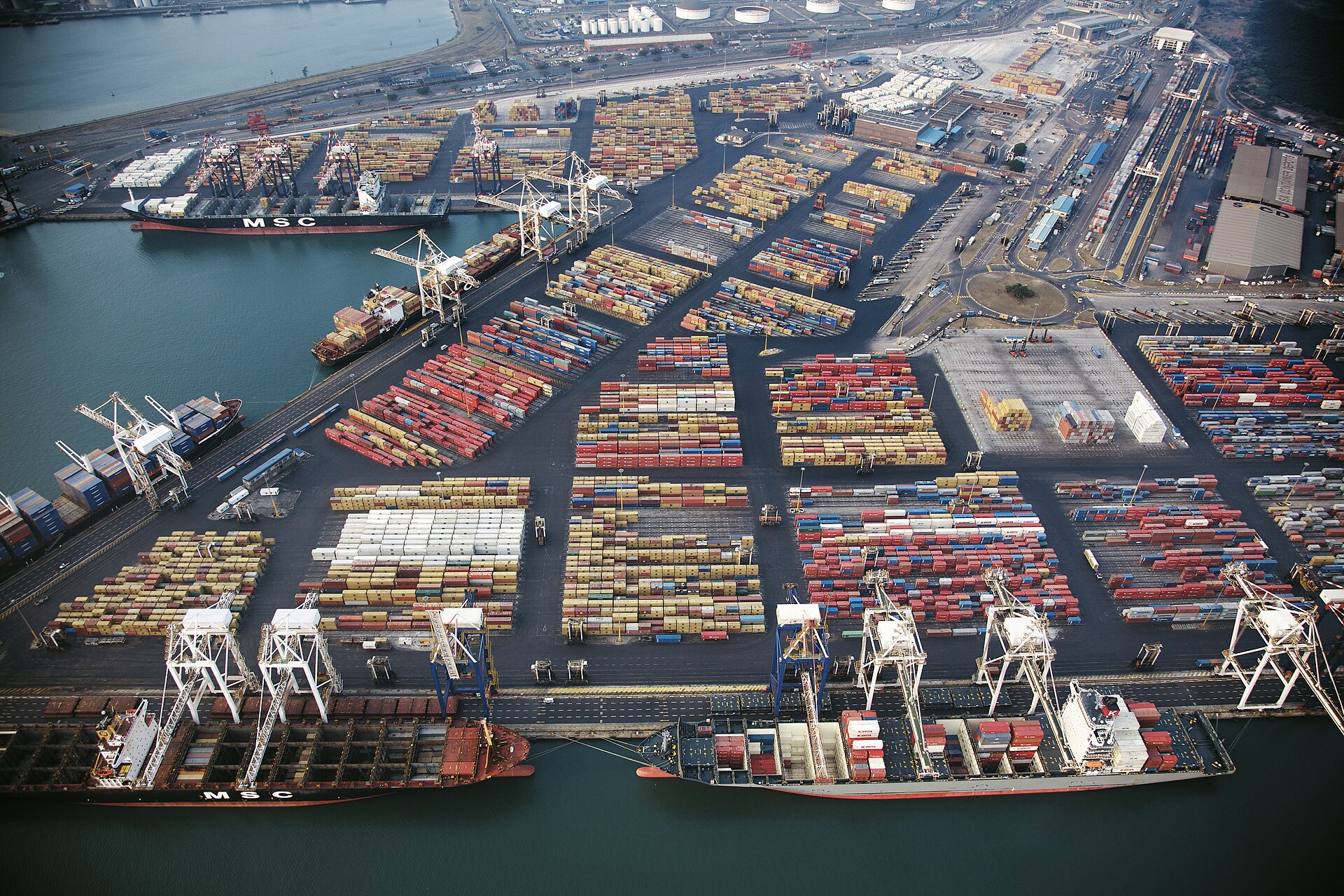
Image: A container terminal at Durban Port in South Africa showing large cranes, stacked shipping containers, and cargo vessels used for maritime trade and a main regional logistics in Southern Africa. (Image source: Wikimedia Commons)
The defining aspect of Taiwan’s industrial diplomacy in Southern Africa is about entering supply chains rather than increasing ties through standalone projects. The central issue is that modern manufacturing runs through divided cross-border production networks, and Taiwan has a strategy to plug into these systems. A research paper by Dr des. Sören Scholvin and Peter Draper note that, with its more advanced transport infrastructure, active industries, and access to markets in the region through the Southern African Development Community (SADC), South Africa is a vibrant route into a robust economic geography of more than 300 million people. The Taiwanese businesses based in South Africa are not only meeting domestic demands within the country, but are better positioned to supply other markets like Botswana, Namibia, and Mozambique.
Manifestations of this integration can be seen in the Taiwanese electrical and automotive components through vital corridors operated by South Africa. These goods move through Durban ports before reaching destination markets, connecting Taiwanese production networks to the consumption and assembly points.
This strategy has become increasingly important in the sense of diversifying the global supply chain. In fact, the Organization for Economic Co-operation and Development (OECD) and other policy institutions point out that companies are becoming more diversified towards their global supply chains in an effort to reduce overdependence on single-country production and to reduce exposure to concentrated dependencies in major sourcing locations.
While Southern Africa is still developing, it is a good alternative choice for light manufacturing. Taiwan’s Minister of Foreign Affairs, Lin Chia-lung (林佳龍), acting as President Lai Ching-te’s special envoy for a high-level Africa mission and policy briefing on Taiwan–Africa economic diplomacy that took place in Eswatini on April 2025, indicated that MOFA will continue to support Taiwanese enterprises expanding into African markets to enhance overseas economic cooperation by leveraging on Taiwan’s industrial strengths.
Ongoing Political Pressure
Even with growing economic cooperation, Taiwan’s footing in Southern Africa continues to be politically sensitive and contentious. Diplomatic progress for Taiwan has narrowed in the face of unending pressure from the PRC, which is using its economic influence and the “One China Policy” to change how governments in the region interact with Taipei. This pressure can render policy actions, such as the weakening of Taiwan’s diplomatic presence and stricter limitations on official friendship with strategic countries like South Africa, which doesn’t maintain diplomatic relations with Taiwan. Representatives of Taiwan run official activities of trade, investment facilitation, and cultural exchanges through liaison offices. These offices exist within a limited environment, controlled by the host governments to ensure they balance economic ties with China. The aim is to contain Taiwan’s formal diplomatic footprints against any official relations with local authorities, even as economic interactions continue.
This pressure on Taipei has forced it to reexamine its approach on what it can immediately control. Rather than seeking legitimacy through official channels, it relies on business-to-business (B2B) ties and strong connections that are less exposed to the tensions of politics. The way that Taiwanese companies and development agencies are capable of conducting their affairs in ways that prioritize commercial outcomes over symbolic diplomacy should be recognized. For instance, Taiwan’s business forums and industrial partnerships are often arranged without raising much public scrutiny, as with a Taiwanese trade delegation visit to Nigeria’s commercial town Lagos in March, which was not televised and did not have a press conference, reduces the risk of political backlash while keeping commercial cooperation flourishing. Taiwan is creating another facet of influence that is difficult to dislodge without incurring economic costs for the host country. Even though it cannot compete fairly with the PRC in terms of formal diplomacy, Taiwan is gaining traction below the political surface, sustaining ties with mutual economic benefits.
Policy Implications
The realities in Southern Africa have shaped Taiwan’s experience, where industrial diplomacy can substitute for formal diplomatic recognition if further deepened and systematized. This means moving outside the scope of episodic trade missions towards sustained industrial integration. One priority should be scaling the support for small and medium-sized enterprises through collaborative mechanisms led by TAITRA, focusing on establishing clusters of manufacturing sectors where Taiwan is very much present and has comparative advantages (such as electronics, light manufacturing, and renewable energy). These sectors should be paired with vocational training streams in collaboration with local institutions to ensure that technology transfer leads to a boost in the skilled workforce.
At the same time, Taiwan needs to consolidate its footing in South Africa as an important anchor in the region. Due to South Africa’s improved logistics infrastructure and access to markets via SADC, investments in industrial parks, export processing zones, and supply chain pipelines can put Taiwan in a sustainable position in regional manufacturing networks. With that, it would fit with other global efforts towards diversifying supply chains, especially with respect to ongoing disturbances in Asia-centric production systems.
For countries in Southern Africa, ties with Taiwan give them a pathway to advanced industrialization without overdependence on a single foreign partner. Respective governments should actively integrate Taiwanese investment into their national industrial frameworks by providing clear regulatory laws, improving contract enforcement, and fixing their incentives models toward sectors that bring about employment and social value. Their partnerships with Taiwanese companies should be structured to consider the requirements for local content, such as the minimum local manufacturing baseline for specific sectors in South Africa, which require a set percentage of the value of a product to be manufactured locally instead of only being assembled from imported parts—alongside transfer of skills, and joint ventures—which can ensure that foreign investment contributes directly and sustainably to domestic production capacity.
Critically, policymakers and experts in Taiwan-Africa relations must adopt a flexible geopolitical approach. Instead of looking at diplomatic ties with Taiwan as a zero-sum choice against the PRC, Southern African countries can pursue complementary economic relationships that have the capacity to maximize their access to Taiwan’s technology, investment diversity, and strategic flexibility. Taiwan’s model anchored in precision manufacturing, SME growth, and human capital development fills the gaps that partners relying on infrastructure alone often leave behind.
The main point: Through industrial diplomacy, Taiwan is maintaining and expanding its influence in Southern Africa using businesses, strategic investment, and supply chains to bring about lasting economic partnerships, despite its challenges in gaining diplomatic recognition.


.jpg)