
Taiwan and South Korea, the two largest of the Four Asian Dragons by population and economic output, are fierce rivals, especially in the semiconductor manufacturing industry. But their common reliance on China’s market has become a vulnerability that neither can address alone. Each controls crucial nodes of global semiconductor manufacturing, and together they could constitute a chokepoint in the global hardware ecosystem.
Taipei and Seoul should collaborate to open new markets and negotiate with major powers. Together, they have leverage that neither one can wield so effectively alone.
Rivals, but Also Partners
Taiwan and South Korea have long been bitter rivals. The relatively recent memory of Seoul switching recognition from Taipei to Beijing in 1992 has left a lingering sense of betrayal among many Taiwanese, as South Korea was the last country in Asia to end diplomatic relations with Taiwan.
In the 2000s and 2010s, South Korea’s Samsung Electronics allegedly pursued a “kill Taiwan” plan aimed at undermining Taiwan’s chipmaking capabilities. Furthermore, the contested judgment in the taekwondo competition at the 2010 Asian Games, also called “Sockgate,” sharply eroded bilateral public goodwill.
In 2012, Foxconn founder Terry Gou (郭台銘), while discussing competition with Samsung, used the derogatory racist slur, gaoli bangzi (高麗棒子), to refer to Koreans, prompting strong criticism and further fueling anti-Taiwanese sentiment in South Korea. Given this bitter history and the very real financial stakes involved, the South Korean and Taiwanese chip firm rivalry is often shaded by feelings of mutual antagonism.
In the past, outside attempts to align Taipei and Seoul’s chip policies—such as President Joe Biden’s “Chip 4 Alliance” concept—fell short because they did not adequately reckon with the logic of heated competition between leading Taiwanese and South Korean chipmakers.
However, unhealthy rivalry and nationalism should not blind either side. The two neighboring East Asian democracies, together with their manufacturing champions, have a far more synergistic relationship today than many assume.
Taiwanese American Nvidia CEO Jensen Huang’s (黃仁勳) recent consecutive visits to Taiwan and South Korea in late May and early June, respectively, garnered warm welcomes in both places. Such a reaction speaks to how deeply interconnected and complementary the two economies have become in today’s semiconductor industry. Huang was also awarded this year’s James A. Van Fleet Award for his contributions to the promotion of US-South Korea relations.
Economically, the Asian neighbors have built enduring ties. In 2025, South Korea was Taiwan’s third-largest trading partner, while Taiwan was South Korea’s fourth-largest. Furthermore, a partial division of labor already exists between the two economies. Taiwanese firms, notably Taiwan Semiconductor Manufacturing Company (TSMC, 台灣積體電路製造股份有限公司), manufacture advanced logic chips, while South Korea’s Samsung and SK Hynix dominate memory. These companies (and both countries) are integral to today’s AI revolution, both for training AI models and supplying data centers.
The two economies conducted over USD 60 billion in bilateral chip trade in 2025, with Taiwan’s advanced logic chips supporting rapid AI compute infrastructure development in South Korea, while Taiwan packages many South Korean-made high bandwidth memory (HBM) chips. In 2025, Taiwan imported around USD 49.3 billion worth of integrated circuits from South Korea, representing 37.7 percent of Taiwan’s chip imports, far more than from any other country. South Korea accounted for a smaller but still significant share of Taiwan’s integrated circuit exports, around USD 18.4 billion, or 8.8 percent.
Shared Challenges
Yet despite this growing industrial interdependence, Taiwan and South Korea remain exposed to the same strategic vulnerability: both of them depend heavily on China as a major downstream market for their chips.
China’s booming electronics industry consumes vast quantities of semiconductor chips for everything from iPhones to appliances to AI data centers. In 2025, 51.2 percent of Taiwan’s chip exports went to mainland China or Hong Kong, while 41.7 percent of South Korean chip exports headed to the PRC.
Such overwhelming reliance on one market—especially one that is actively subsidizing its own domestic chip manufacturers to gradually reduce foreign dependence—carries substantial economic security risk. SK Hynix, Samsung, and TSMC may eventually lose much of China’s demand to state-backed Chinese firms. Moreover, Beijing’s increasingly aggressive security posture and willingness to coerce smaller economies make China a fundamentally unreliable customer.
Taiwan and South Korea have long recognized this problem, and each has pursued its own trade reorientation over the past decade. Taipei launched the “New Southbound Policy” under former president Tsai Ing-wen (蔡英文) in 2016. Seoul followed in 2017 by initiating its “New Southern Policy” under then-president Moon Jae-in. These policies succeeded in deepening economic relations with other markets—especially those in Southeast Asia—but have failed to fundamentally reorient chip exports away from China. At the time, the political impetus and market opportunities were simply insufficient.
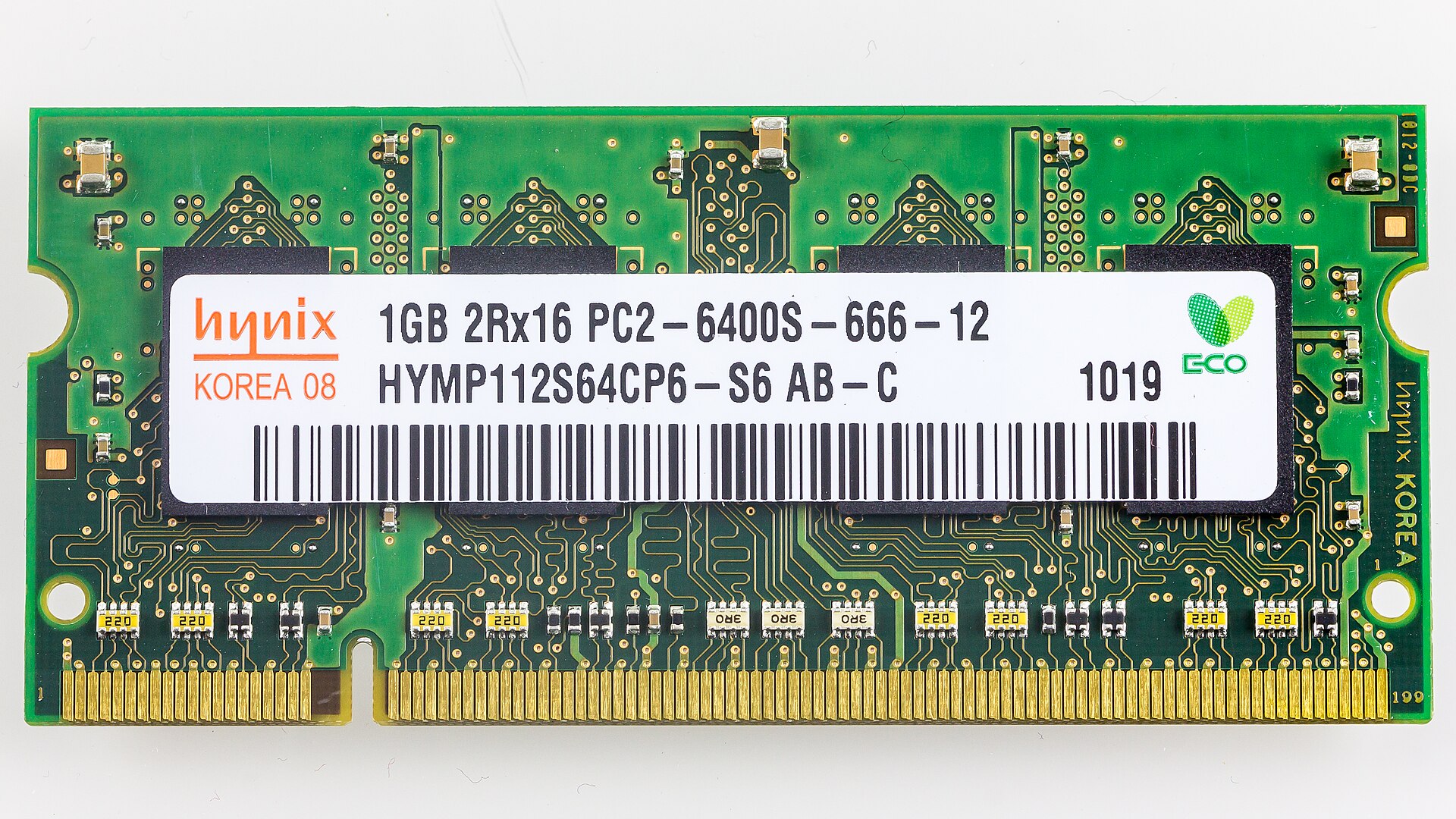
Image: A semiconductor chip manufactured by SK Hynix, one of South Korea’s major chip manufacturers. Taiwan and South Korea manufacturers have faced intense competition qin the market for advanced chips. (Image source: Wikimedia Commons)
How to Team Up Through Chips
Today, Seoul and Taipei cannot afford to go it alone. Reducing the relative weight of the Chinese market for their chip exports is not only a security imperative; it is an economic necessity as China’s indigenous chip ecosystem gains ground.
Building on the complementary strengths of their semiconductor industries, South Korea and Taiwan could establish an industry-led bilateral working group led by their chip giants—TSMC, Samsung, and SK Hynix—to coordinate semiconductor trade and investment policy.
Given the absence of formal diplomatic relations, a direct government-to-government framework with ministerial leadership would not be realistic. However, the sheer economic and monetary weight of these private firms and their close ties to their respective governments would give a cooperative framework substantial influence and credibility. For instance, Taiwan’s National Development Fund is a major shareholder in TSMC, while TSMC founder and former CEO Morris Chang led Taiwan’s Asia-Pacific Economic Cooperation (APEC) delegation seven times between 2006 and 2023.
Similarly, given its strong relationships with Korean chip firms, the Lee Jae Myung administration has a record of leveraging its commercial involvement to pursue decisive political objectives. For instance, ahead of the August 2026 election in South Korea for Democratic Party leadership, Lee promoted a major semiconductor cluster in Jeolla Province backed by planned investment from Samsung and SK Hynix. The initiative benefited one of Lee’s cabinet officials, Kim Min-seok, helping him win the election for party leader to replace Lee’s prominent rival within the party, Jung Chung-rae. Critics accused the administration of using corporate investment to tilt politics in Lee’s favor. Yet, this example demonstrates that Seoul maintains substantial influence over its domestic semiconductor industry—and could work effectively with those firms to facilitate de facto economic collaboration with their Taiwanese counterparts that prioritizes national rather than private interests.
Similarly, TSMC—which was established with Taipei’s financial and political backing in 1987—retains close ties to Taiwan’s political leadership. Taiwanese and South Korean industry associations and companies would provide the institutional backbone of the working group and serve as the primary channel for bilateral engagement, with which the governments could easily and regularly engage. Trade and economic government officials could participate discreetly at the working level or through the two sides’ representative offices. More senior officials would have the opportunity to speak directly in private meetings alongside multilateral institutions in which both are represented, such as the APEC, to coordinate the working group. Some level of unofficial government contact is prudent to ensure that the nominally private sector working group advances the interests of South Korea and Taiwan as a whole, as well as those of their chip firms.
This working group would have two primary aims: (1) to develop a common strategy to cultivate new markets; and (2) to coordinate negotiations on new trade and investment agreements with major economies from a position of greater strength.
One Strategy, One Face
Taiwanese and South Korean chips flow primarily to three sectors: cloud computing infrastructure; consumer goods such as electronics, appliances and automobiles; and telecommunications equipment. Yet China’s massive output in all three categories has created a gravitational pull that has been hard for Taiwanese and Korean chip firms to escape. As a result, any joint Taiwan-South Korea strategy for cultivating overseas markets and negotiating trade agreements must go beyond setting up chip packaging facilities or even fabs. They must push for a broader set of economic reforms in those markets that will facilitate the rapid development of consumer electronics manufacturing and cloud computing infrastructure.
India holds the most potential. Unlike in Southeast Asia, Chinese investment and 5G telecommunications penetration are fairly low, and the country has massive room for growth. Individual Taiwanese and South Korean firms such as Foxconn, Samsung, and Hyundai have had success with particular projects that received special Indian government attention and support. Indeed, the Indian government has repeatedly identified electronics, automobiles, and semiconductors as key sectors to bolster India’s manufacturing output. But India’s complex regulatory environment, bureaucratic proceduralism, infrastructure development bottlenecks, and sometimes counterproductive labor laws mean that India’s operating environment remains very difficult for foreign investors. [1] As a result, India has failed to generate an electronics manufacturing ecosystem—and chip demand—that can rival China’s.
By speaking with one voice to New Delhi as the only two economies capable of helping fulfill India’s ambitions in electronics and semiconductor manufacturing, Seoul and Taipei might make greater progress in pressing for reforms in India than either could alone. They might also open greater access for Taiwanese and South Korean firms to a more populated market than China—one which has yet to expend its demographic dividend.
The same logic applies to Taiwan’s and South Korea’s policies vis-à-vis the United States. In recent years, successive US administrations have pressed Taiwanese and South Korean chipmakers to expand manufacturing on American soil, from the Biden Administration’s CHIPS and Science Act to the Trump Administration’s greater demands for investments in the United States. Washington’s desire to reshore enough chip production to sustain its defense capabilities and economic system in a supply shock is a rational pursuit. However, as long as key inputs, downstream packaging, and testing still occur outside of the United States, domestic chip fabrication alone is inadequate to ensure US economic resilience. Moreover, a substantial share of the world’s chips still end up in electronics made in Asia. Even if the United States can ensure a bare minimum supply at home for military use and cloud services providers, it will have to look beyond its borders for sufficient demand to make US chip production economical in the long run.
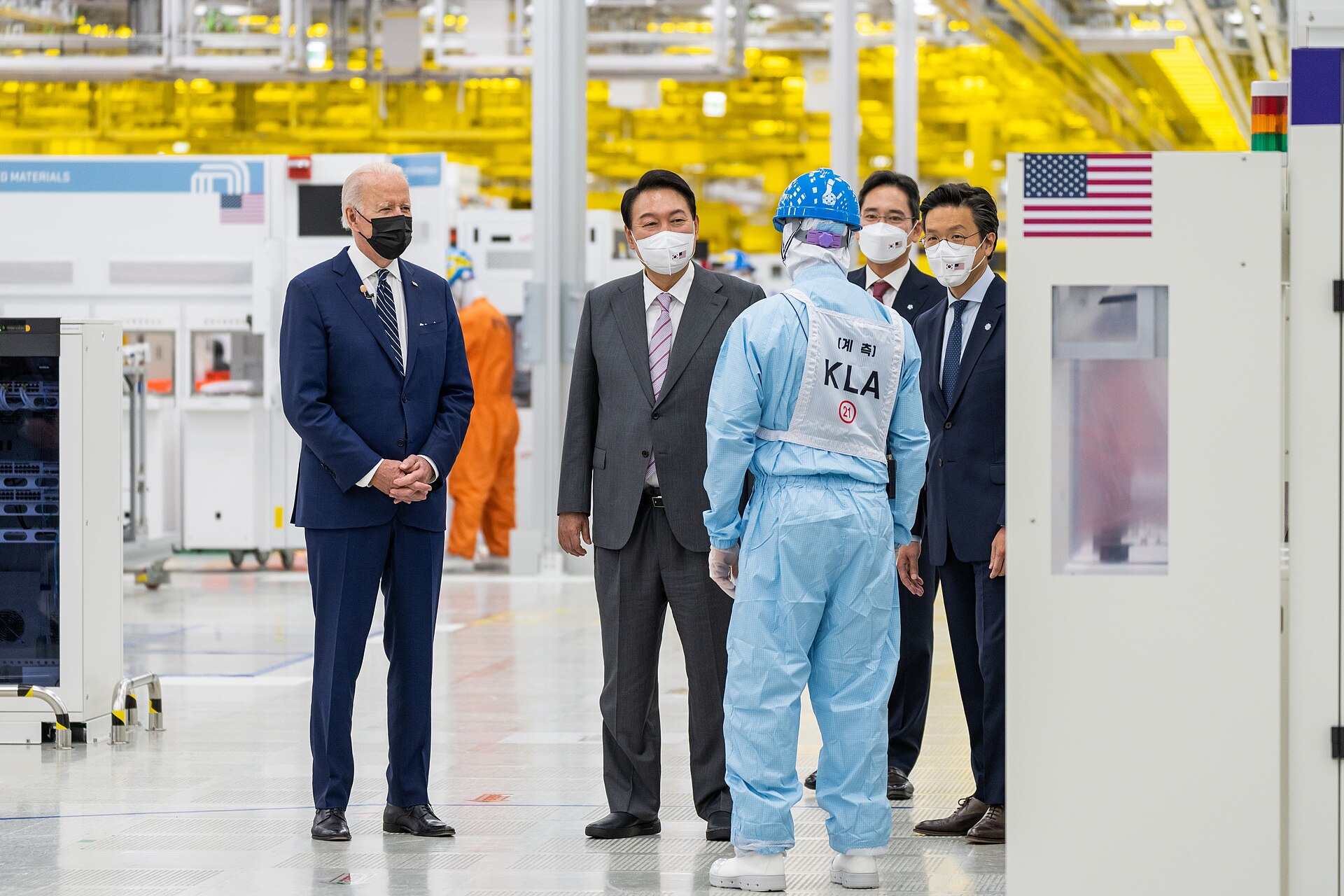
Image: Then-President Joseph Biden and then-President Yoon Suk-yeol visiting a Samsung semiconductor plant in South Korea (May 2022), (Image source: Wikimedia Commons)
More recent US administrations have focused on boosting foreign investment in the United States. A Washington willing to subordinate political and geostrategic partnerships in favor of a maximum reshoring effort might seek to play Taipei and Seoul against each other by inducing them to pledge ever greater semiconductor investments. This tactic could gradually hollow out the manufacturing capacity underpinning their respective “silicon shields,” leaving both more vulnerable to security threats from China in the long run—even if the most advanced logic chips are still produced in Taiwan.
Instead of competing to offer ever-larger investments and concessions, Taipei and Seoul should coordinate the scale, terms, and technological scope of their US investments. Rather than sending an ultimatum to Washington, Taipei and Seoul could provide a roadmap for a sustained Taiwan-South Korea-US trilateral partnership on semiconductor innovation and fabrication to support US-led AI stack dominance (which covers the whole production chain from critical minerals and energy to semiconductors and telecommunications equipment, upon which the development and rollout of AI software relies). This triangle would be based on mutual trust and common economic and security interests. This would be far more beneficial to all involved—including the United States—than haphazard investment pledges.
Targeted investments would complement ongoing economic security projects (such as the Hanwha Philly Shipyard in Philadelphia) and help anchor chip fab suppliers in the United States. They would also allow Taiwanese and South Korean chip firms to better serve their US customers; indeed, this was part of the rationale that made the initial TSMC plant in Arizona feasible. More direct cooperation between Taipei, Seoul, and Washington may also allow all three parties to identify and capitalize on new production synergies of which US policymakers may not be aware.
The main point: Ongoing commercial rivalry and nationalist sentiments show that the Taiwan-South Korea partnership will not be easy. But in continuing to work alone—and sometimes at odds—Taipei and Seoul are leaving leverage on the table that could secure their symbiotic prosperity for years to come.
[1] Devesh Kapur and Arvind Subramanian, A Sixth of Humanity: Independent India’s Development Odyssey (Gurugram: HarperCollins Publishers India, 2025).