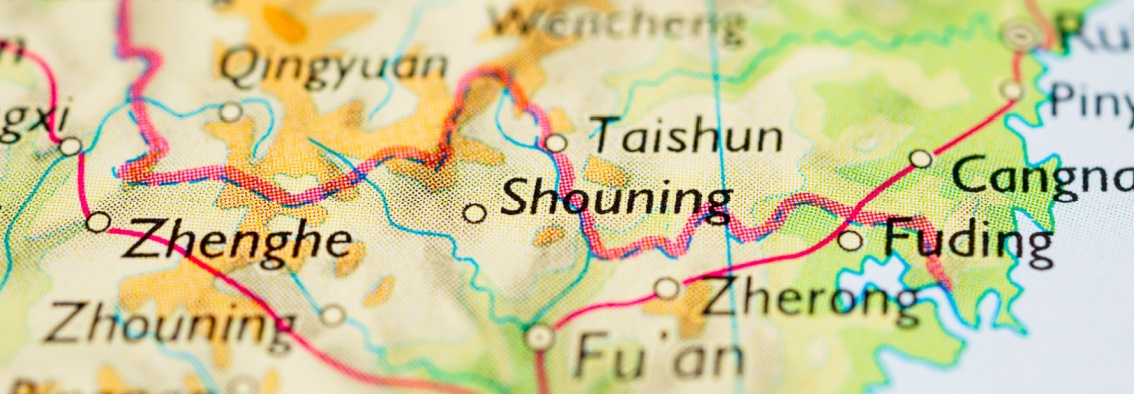

Fujian is a critical launchpad for the People’s Republic of China’s (PRC) coercive unification operations aiming at Taiwan in both peacetime “gray zone” and contingency scenarios. In particular, Fujian’s maritime militia has become an indispensable actor in the PRC’s implementation of its unification objectives and cross-Strait signaling, including lawfare, maritime operations, and military exercises, all supported by enhanced maritime domain awareness (MDA) and anti-access/area-denial (A2/AD) capabilities. Through activities such as monitoring maritime targets, coordinated swarming, and vessel inspections, local militia units contribute to intelligence, surveillance, and reconnaissance (ISR) functions that support PLA operations while advancing sovereignty claims in low-kinetic forms.
Red Culture: Civil-Military Integration Heritage in Fujian
Rather than being a recent ad hoc creation, Fujian’s militia draws legitimacy and continuity from a long-standing civil-military governance tradition. Ingrained solidarity among the Chinese Communist Party (CCP), the military, and the civil sector underpins Fujian’s ongoing implementation of its militia initiatives.
After its founding in 1921, the CCP institutionalized its first series of “revolutionary bases” (or “red bases”) (革命根据地) for capacity-building during its “people’s war” (人民战争) insurgency, using them for guerrilla warfare and political mobilization. Locals were recruited and often assimilated into the CCP under political working groups, receiving training in literacy, ideology, and combat skills. Fujian Province served as both a regional foothold for the Chinese Communist Party (CCP) during the Chinese Civil War, as well as its final battleground during the Battle of Dongshan Island (東山島戰役 / 东山岛保卫战) in 1950. As a result, Fujian’s deeply rooted civil-military ties and “frontline supporting tradition” (支前传统) have a long legacy in terms of the province’s militia development.
PAFMM: A Critical Facet of the People’s Armed Force
The People’s Armed Force Maritime Militia (PAFMM, 海上民兵) is often referred to as the “third sea force” (中国海军的第三支力量) and serves as a force multiplier for the People’s Liberation Army (PLA). The force is distributed across 11 provinces nationwide, including the coastal provinces of Zhejiang, Hainan, and Fujian. The PAFMM includes civilians from various industries, while PLA veterans and professionals in maritime administration, commercial shipping, fishing, and emergency response constitute a significant portion of its membership. Such components and recruitment patterns also apply to the PAFMM in Fujian, which prioritizes candidates with military backgrounds and vessel maneuvering certifications (船只驾驶证) through targeted recruitment.
Referred to as the “Helpers of the PLA” (解放军的助手), the PAFMM enhances the PLA’s skill sets and overall capacity for various types of missions. After completing basic military and maritime security training, including education in situational awareness and reporting functions, PAFMM civilians become auxiliaries within the PRC’s broader maritime governance and signaling framework. As a result, the PAFMM actively engages in a range of tasks, from humanitarian support to enhancing maritime domain awareness, including patrolling, search-and-rescue, and medical aid, while remaining relevant and ready for contingency operations. These include, but are not limited to, regular gray-zone activities (e.g., ISR, air and sea incursions) and deliberate escalation from the gray zone. The scenarios of the latter usually span vessel inspection, quarantine, and drills and exercises that could evolve into operations.
From the perspective of organizational structure, Fujian Provincial Military District (福建省军区) of the PLA, PRC government branches across all levels (Province-level; Prefecture-level; County-level; Township-level), the National Defense Mobilization Commission (国防动员委员会), and the People’s Armed Forces Department (PAFD/人民武裝部, also abbreviated as 人武部) are all institutional components of Fujian PAFMM’s ecosystem from the military side, while local PAFDs serve as the primary actors in maintaining the militia’s functionality and mobilization readiness. Specifically, local PAFDs, including county-level PAFDs, are responsible for the initial recruitment of local militia and for overseeing its organization, training, and potential mobilization. Such an institutional responsibility can be verified through the latest militia recruitment announcement on the WeChat platform from YouXi County’s PAFD (尤溪县人武部). Meanwhile, militia members are required to respond to mobilization orders from any level.
The PAFMM in Operation
Over the past decades, Fujian’s militia has evolved from playing minor roles in coastal defense, anti-piracy, and civil war combat to those of a modern maritime force. Today, it serves as more than just a “helper of the PLA”: It is a critical feature of the PLA‘s cross-Strait signaling strategy.
As a dual-use force, the PAFMM in Fujian has taken an active part in a range of tasks (多样化任务) since 2016, engaging in maritime surveying and navigational guidance, including participation in the Eastern Theater Command’s island encirclement simulation (合围台岛演习) following former US House Speaker Nancy Pelosi’s 2022 visit to Taiwan. Since 2023, PAFMM units have facilitated gray-zone tactics in lawfare, including vessel inspections, sea mapping in contested areas, and close encounters with Taiwanese vessels and personnel. The PAFMM has played supporting roles in the recurring “Joint-Sword Exercise Series” (联合利剑系列演习) around Taiwan (see here and here). Local units have been immersed in training and simulations for seamless “operational conversion between peacetime and contingency” (平战转换)—while further supporting nearshore patrolling, maritime search and rescue (海上搜救), and emergency responses during extreme weather, such as tropical storms and typhoons.
Maritime Assets and Militia Training Infrastructure
Fujian Province has long leveraged its coastal status and political-military heritage to develop its maritime militia. The province has pursued a maritime-centered development strategy since the 1990s to establish itself as a “leading coastal province” (海洋強省). Maritime assets, including deep-water ports and training bases in its critical coastal cities—Xiamen (厦门), Quanzhou (泉州), Zhangzhou (漳州), Dongshan (东山), and Pingtan (平潭)—have established robust logistical foundations for the PAFMM’s coordination, training, and mobilization.
Militia training bases in Fujian are distributed across the province’s cities, from the municipal to the county level. The number of sites continues to expand, including the ongoing base construction project in Minhou County (闽侯县). While the exact number and locations of all active militia training bases remain unverified, open-source intelligence has confirmed the locations of several PAFMM training bases in active use so far. These established bases are located in Quanzhou City (泉州海上民兵训练基地) in Quanzhou Ocean Institute (泉州海洋学院), Zhangzhou City (漳州南炮台训练基地), Dongshan Island (东山岛), Ningde (宁德陆军预备役海防团训练基地), as well as two bases in Xiamen City (厦门水警训练基地、厦门海沧区民兵训练基地). The militia training base in the Haicang District of Xiamen (厦门海沧区民兵训练基地), established in July 2025, is the newest and one of the largest PAFMM training bases. Bases in Dongshan have trained both the People’s Liberation Army Navy Marine Corps, and local militias each year in various combat subjects, particularly amphibious landing operations and beach obstacle breaching (滩头破障), as well as supporting roles. Meanwhile, the People’s Liberation Army Navy (PLAN) has conducted annual amphibious assault training exercises on Dongshan Island since the mid-1990s, following the Third Taiwan Strait Crisis.
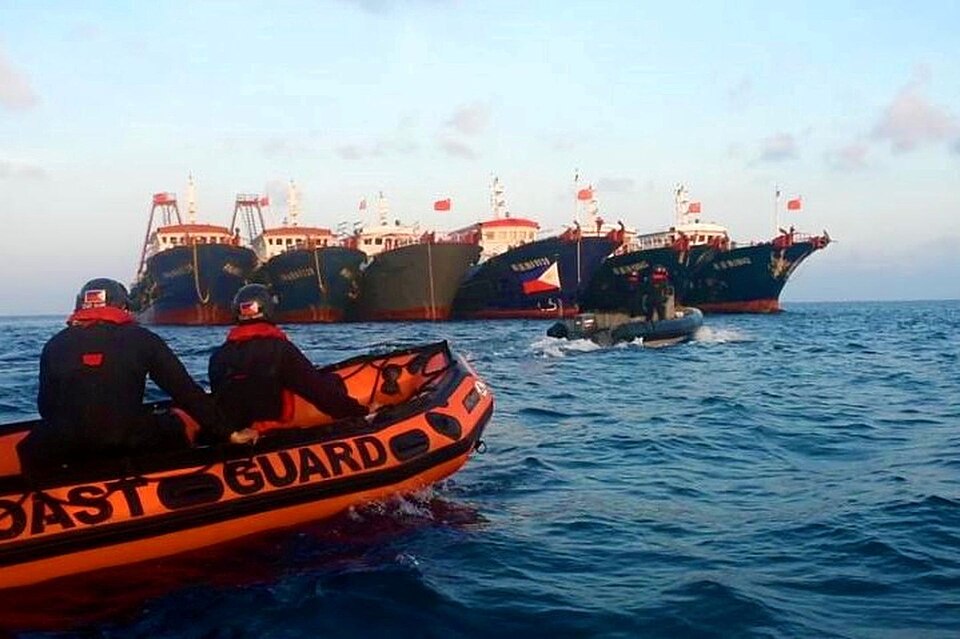
Image: Philippines Coast Guard personnel approach Chinese-flagged vessels near Whitsun Reef (AKA Julian Felipe Reef) in the Spratly Islands (April 13, 2021). The coordinated use of such vessels illustrates the increasing role of the Chinese Maritime Militia in pursuing Chinese state goals. (Image source: Wikimedia Commons)
Governance Structure and Command Hierarchy
The National Defense Mobilization Commission of the Fujian Provincial Military District (省军区国防动员委员会) is the leading coordinating body responsible for integrating military requirements with civilian resources at the provincial level. Incorporated into PRC’s broader national defense mobilization system, the commission operates under a civil–military coordination framework (军地联合) to plan, organize, and oversee the mobilization of personnel, transportation assets, and logistics in both peacetime and contingency scenarios.
At lower administrative levels, corresponding branches of the National Defense Mobilization Commission at the prefectural and county levels execute and coordinate the inspection, registration, and the organization of civilian vessels and other maritime assets into militia units. In parallel, national defense transportation authorities (国防交通主管机构) at the provincial and municipal levels manage the requisitioning and operational mobilization of civilian vessels to ensure operational readiness of maritime assets.
At the grassroots level (基层), local People’s Armed Forces Departments (人民武装部) keep detailed registries regarding both personnel and vessels, drawing on open-source reporting and local policy documents that indicate systematic tracking mechanisms for mobilization readiness. Under the principle of “one vessel, one file; one individual, one record” (一船一档,一人一册), each registered vessel is paired with a dedicated administrative file documenting ownership, capabilities, and mobilization status, while individual militia members are cataloged with personal, professional, and political information to facilitate rapid activation and assignment.
This multi-layered organizational structure—spanning military, administrative, and civilian institutions—may appear complex, but in practice it enhances responsiveness, and local adaptability. Rather than representing fragmentation, the system enables distributed coordination across jurisdictions while maintaining centralized strategic direction. As a result, Fujian’s maritime militia can mobilize quickly, operate flexibly in nearshore environments, and integrate civilian maritime resources into broader military and signaling activities with relatively low friction.
Recruitment and Personnel Composition
The PAFMM’s recruitment in Fujian adheres to strict regulations, yet participation remains fully voluntary. In practice, the recruitment and assimilation process often prioritizes CCP members, seasoned professionals in navigation and broader maritime affairs, and professionals holding the “Seafarer Identification Document of the People’s Republic of China,” (中华人民共和国海员证) issued by the Maritime Security Administration of the PRC (中华人民共和国海事局). Such an identification is commonly referred to as a “Seaman’s Book”. According to the “Regulations for the Crewmember of the People’s Republic of China” (中华人民共和国船员条例), this document is required for Chinese nationals serving as crew on internationally operating vessels or undertaking overseas maritime assignments. Such staffing prioritization also applies to veterans with combat experience. Local recruitment notices indicate a preference for personnel with maritime-related professional skills, including navigation and seafaring experience.
As a result, Fujian’s PAFMM categorizes recruits into “core militia” (基干民兵) and “regular militia” (普通民兵), under two separate organizational structures. The former—as the more skilled force—acts as the vanguard for “high-risk missions” (高风险任务). The political vetting of militias in critical positions is routine. Political vetting and allegiance investigations usually occur during the recruiting stage and the formation of the militia unit, and the promotion of individual militiamen to core positions (骨干).
Regulatory and Incentive Framework
The PAFMM regulation and incentive framework is standardized, following provincial directives but locally implemented. In January 2025, the Fujian Provincial Government issued its “Measures for Guaranteeing Militia Rights and Interests” (福建省民兵权益保障办法), the latest provincial regulation concerning the incentives and benefits that are guaranteed for PAFMM personnel. The objective of the regulation was to enhance the Fujian PAFMM’s “sense of honor, sense of gain, and sense of responsibility” (荣誉感、获得感和责任感). The regulation has unified the incentive and reward system province-wide, encompassing compensation, labor protections, insurance, and certifications. The regulation specifically instructs banks and other financial service providers to consider innovative financial products that offer “appropriate favors” (适度优惠倾斜) for militia members.
Another prefecture-level regulation, the 2002 “Several Provisions on Militia Work in Urban Fuzhou” (福州市城市民兵工作若干规定), delegated financial administration of the militia to the city and district levels, including funds for training and equipment storage. In addition, the city of Fuzhou has been implementing the “Contemporary Regulations on Civilian Vessel Requisition and Crewmen Mobilization” (福州市民用船舶和船员民兵动员征用暂行规定) since 2005, which sets the standard for PAFMM members’ financial compensation. As the headquarters of both the Eastern Theater Command and the Fujian Military District, Fuzhou has been classed as one of the “Model Cities of Double Support” (双拥模范城市). “Double Support“ (双拥) is a shorthand for “localities support military members and their dependents, the military supports the government and loves the people” (地方拥军优属、军队拥政爱民). Other “Double Support” coastal cities, including Xiamen and Zhangzhou, also serve as launchpads that underpin the Fujian PAFMM’s activities.
As a result of these regulations, militia personnel in Fujian now qualify for employment advantages, special benefits from state-owned banks, subsidized medical services, and are legally guaranteed compensation for training. In particular, these “reward criteria” (奖励标准) that are implemented at prefecture-level cities (e.g., Putian/莆田) aim to bolster local militiamen’s morale and enthusiasm for training participation.
The main point: The PAFMM in Fujian has developed into a dual-use actor that can both safeguard the province’s maritime security and also assist the PRC’s unification objectives toward Taiwan. It serves as a political signaling tool during peacetime gray-zone activities and as an indispensable auxiliary for the PLA Navy’s potential operations in a Taiwan contingency. As a result, international stakeholders should closely monitor the development of PAFMM.