
Introduction
In late May, Philippines President Ferdinand Marcos Jr. visited Tokyo for a summit with Japanese Prime Minister Sanae Takaichi—a summit in which the two leaders announced that ties between their countries were being elevated to the level of a “comprehensive strategic partnership.” Among the issues discussed at the summit were an agreement for the increased exchange of intelligence information (the “General Security of Military Information Agreement” or GSOMIA), and a new series of negotiations to resolve maritime sovereignty disputes. The latter series of talks will be primarily focused on issues delineating the exclusive economic zones (EEZs) and continental shelves of the two countries, which carry implications for fishing rights and other economic activity.
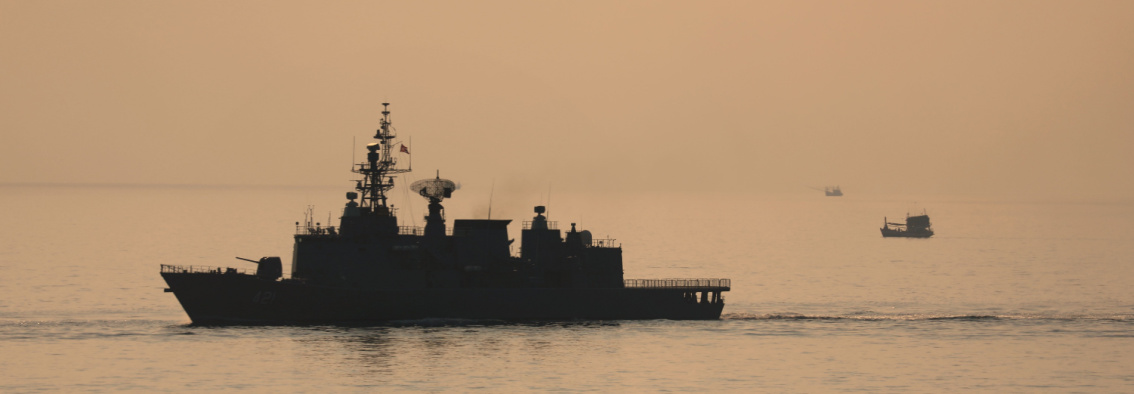
These negotiations continue a trend of warming ties between the two states—to include a growing security relationship, as seen in the “Japan-Philippines Reciprocal Access Agreement” signed in August 2025. That agreement opened up mutual military base access, and provided for “cooperative activities, such as joint exercises and disaster relief,” and to “improve interoperability between the [armed] forces of the two countries.” The growing security relationship has also been seen in agreements for transfers of military equipment: most prominently, plans announced this year for the transfer from Japan to the Philippines of five Abukuma-class destroyer escort ships in 2027, once they are decommissioned from service with the Japanese Maritime Self-Defense Force (JMSDF).
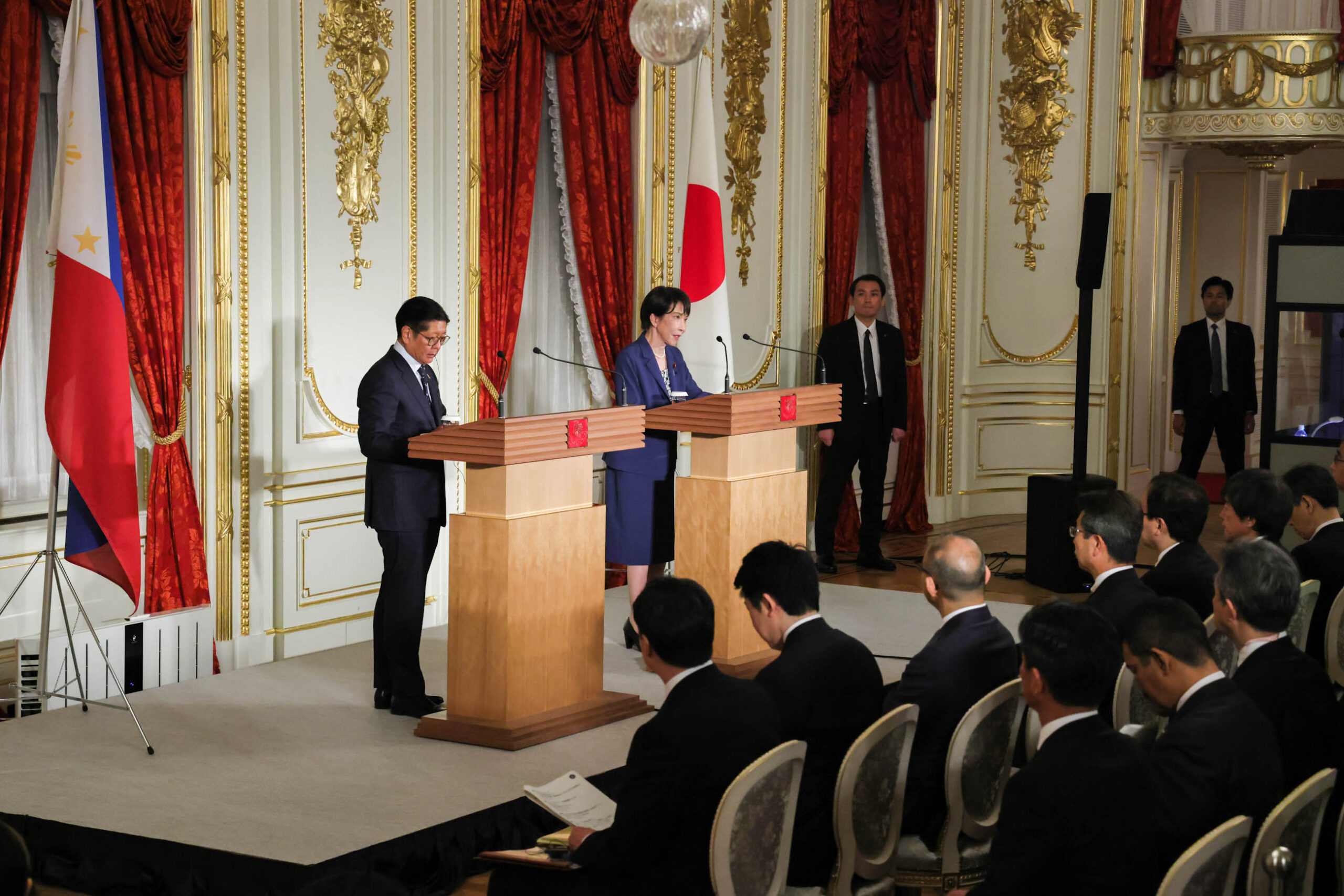
Image: Philippines President Ferdinand Marcos Jr. (left podium) and Japanese Prime Minister Tanae Takaichi (right podium) at a joint press conference in Tokyo (May 28). During their summit, one of the initiatives announced was a new series of negotiations to resolve maritime disputes between the two countries—an announcement that triggered an angry response from the government of the PRC. (Image source: Japanese Prime Minister’s Office)
Amidst the complicated competing sovereignty claims in the East China Sea (ECS) and the South China Sea (SCS)—which include both Taiwan and the People’s Republic of China (PRC) amongst the multiple rival claimants—the bilateral negotiations between Japan and the Philippines announced at the May summit are a significant step towards untangling disputes that might otherwise hinder their advancing security relationship. The announcements also came close in time to a significant anniversary regarding SCS territorial claims: the 10th anniversary of the July 2016 “South China Sea Arbitration” ruling by the International Court of Arbitration in The Hague. This case, brought in response to a filing by the Philippines, substantively rejected the expansive maritime sovereignty claims made by the PRC accompanying its asserted “Nine Dash Line” in the SCS.
What might have otherwise seemed like a low-key diplomatic announcement between Japan and the Philippines prompted a furious reaction from Beijing. The PRC’s diplomatic and military responses in June and July further asserted its claims over disputed maritime territories—as well as Taiwan itself. Additionally, Beijing seized on the talks as a pretext to advance more provocative PLA military presence operations into the waters east of Taiwan.
Taiwan and PRC Reactions to the Japan-Philippines Maritime Sovereignty Talks
Taipei’s Response
Taiwan, in its official state identity as the Republic of China (ROC), maintains extensive legacy sovereignty claims in the SCS and its maritime periphery. Accordingly, the joint Japan-Philippines announcement about maritime sovereignty talks put Taiwan’s government in a slightly awkward position: while Taipei has been broadly supportive of growing Japan-Philippines security ties, the talks present the prospect of Taipei being excluded from negotiations over territories officially claimed by the ROC (even if those territories lay beyond de facto ROC administration). Accordingly, the ROC Foreign Ministry issued a relatively measured statement on June 3 that maintained traditional ROC claims, called for all sides to respect Taiwan’s fishery usage and other rights, and stated that: “Given the high degree of overlap between the area to be negotiated by Japan and the Philippines and Taiwan’s exclusive economic zone off its east coast, Taiwan again calls on both nations to take this fact into account, fully consider Taiwan’s rights and interests, and consult with Taiwan on relevant issues.”
Beijing’s Response
By contrast, the reaction from the PRC was much harsher—and involved not only diplomatic condemnation, but also a state media propaganda campaign and additional gray zone military actions to the east of Taiwan. Further, the PRC state response further sought to leverage the situation to further assert its own sovereignty claims over Taiwan. For example, in the PRC Foreign Ministry (外交部) press conference on June 2, spokesperson Mao Ning (毛宁) stated that:
China has made clear its position on the announced maritime delimitation talks between Japan and the Philippines […] the area involved in their planned talks is east of China’s Taiwan island [and] China has exclusive [sic] economic zone and continental shelf in this area. […] Any delimitation concerning waters to the east of Taiwan must have China as a party to the talks. […] The two sides of the Taiwan Strait belong to one and the same China. To uphold national sovereignty and maritime rights and interests is the shared responsibility of all Chinese people on both sides of the Strait. [1]
On June 7, the Chinese Communist Party (CCP)’s official mouthpiece People’s Daily published an authoritative editorial on the issue, titled “The Japan-Philippines Connection Is a Dangerous Step Towards Bringing Turmoil to the Asia-Pacific Region” (日菲勾连,祸乱亚太的危险一步). The editorial was published under the byline “Zhong Sheng” (钟声), a pseudonym used for authoritative statements on foreign policy issues. [2] The editorial declared that:
From announcing the start of the so-called “boundary delineation talks” (所谓海域“划界谈判”) to increasing intelligence sharing, defense equipment exchanges and joint exercises, Japan and the Philippines have, under the name of “security cooperation,” manufactured bloc confrontations, raising up real hazards to the region. […] This not only caused great concern among many people in the region, but has also met with widespread opposition from the international community. […] [The] talks completely lack a basis in law, [and] seriously encroach on China’s maritime sovereignty rights. […] The Japan-Philippines proposed boundaries are located to the east of China’s Taiwan island (位于中国台湾岛以东) […] China possesses the exclusive economic zone and continental shelf in this sea area.
The diplomatic broadsides were also accompanied by a stepped-up media propaganda campaign intended to denigrate Japanese and Filipino leaders in personal terms. One of the more shocking examples of this material emerged in mid-July: an animated video posted by the state media outlet China Daily, which personified the Philippines as a monkey manipulated by America and Japan (see image below). [3] The video provoked widespread outrage in the Philippines—as well as a personal response from President Marcos, who reportedly summoned the PRC ambassador for a direct protest. President Marcos also appeared to make veiled reference to the controversy in his July 27 state of the nation speech, in which he stated that “Of late, our very humanity has been called into question,” and that “We are Filipinos, and we do not yield” in the face of foreign pressure.
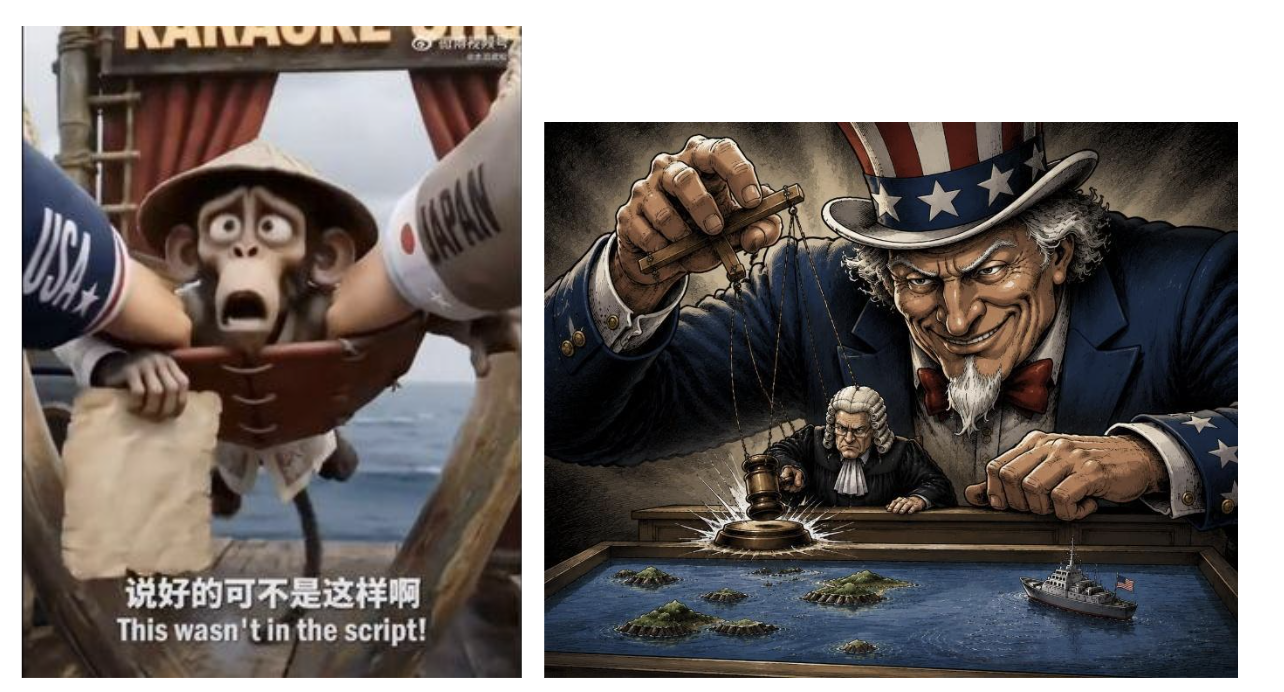
Image left: A still image from an AI-generated video posted by the Chinese state media outlet China Daily in mid-July, which personified the Philippines as a hapless monkey manipulated by Japan and the United States (image source: Sina.cn).
Image right: A July 15 cartoon posted by China Daily, depicting Uncle Sam as the sinister puppet master behind international rulings (such as the 2016 International Court of Arbitration ruling) that have rejected PRC maritime claims. (Image source: China Daily).
As the controversy unfolded in June and July, the PRC even appeared to leverage the dispute to signal even more extensive claims at the expense of the Philippines—by further expanding its existing claims on Taiwan. An academic conference held in late June at Guangzhou’s Jinan University (暨南大学)—an institution directly operated by the CCP’s United Front Work Department (UFWD, 统一战线工作部), and therefore an agent for CCP propaganda and united front work—issued a finding that the Philippines’ Batanes Islands (located in the Luzon Strait between Taiwan and the Philippines’ northern island of Luzon) in fact rightfully belonged to the PRC. The stated rationale for this was that the islands lay on the continental shelf of Taiwan; and as Taiwan is PRC territory, the islands were therefore also rightfully Chinese territory. The conference announcement does not represent an official government statement per se; however, coming from a UFWD institution, it appears to be a semi-official CCP trial balloon for what could become a more direct claim in the future.
The PRC’s Stepped-Up Military Activity East of Taiwan
Increased Coast Guard Patrol Activity
The PRC accompanied its rhetoric with expanded military activity in the vicinity of Taiwan, including noteworthy operations conducted in the waters to the east of the island. Much of this activity consisted of increased coast guard patrols—frequently described in Chinese state media as “inspection” (巡查) patrols, employing language intended to emphasize that the patrols are covering domestic territory (see images below). Taiwan’s government reported a significant rise in PRC coast guard activity around Taiwan during the month of June: indicating that 55 vessels had operated near Taiwan (locations and distances not specified), reportedly representing a near doubling of the number observed in May.
The PRC also stepped up maritime activity to the east of Taiwan during this period. At least two PRC Coast Guard task forces, each consisting of a pair of ships, operated to the east of Taiwan in June and July (see here and here). The first task group, which operated through June, consisted of the vessels Daishan (岱山) (2502) and Baita (白塔) (2304). On or about July 4, these ships were relieved by another task group consisting of the vessels Xiushan (秀山) (2305) and Chongming (崇明) (1401). In turn, the Taiwan Coast Guard deployed its own ships to monitor the PRC vessels—including the vessels Bali (八里) and Hualien (花蓮), which were reportedly dispatched to observe the second task group in July.
The Chinese government explicitly linked these patrols with both the the Japan-Philippines talks, and its claims over Taiwan. The PRC Taiwan Affairs Office (国台办) issued a statement on July 2 that reiterated “Taiwan is a part of China,” and then proceeded to assert: “For the mainland’s coast guard to conduct law enforcement inspection patrols [east of Taiwan] is exercising jurisdiction, [and] is maintaining national territorial sovereignty and just oceanic rights; and is also a necessary action directed towards Japan and the Philippines bypassing China to commence unauthorized maritime delineation talks that encroach on China’s maritime rights” (大陆海警在相关海域开展执法巡查,是依法行使管辖权,是维护国家领土主权和海洋权益的正义之举,也是针对日本、菲律宾绕开中国擅自启动在该海域划界谈判、侵害中国海洋权益采取的必要行动).
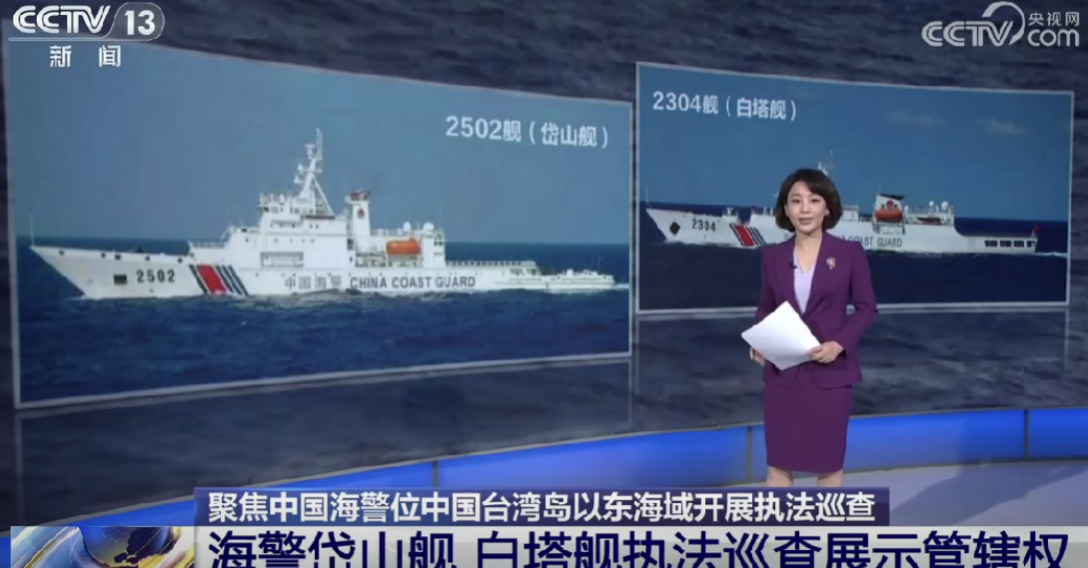
Image: A still image from a June 2 PRC state television news segment about the PRC Coast Guard vessels conducting an “inspection” (巡查) around “China’s Taiwan island” (中国台湾岛). (Image source: CCTV)
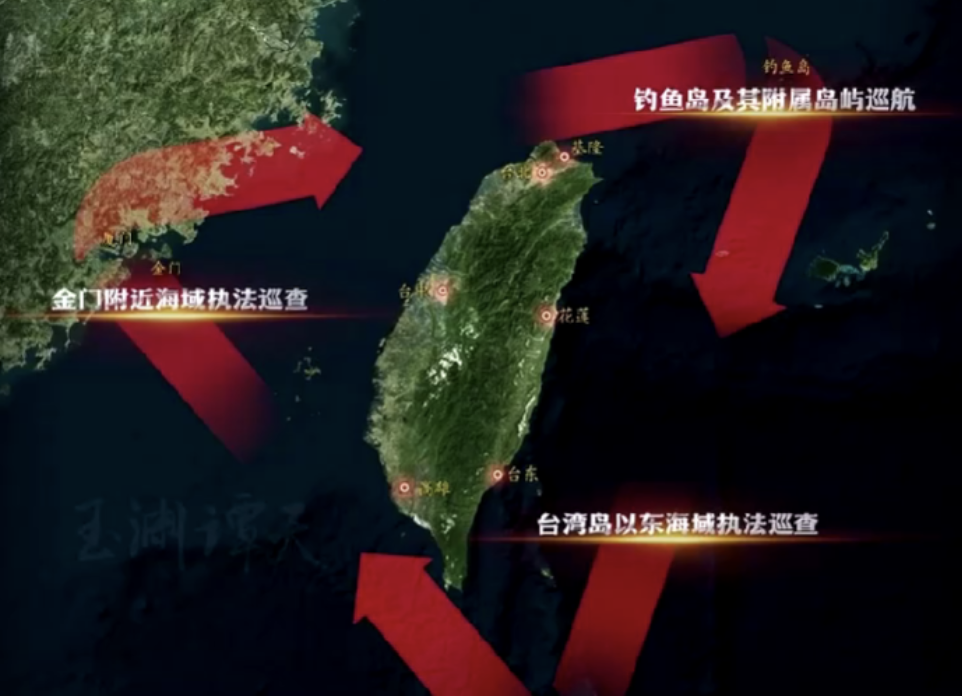
Image: A graphic from a June 2 Chinese state television news segment about the route supposedly taken by PRC Coast Guard vessels sailing to the east of Taiwan. The three points identified are: Kinmen Island (west), the Senkaku / Diaoyu Islands (northeast), and the waters east of Taiwan itself. The graphic seeks to present an image of Taiwan as surrounded by these patrols. (Image source: CCTV)
The July 6 Submarine Missile Launch
A more dramatic and provocative action occurred on July 6, when PRC state media announced that a PLA Navy submarine had conducted a mid-day missile test launch in the Pacific Ocean. The location, type of submarine and missile, and flight path were all unspecified; however, the missile was described as carrying a “training simulation warhead” (训练模拟弹头) rather than an active warhead. [4] The same day, Joseph Wu (吳釗燮), secretary-general of Taiwan’s National Security Council, posted to social media a graphic depicting the flight path of the missile. The post identified the missile as a JL-2 intercontinental ballistic missile (ICBM), and depicted a launch point of origin in the South China Sea, with a splashdown area roughly halfway between the Pacific island states of Nauru and Tonga (see image below).
Despite the PRC government’s boilerplate assertions that the missile launch was routine and “not directed towards any specific country or target” (不针对任何特定国家和目标), the launch prompted a negative reaction from many regional governments: Australian Prime Minister Anthony Albanese called the launch a “provocative act” that “destabilized the region;” and Japanese Chief Cabinet Secretary Minoru Kihara expressed “grave concern regarding China’s increased military activity” in the region.
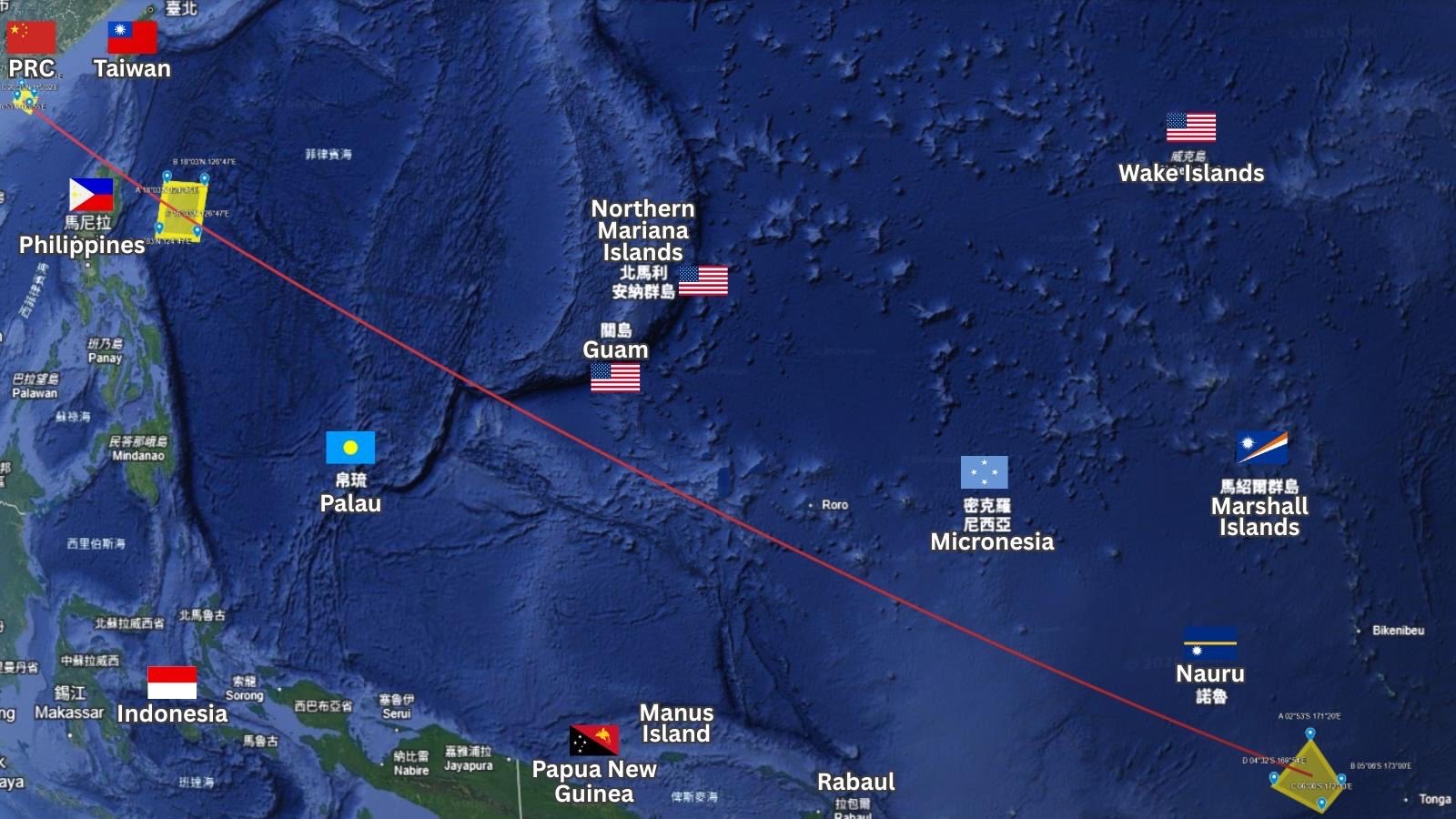
Image: A graphic posted by Joseph Wu, secretary-general of Taiwan’s National Security Council, depicting the flight path of the July 6 Chinese missile launch: from a launch area in the South China Sea east of Hainan Island, to an ocean area in the South Pacific to the west of Tonga. (Image source: Joseph Wu X Account)
Conclusion
The initiation of the maritime territorial talks between Japan and the Philippines, while seemingly an anodyne diplomatic announcement, carries alarming implications from Beijing’s perspective. On the surface, the prospect of the two countries reaching bilateral resolution on disputed maritime claims would complicate the PRC’s efforts to assert its own ownership over those territories. But on a deeper level, the Japan-Philippines announcements are representative of slowly coalescing regional security relationships—which include, on a quieter level, Taiwan—that frustrate Beijing’s attempts to play divide-and-conquer with less powerful Pacific states. Accordingly, the PRC initiated a furious response, across the diplomatic, informational, and military domains.
Of the latter, the July 6 ICBM launch was the most provocative of Beijing’s measures. Despite routine blandishments that the test was routine, this is unlikely. Both the timing of the launch, and its apparent flight path—through the Luzon Strait, and between the Philippines and Japan—appeared very likely intended to send a saber-rattling message to both Tokyo and Manila (whether or not the launch may have also addressed PLA weapons testing requirements).
As a propaganda tactic, the CCP leadership also regularly seizes on political disputes as a pretext to expand its coercive gray zone military operations directed at other states. (Editor’s note: For an exemplary discussion of this practice in another context, see “Four Years Later: The Legacy of the Nancy Pelosi Visit on Taiwan’s Security” by Thomas J. Shattuck, elsewhere in this issue.) Accordingly, in the days to come we are likely to see more regularized PRC coast guard presence patrols to the east of Taiwan, as these vessels conduct continued “inspection” patrols in what Beijing claims as its territory.
As Japan and the Philippines continue to develop their quasi-alliance in the face of shared PRC coercive pressure, they are likely to continue exploring further means for security cooperation. As they do so, Beijing will almost certainly continue to ramp up aggressive measures in response—and will seek to leverage these same steps to further assert its claims over Taiwan.
The main point: In June and July 2026, the PRC government initiated a series of measures—diplomatic, informational, and military—to leverage pressure against a growing security relationship between Japan and the Philippines. These measures, which are likely to continue into the future, will also be leveraged by Beijing to ramp up military presence in the region and to further assert its sovereignty claims over Taiwan.
[1] Of note, in the same press conference the spokesperson used the context of the maritime talks to attack Taiwan’s current presidential administration: “The DPP authorities, in pursuing selfish political gains, have gone so far as to put the Chinese nation’s vital interest up for sale, a move that betrays ancestors and breaches all moral boundaries. This once again shows that these separatists have completely forfeited the national stance and degenerated into traitors to the nation.” The official comments also singled out Philippines Defense Minister Gilberto C. Teodoro, Jr. for personal vilification. (For more on the latter point, see endnote #3, below.) See: “Foreign Ministry Spokesperson Mao Ning’s Regular Press Conference on June 2, 2026,” PRC Foreign Ministry (June 2, 2026), https://www.mfa.gov.cn/mfa_eng/xw/fyrbt/lxjzh/202606/t20260602_11923474.html.
[2] The characters 钟声 literally mean “sound of a bell” (or clock), but are also a homophone for “voice of China” (中声). People’s Daily itself describes Zhong Sheng as “a pen name often used by People’s Daily to express its views on foreign policy and international affairs.” As an example, see: Zhong Sheng, “Sliding Toward ‘Predatory Hegemony,’ U.S. Is ‘Regressing’ into Future,” People’s Daily, April 27, 2026. https://en.people.cn/n3/2026/0427/c90000-20450727.html.
[3] There are other recent examples of vituperative personal attacks on Filipino political leaders. For example, in the June 2 PRC Foreign Ministry press conference referenced above (see endnote #1), Mao Ning described the defense minister of the Philippines, Gilberto C. Teodoro, Jr., as follows: “This Philippine defense secretary is known to vilify China. His latest rhetoric […] again shows his complete disregard of the welfare of the Philippine people […] All he cares [sic] is selfish personal gains to the point that he would perform political theatrics even when people’s well-being is at stake. What he does is seriously detrimental to China-Philippines ties and trust and not at all in the interest of his own country and people.” (See: “Foreign Ministry Spokesperson Mao Ning’s Regular Press Conference on June 2, 2026,” PRC Foreign Ministry (June 2, 2026), https://www.mfa.gov.cn/mfa_eng/xw/fyrbt/lxjzh/202606/t20260602_11923474.html.) In another example, a July 15 state media cartoon depicted a Philippine leader (likely intended to be President Marcos) as a garishly made-up clown, in a sinking boat made up of the 2016 arbitration decision. This latter example, and the video depicting the Philippines as a monkey, demonstrate the increasing use of AI-generated context in PRC state propaganda; as well as an increasing willingness to attack perceived regional opponents in crude, and even racist, terms.
[4] The launch platform was not specified, but was likely one of the six Type-094 (NATO Jin-class) ballistic missile submarines operated by the PLA Navy, and homeported on Hainan Island. See: ODIN database, “Type 094 Class (Jin Class) Chinese Nuclear-Powered Ballistic Missile Submarine” (updated April 26, 2024),
https://odin.t2com.army.mil/WEG/Asset/e9abff9d94c4503bfdeb09e913e9ea0f.