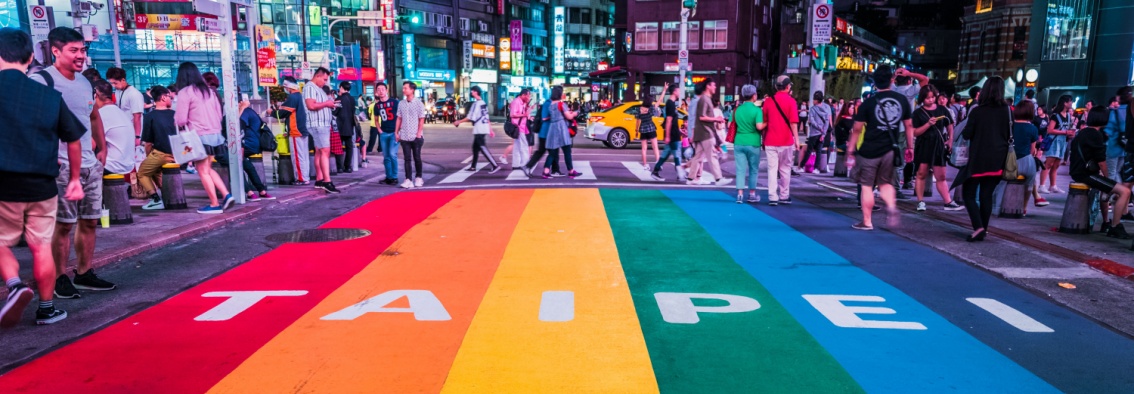


Since the legalization of same-sex marriage in May 2019, Taiwan has made strides to cement its reputation as a regional leader on LGBTQ+ rights, notably through subsequent reforms to the legal frameworks protecting same-sex couples. In terms of public attitudes towards the LGBTQ+ community, a new survey released by the Taiwan Equality Campaign (彩虹平權大平台) revealed that support for same-sex marriage in 2026 remains unchanged from the previous year, at 54.3 percent; while other surveyed categories, including adoption, transnational same-sex marriage, and gender equality education, saw remarkable increase in public support.
Despite this progress, Taiwan’s LGBTQ+ movement continues to face headwinds, including the growing hostility toward gender equality globally manifested in political repression targeting LGBTQ+ people, and internal divisions among the Taiwanese LGBTQ+ community. These challenges risk derailing social and legislative progress on LGBTQ+ rights and undermining the country’s hard-won democratic values.
Mounting Hostility Towards LGBTQ+ Communities
A global resurgence of far-right mobilizations has bolstered resistance to LGBTQ+ movements worldwide. Under the guise of fighting “gender ideology,” right-wing populist leaders, conservative parties, illiberal and authoritarian regimes, and religious movements have attempted to rescind existing laws and policies protecting same-sex marriage and LGBTQ+ rights, roll back critical education about gender and sexuality, and weaken social organizations advocating for the human rights of LGBTQ+ people. Moreover, movements led by both state and non-state actors—those obsessed with the mandate of defending traditional “family values”—have formed new transnational coalitions to reshape international gender norms by altering the language of equal rights policy and creating multilateral forums for norm-building (such as the Political Network for Values and the Group of Friends of the Family) to advance their interests and ideology.
Meanwhile, global support for LGBTQ+ rights has dropped slightly. The 2025 edition of the 26-country Ipsos LGBTQ+ Pride Report showed reduced support for several LGBTQ+ rights issues. Support for same-sex marriage declined from 74 percent in 2021 to 69 percent in 2025, while support for same-sex couples having the same adoption rights as heterosexual couples fell from 64 percent to 59 percent over the same period. More troubling, homophobic attitudes appear to be rising in Western societies, which have long presented themselves as champions of democracy, progressive values, and LGBTQ+ rights. According to the Institute for Strategic Dialogue, a UK-based think-tank dedicated to safeguarding human rights, LGBTQ+ individuals have been increasingly exposed to hate-motivated violence, online harms, and censorship of LGBTQ+ content, including books and online resources.
President Donald Trump’s return to office in January 2025 has fueled an uptick in hateful rhetoric towards the LGBTQ+ community in the United States. Trump’s broad attacks on diversity, equity, and inclusion (DEI), as well as on transgender individuals, has had far-reaching ramifications for global LGBTQ+ activism. Upon returning to the White House, the Trump Administration has implemented a wave of executive orders, policy initiatives, and rhetoric targeting the LGBTQ+ community in order to root out “gender ideology extremism,” rendering LGBTQ+ people—especially transgender individuals—with fewer legal protections, while emboldening prejudice and legitimising discrimination against this marginalized communities in the United States. In an apparent departure from American leadership in advancing human rights and the inclusion of LGBTQ+ people as a cornerstone of US diplomacy, the Trump Administration has eliminated foreign assistance programs and dismantled the US Agency for International Development (USAID), withdrawn from the United Nations Human Rights Council, and ended US support for LGBTQ+ rights at the United Nations and Organization of American States, which may leave Taiwan without a vocal supporter for its international inclusion.
The absence of US leadership and the spread of an “anti-gender movement” have posed significant challenges to LGBTQ+ people and their allies around the world, jeopardizing hard-won progress toward gender equity and inclusion. Washington’s retreat from supporting LGBTQ+ rights has also caused civil society groups and organizations dedicated to gender equality–particularly in developing countries–to lose critical financial and human resources, and put LGBTQ+ people at risk of violence, discrimination, and disruption of life-saving healthcare programs. The global rise of anti-LGBTQ+ sentiments contributes to global democratic backsliding by undercutting the liberal commitment to human rights, as well as democratic norms and institutions.
While the closure of USAID is unlikely to directly affect Taiwan’s LGBTQ+ movement—given that USAID funding to Taiwan has been relatively limited in recent years, and has mainly focused on disaster response and capacity-building—the Trump Administration’s campaign against LGBTQ+ rights has raised concerns about Taiwan’s transnational advocacy networks, especially those connected to the United States. As part of a broader effort to crack down on progressive organizations under the banner of counterterrorism, for instance, the Trump Administration’s vow to launch investigations into the Open Society Foundations (OSF)—established by billionaire George Soros to promote liberal democracy and human rights around the world—may put Taiwan’s civil rights groups at risk of losing critical sources of funding. This is because many Taiwanese nonprofit organizations advocating for LGBTQ+ rights, such as the Taiwan Equality Movement and the Taiwan Tongzhi Hotline Association, have received donations worth hundreds of thousands of dollars from the OSF.
Divisions Within Taiwan’s LGBTQ+ Community
Emerging internal divisions within Taiwan’s LGBTQ+ community regarding transgender rights and sexual rights issues also endanger civil society advocacy efforts. In the days leading up to the Taiwan LGBTQ+ Pride Parade in October 2025, controversy erupted after Belle Chiu, an employee of the Taiwan Rainbow Civil Action Association (臺灣彩虹公民行動協會, TWRCAA) and organizer of Taiwan Pride, posted on social media that she was “against pedophilia, against legal gender change without surgery, against surrogacy, [and] against psychological gender identity.” Both her post, which ironically stood in opposition to last year’s Pride theme of promoting gender-friendly policies, and the sluggish response issued by TWRCAA, sparked widespread outrage within Taiwan’s LGBTQ+ community.
While some individuals called for a boycott of the 2025 Taiwan Pride, multiple LGBTQ+ groups, such as the Intersex, Transgender and Transsexual People Care Association (台灣性別不明關懷協會,ISTSCare), the Taiwan Relationships Education Association (台灣情感教育協會,TREA), BDSM Taiwan (皮繩愉虐邦) and Kaohsiung Pride, issued statements demanding TWRCAA’s clarification over the controversy, and calling for unity and respect for others. The Taiwan Alliance to Promote Civil Partnership Rights (台灣伴侶權益推動聯盟, TAPCPR), stated that the comment was unlikely to be an isolated occurrence, but rather reflected long-standing internal disagreements within the TWRCAA over transgender rights at a time when the transgender community is gaining greater visibility.
Sexual rights associated with the 6 Colors Manifesto (六色宣言) also became a source of dissension among Taiwan’s LGBTQ+ community. The manifesto, issued in 2008, used the design of the rainbow flag to represent LGBTQ+ rights issues, with the “red procession” portion of the manifesto representing issues of sexual rights and sexual autonomy. The TWRCAA has sought to revise the red procession, claiming that it has led to misunderstandings and false accusations propagated by anti-LGBTQ+ rights groups, including that the manifesto supports the sexual exploitation of children. Yet, other LGBTQ+ and sex rights groups, including the Taiwan Gender Queer Rights Advocacy Alliance (社團法人台灣酷兒權益推動聯盟, TGQRAA), Hand Angel (手天使), and the Taiwan Sex Industry and Workers’ Rights Association (台灣性產業勞動者權益推動協會, TSIWRA) have condemned the TWRCAA’s decision as succumbing to public pressure, and urged domestic LGBTQ+ advocacy groups to pursue broader dialogue and strengthened education on sexual rights.
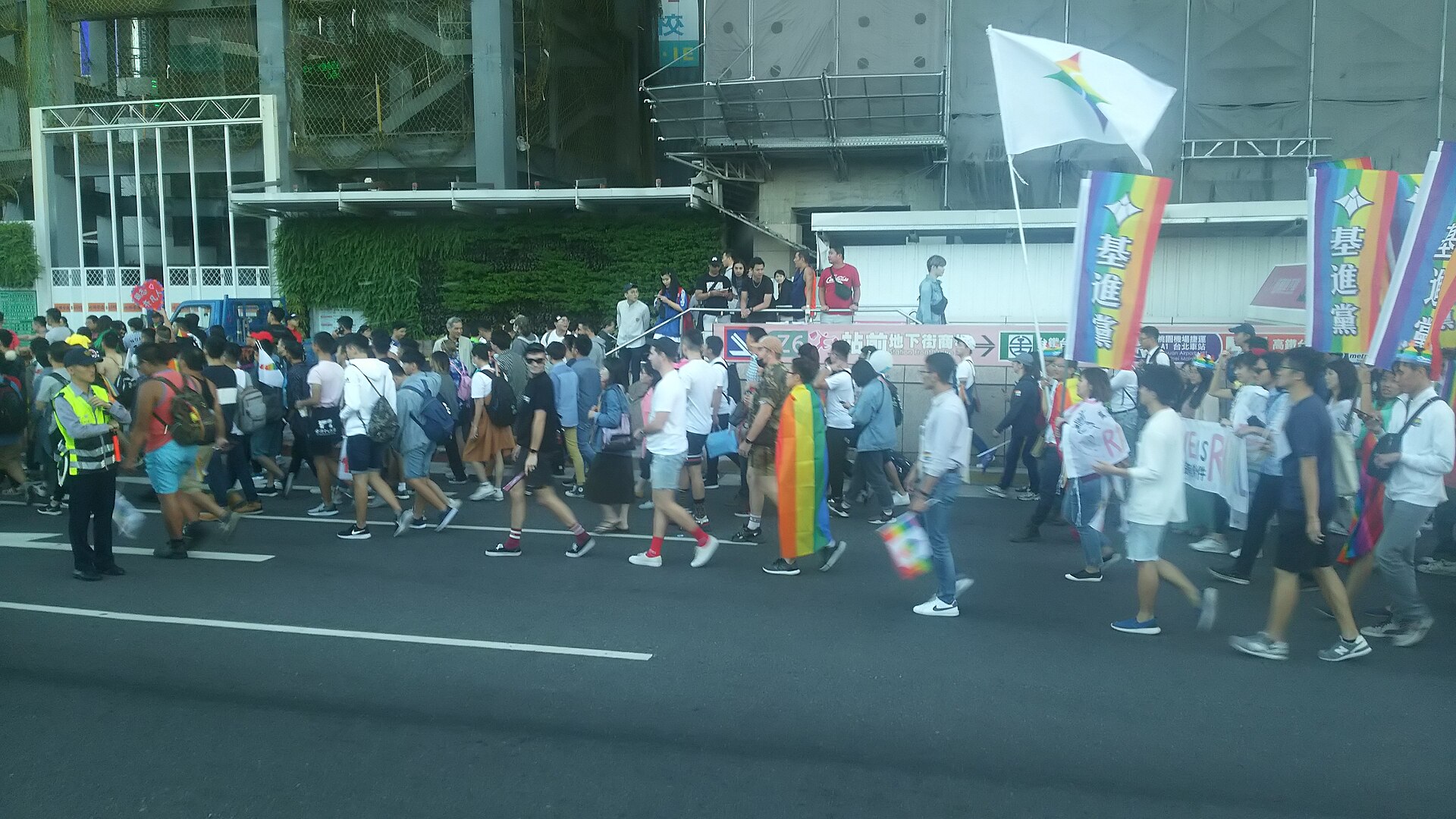
Image: Participants in Taipei’s 2018 Pride Parade march past the area of Taipei Main Station (Oct. 27. 2018). (Image source: Wikimedia Commons)
Navigating Challenges to LGBTQ+ Rights in Taiwan
On the domestic front, anti-LGBTQ+ groups, such as the Taiwan Solidarity Union (now known as Taiwan Solidarity Party, 台聯黨), the No Self ID Taiwan (NDISTW), the Taiwan Parents Protect Women and Children Association (台灣家長守護婦幼權益協會, TPPWCA), and the Taiwan Women’s Association (臺灣女性協會,TWA), have been antagonistic toward efforts to uphold LGBTQ+ rights, especially transgender rights. Trump’s return to the US presidency has empowered organizations associated with the anti-LGBTQ+ movement. For example, TSP chairperson Chou Ni-an (周倪安) invoked Trump’s “revolution of common sense,” under which the US recognizes only two biological sexes, male and female, in calling for Taiwanese politicians to adopt the same position and reconsider what she described as Taiwan’s excessively left-leaning approach. With substantial resources and grassroots movements, these groups pose challenges for liberal progress based on their populist campaigns, and exploit divisions over LGBTQ+ issues for their advantage. The results of a 2018 referendum, in which same-sex marriage and gender equality education were rejected, serves as a lesson on how anti-LGBTQ+groups can mobilize support by stoking fear of the collapse of traditional values among the public.
Failure to take action to raise public awareness of LGBTQ+ rights issues would lead to a setback for Taiwan as a leader on human rights issues in Asia, as the Taiwan Equality Campaign aptly pointed out when referring to declining level of public support for the LGBTQ+ community in 2025. Hence, the Taiwanese government should take the lead in advancing true marriage equality and social inclusion. For instance, the Lai Ching-te (賴清德) Administration should amend the Assisted Reproduction Act to allow the use of assisted reproduction for single women and same-sex female couples. This act, which is limited to married heterosexual couples, has been a source of controversy among members of the public and lawmakers due to the government’s insistent stance on and partisan divisions over the expansion of the use of assisted reproductive technologies and the legalization of surrogacy. Furthermore, given the rise of anti-transgender movements, a comprehensive anti-discrimination law should be put forward in order to provide protection for vulnerable groups.
As global democracy is threatened by rising authoritarianism, and anti-LGBTQ+ movements are rising, Taiwan should leverage its position as a well-established democracy to reinforce its democratic resilience and advocate for minority rights at the global level. The Taiwanese government should be as committed to advancing LGBTQ+ rights abroad as well as at home, turning rhetoric into concrete policy. Achieving this goal requires the active participation and intellectual resources of the government, civil society groups working for human rights, and policy think tanks.
Taiwan now has greater potential for human rights exchanges and collaboration with like-minded democracies, particularly European partners, since they are all devoted to promoting and safeguarding human rights, democracy, and the rule of law. Taiwan and the European Union, for example, hold annual Human Rights Consultations in which both sides exchange views on human rights developments, policy initiatives, and plan joint actions. In countries where LGBTQ+ populations are facing institutional discrimination, stigma, and criminalization—especially in the Global South—Taiwan should distribute financial resources to LGBTQ+ organizations on-the-ground, and engage in track-two diplomacy to share experiences in advancing LGBTQ+ rights.
Additionally, Taiwan should collaborate with non-governmental organizations and corporations to develop grassroots initiatives to promote equal rights. The Taiwanese government should share its experiences of calibrating laws and policies that help advance LGBTQ+ rights with its existing diplomatic allies. By doing so, Taiwan can strengthen people-to-people ties and expand its international foothold. However, Taiwan should recognize that much of the Global South remains less accepting of the LGBTQ+ community and some countries still criminalize same-sex conduct. Therefore, Taiwan should adopt a nuanced and pragmatic approach to promoting LGBTQ+ rights, one that advances rights-based principles while minimizing the risk of backlash from regimes that frame LGBTQ+ advocacy as ideological interference.
By incorporating LGBTQ+ rights into its values-based diplomacy, Taiwan could forge ties with other like-minded partners in supporting LGBTQ+ rights and combating global democratic repression, highlighting the spirit of “Taiwan Can Help.” In doing so, Taiwan can reinforce its identity as a progressive democracy that treasures liberal rights protections and freedoms of all individuals in society.
The main point: Taiwan’s leading status on LGBTQ+ rights now faces pressure from three headwinds: a global resurgence of anti-LGBTQ+ movements and growing internal divisions within Taiwan’s LGBTQ+ community. To bolster its international standing, Taiwan must strengthen domestic consensus, promote comprehensive anti-discrimination protections, and incorporate LGBTQ+ rights into its values-based diplomacy.