
COMPUTEX 2026, the world’s premier technology and AI procurement exhibition, took place from June 2-5, 2026, in Taipei, Taiwan. This year’s event centered around the theme “AI Together,” with a focus on AI computing, advanced robotics, and next-generation smart technology ecosystems. While most observers focus on TSMC as the firm that represents Taiwan’s dominance in chip manufacturing, the island’s success is equally the result of its diverse ecosystem of semiconductor firms that cover nearly every stage of production.
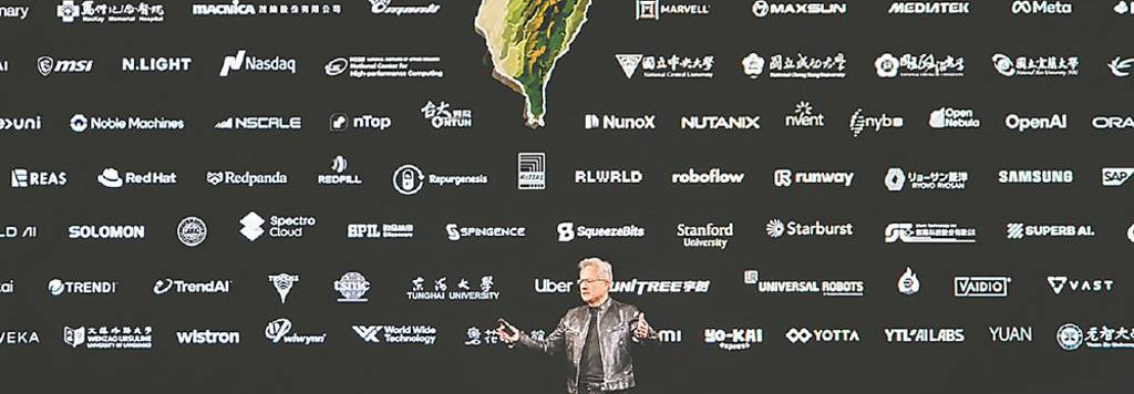
For example, Nvidia CEO Jensen Huang gave a speech at the event in which he introduced a powerful new chip (the “RTX Spark”) and revealed his company’s global partnership. From wafer and chip producers to manufacturing and systems leaders, Taiwan hosts more than 500 firms supporting Nvidia’s manufacturing ecosystem. Together, they produce more than one million components for Nvidia’s new “Vera Rubin” infrastructure supporting agentic AI.
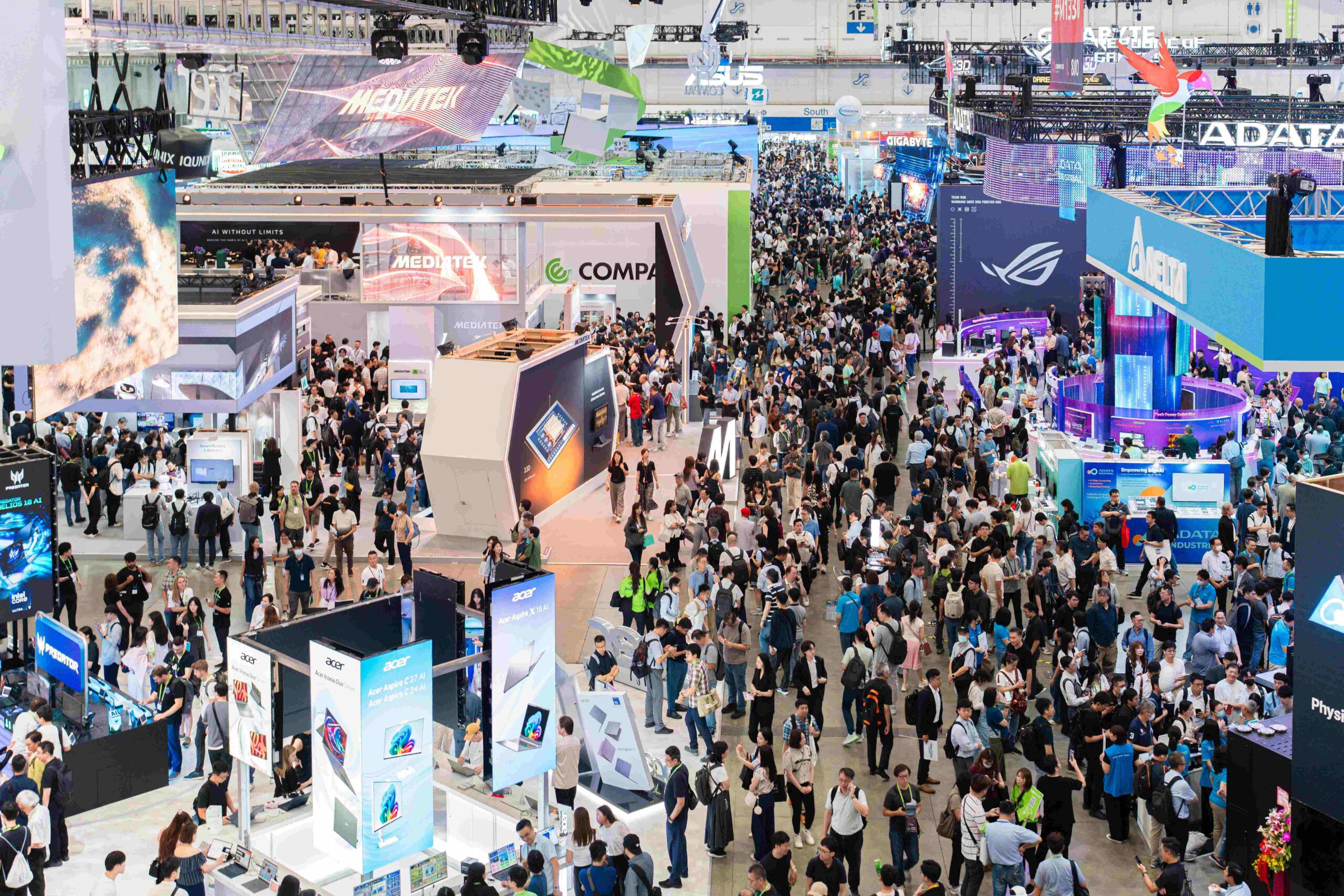
Image: A view of the event floor at the COMPUTEX 2026 tradeshow. (Image source: COMPUTEX Taipei)
Taiwan’s Centrality in the Global AI Supply Chain
Taiwan’s role in Nvidia’s supply chain reflects a broader reality: that many of the world’s most advanced AI systems depend on the semiconductor manufacturing ecosystem concentrated in this small country. “Upstream” companies such as Nvidia, AMD, and Apple design the advanced chips that power their products. However, these companies do not manufacture these chips themselves; instead, they rely on specialized foundries to fabricate their designs.
Taiwan Semiconductor Manufacturing Company (TSMC, 台灣積體電路製造股份有限公司) is the undisputed leader of the global semiconductor foundry industry, producing more than 90 percent of the world’s most advanced chips and occupying more than 70 percent of the global foundry market in 2025. Since it was launched in 2022, TSMC’s 3-nanometer technology has become the industry standard for high-performance computing, artificial intelligence, and mobile devices; while its 1.6-nanometer process will be ready for commercial production in the second half of 2026. TSMC’s constant technological innovation gives it an edge over its competitors.
Yet, before a chip can power an AI server, smartphone, or automobile, it must undergo a series of highly specialized back-end processes that transform manufactured wafers (the structures housing semiconductors) into reliable and deployable products. As AI chips become increasingly complex, these downstream capabilities in assembly, testing, and packaging (ATP) have become just as critical as the advanced manufacturing itself.
ATP serves as the critical final bridge between raw silicon and the functional microchips inside our modern devices. Assembly is a process wherein a large, newly fabricated silicon wafer is sliced into distinct, miniature squares. The testing process then simulates years of intense real-world usage to filter out any components that fail to meet strict performance metrics, ensuring that only flawless hardware proceeds further down the supply chain. The final stage completes the process by packaging verified chips for global distribution and integration.
In 2023, Taiwan’s semiconductor packaging and testing sector captured more than 50 percent of the global market, generating NTD 584 billion (USD 18.46 billion) in revenue. Such dominance is the result of more than five decades of ecosystem building. In the 1970s, Taiwan faced both economic turmoil driven by global oil crises, and diplomatic challenges brought about by the loss of its seat in the United Nations and formal ties with major partners like the United States and Japan. Recognizing these challenges, the government realized that Taiwan’s economy could no longer rely on traditional labor-intensive industries, such as textiles and plastics. Therefore, Taiwan launched the “Ten Major Construction Projects” (十大建設) to transition Taiwan’s economy toward technology- and capital-intensive industries with higher added value.
To achieve this, Taiwan established the Industrial Technology Research Institute (ITRI, 工業技術研究院) in 1973 to invest in technological R&D. Three years later, ITRI signed a technology transfer and licensing agreement with the US semiconductor firm Radio Corporation of America (RCA). The agreement allowed Taiwan to import technology to build 3-inch wafers. The transfer of knowledge built the foundation for Taiwan’s vertically specialized supply chain, enabling multiple independent companies in Taiwan to handle individual stages of the production. The 1980s saw the emergence of specialized firms focused on fabrication, testing, and packaging.
Today, five of the world’s ten largest semiconductor assembly and testing companies are headquartered in Taiwan. At the center of this ecosystem is ASE Group (日月光集團). As the world’s largest independent provider of chip assembly and testing services, ASE Group ensures the newly-manufactured chips are flawless and ready to be installed onto various kinds of electronic devices. Meanwhile, companies such as King Yuan Electronics Co. (京元電子) and Powertech Technology (力成科技), each specialize in packing or testing for advanced chips. The success of these companies shows that Taiwan has built competitive advantages across multiple segments of the semiconductor value chain.
Taken together, Taiwan’s strategic importance cannot be measured solely by TSMC’s leadership in semiconductor manufacturing. Instead, Taiwan’s advantages lie in its complete, highly interconnected semiconductor ecosystem that supports every stage of production.
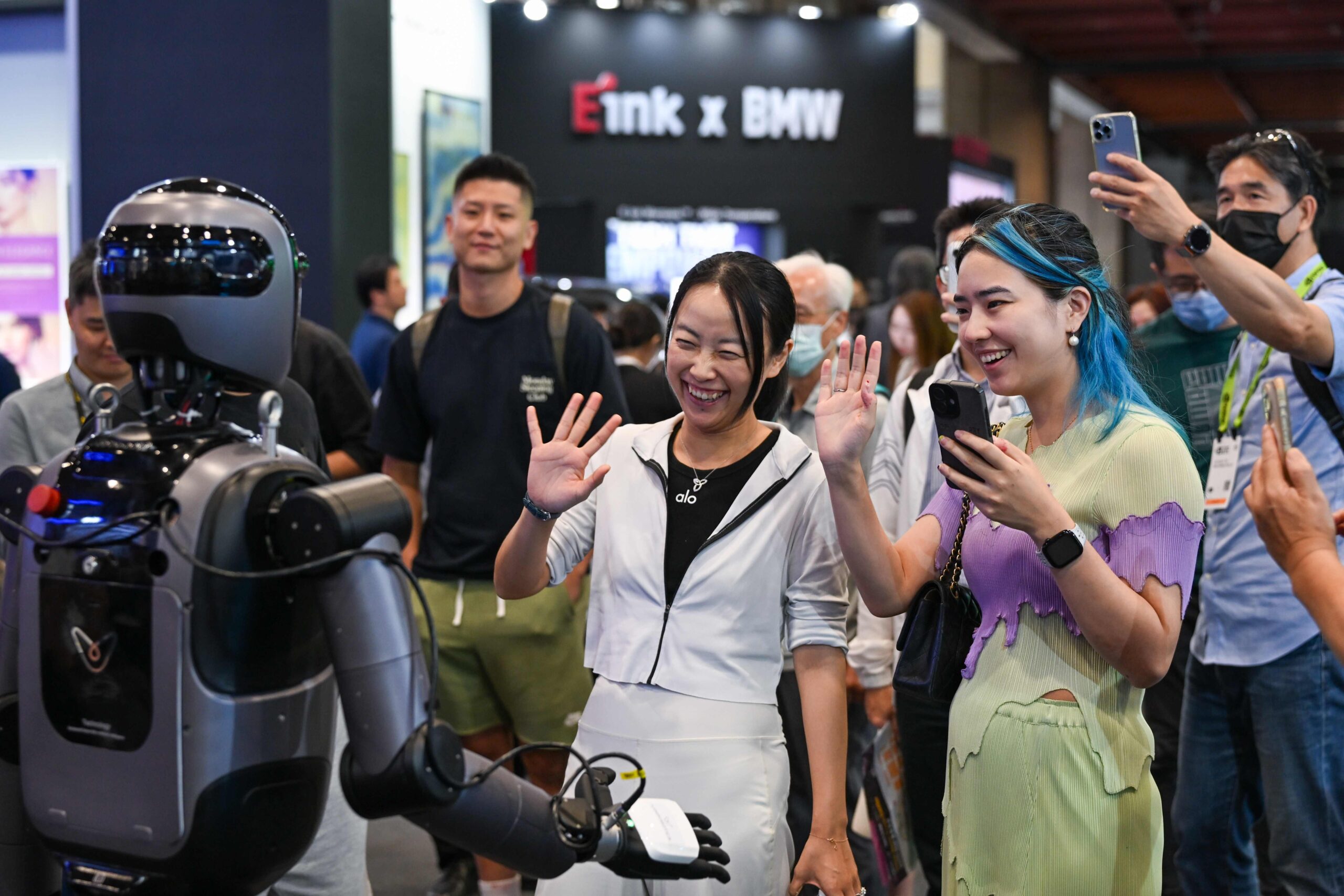
Image: Attendees interact with a robot in the “AI Robotics Zone” at the COMPUTEX 2026 tradeshow (undated). (Image source: COMPUTEX Taipei)
The Cluster for Scale Economy
Central to Taiwan’s success in dominating the semiconductor supply chain is the strategic organization of economic activity within geographically-concentrated technology clusters. Inspired by Silicon Valley’s success in the United States, Taiwan’s science park model brings together manufacturers, suppliers, research institutions, and universities—in close proximity to one another—to create powerful advantages for innovation.
The first science park, the Hsinchu Science Park (新竹科學園區), was established in 1980 near leading research institutions, including the National Yang Ming Chiao Tung University (NYCU, 國立陽明交通大學), and the Industrial Technology Research Institute. The combination of government, academic, and industry institutions creates the interconnected ecosystem that fosters close collaboration for technology research and innovation.
Today, the Hsinchu Science Park remains the centerpiece of Taiwan’s high-tech economy. Driven by continued growth in artificial intelligence applications, the annual total revenue of the entire park is expected to surpass NTD 1.8 trillion (USD 56.9 billion) in 2026. What makes Hsinchu irreplaceable is the knowledge network it contains. When a new technology sector emerges within the cluster, it does not need to construct its foundational capabilities from scratch. Instead, it can draw on a pre-existing, deeply internalized semiconductor knowledge base that surrounds it within the park. This cross-firm feedback loop depends on physical co-location and cannot be replicated at scale without the broader network supplying equipment, technology, and services.
Over the past decade alone, the total planned area of national science parks has expanded by more than 1,305 hectares (3224 acres). Taiwan is actively replicating and extending this model to the southern part of the island, where science parks in Chiayi, Tainan, and Nanzih are expanding due to the surge in demand for semiconductors caused by the global AI boom.
The Human Infrastructure Behind the Chip
Equally important is the steady supply of high-skilled workers capable of innovating on and operating some of the world’s most advanced manufacturing processes. Workers with STEM degrees are in high demand in Taiwan: it is estimated that the industry will require an additional 193,000 high-skilled workers in 2026.
To sustain the amount of talent needed, the Taiwanese legislature enacted the National Key Fields Industry-University Cooperation and Skilled Personnel Training Act (國家重點領域產學合作及人才培育創新條例) in 2021. The legal framework aims to accelerate R&D and train mid-to-high-level talent for critical national industries, through joint investment from both the government and industry. Under this scheme, top Taiwanese universities can establish independently-operated research colleges in partnership with major research-intensive firms. Granting substantial flexibility in budgeting and governance, the law helps schools to develop programs that correspond with the latest industry-need skills.
For instance, with funding from TSMC, National Yang Ming Chiao Tung University (NYCU, 國立陽明交通大學), established a Department of Microelectronics Engineering, where students can learn cutting-edge research and knowledge in nanotechnology, component architecture, and chip design. Moreover, the curriculum of NYCU’s materials science program is specifically designed to prepare students for careers as high-level process engineers in the semiconductor industry. Students receive priority consideration for internship opportunities at TSMC and are given access to full-time job interviews. NYCU graduates hired by TSMC may also receive higher starting salaries, with compensation determined by their academic performance and achievements in the program.
Similarly, at National Sun Yat-sen University (NSYU, 國立中山大學), the College of Semiconductor and Advanced Technology Research was designed in close partnership with midstream packaging and testing firms—such as the ASE Group, Orient Semiconductor Electronics (OSE ,華泰電子股份有限公司), and WinWay Technology (穎崴科技股份有限公司). The college aims to eliminate the gap between academic learning and the practical skills that are required at manufacturing sites. These education programs allow high-skilled human capital to remain Taiwan’s lasting edge in the global semiconductor industry. From legislative frameworks to institutional collaboration between firms and universities, Taiwan is investing in the next generation of talent to support the expansion of its physical infrastructure.
The main point: Taiwan’s position at the center of the global AI supply chain is not the product of a single company. Rather, it is the cumulative outcome of decades of government investment in geographical technology clusters, vertical supply chain diversification, and partnerships between firms and universities. As demand for computing continues to accelerate, these advantages will help Taiwan retain its position as the backbone of the global AI infrastructure.